

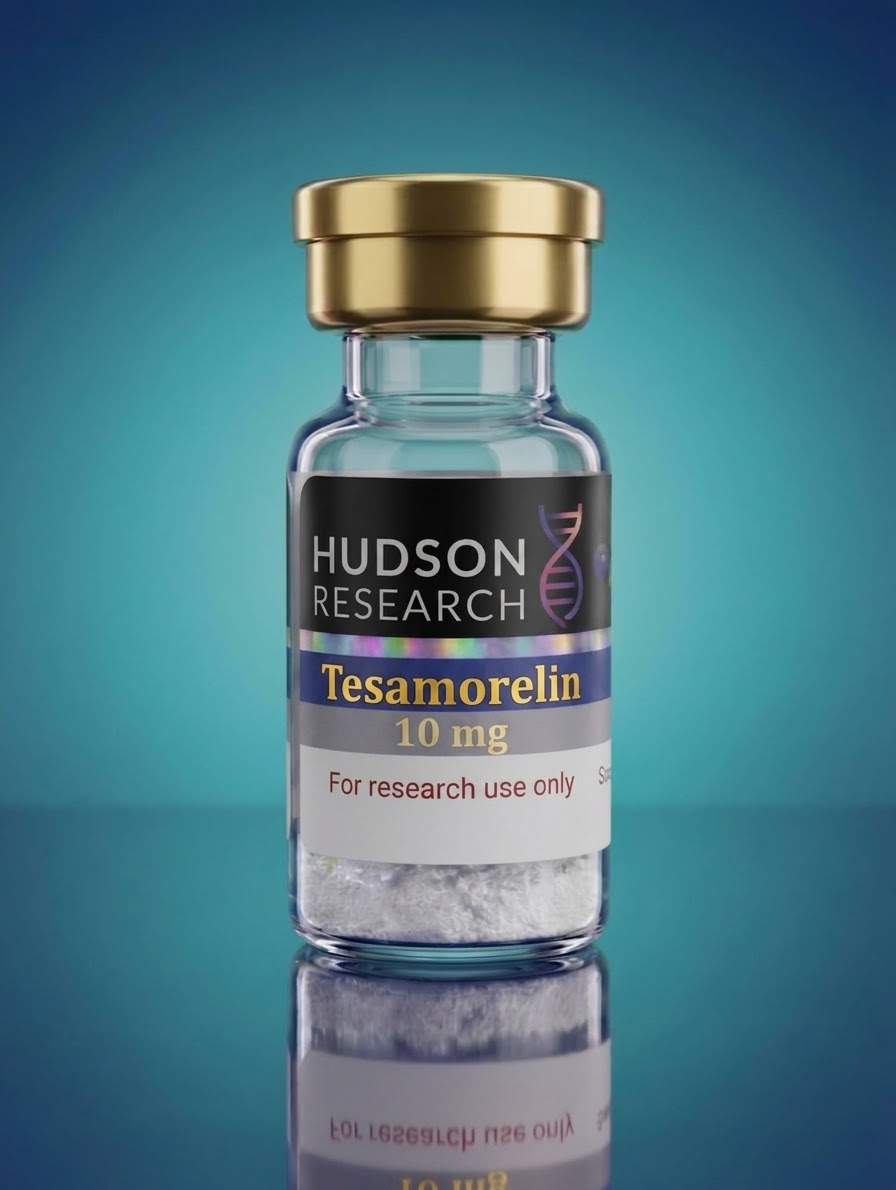
Tesamorelin
Price range: $60.00 through $432.00
Explore Hudson research lab peptides, including Tesamorelin for laboratory research. Review product specifications and research-use information online.
Tesamorelin – Laboratory Research Peptide
Explore Tesamorelin Research Information at Hudson Research Lab
Tesamorelin is a synthetic peptide analogue of growth hormone-releasing hormone (GHRH) studied for its interaction with growth hormone signaling pathways. Researchers investigating peptide chemistry, endocrine signaling, and related laboratory models may be interested in understanding the molecular characteristics and scientific background of this compound.
For researchers exploring Hudson research lab peptides, the Tesamorelin product listing provides a starting point for reviewing available product information and laboratory research specifications. Hudson Research Lab lists Tesamorelin as a research-use product and provides technical information through its online catalog. Prospective laboratory purchasers should review the product documentation, applicable restrictions, and analytical records before making a purchasing decision.
Product category: Research peptide
Product listing: Tesamorelin at Hudson Research Lab
Intended use: Laboratory research and analytical testing only. Not for human or veterinary consumption.
What Is Tesamorelin?
Tesamorelin is a synthetic analogue of growth hormone-releasing hormone, a naturally occurring signaling molecule involved in regulating growth hormone release from the pituitary gland. Its activity makes it relevant to scientific investigations of endocrine signaling, peptide structure, and associated biochemical processes.
The prescription medicine containing tesamorelin has an established medical indication for reducing excess abdominal fat in adults with HIV-associated lipodystrophy. However, this indication applies to approved prescription formulations and does not establish that a research-grade product is suitable for medical use. Tesamorelin is not approved as a general weight-loss treatment. Researchers and consumers should distinguish carefully between a prescription medicine and a compound marketed exclusively for laboratory research.
For laboratories evaluating Tesamorelin research peptides, understanding this distinction is essential. Product identity, formulation, purity documentation, storage requirements, and intended application all matter when assessing a research material.
Why Researchers Study Tesamorelin
Research involving growth hormone-releasing hormone analogues can help scientists investigate the relationships between peptide structure and biological signaling. Depending on the approved laboratory protocol and experimental model, relevant areas of investigation may include:
- Growth hormone signaling: Examining mechanisms associated with growth hormone-releasing pathways.
- Peptide characterization: Studying molecular identity, composition, and analytical characteristics.
- Endocrine research: Investigating signaling relationships in appropriately designed laboratory models.
- Analytical chemistry: Evaluating peptide-related characteristics using suitable laboratory instrumentation.
- Scientific method development: Establishing appropriate analytical procedures for research materials.
These areas describe scientific research interests, not guaranteed product outcomes. A compound’s potential relevance to a research field does not establish that a particular commercial sample has been independently verified or validated for a specific experiment.
Hudson Research Lab Peptides: Product Information
Researchers comparing Hudson research lab peptides should evaluate product documentation rather than relying on promotional language alone. The Hudson Research Lab Tesamorelin listing identifies a 10 mg research product and includes technical information concerning molecular characteristics and laboratory handling.
Before purchasing a research compound, laboratories should review the following details:
- Product identity: Confirm the compound name, product code, and stated molecular specifications.
- Purity documentation: Review the available analytical evidence and determine whether the stated purity is supported by a batch-specific report.
- Certificate of analysis: Check whether documentation corresponds to the exact batch being considered.
- Packaging and labeling: Confirm the stated quantity and intended research use.
- Storage documentation: Follow validated supplier documentation and applicable laboratory procedures.
- Regulatory compliance: Confirm that acquisition, possession, and use comply with relevant federal, state, and institutional requirements.
These checks support a more informed evaluation of laboratory materials. Product descriptions and advertised specifications should not be treated as independent proof of quality unless appropriate supporting documentation is available.
How to Evaluate Tesamorelin Research Materials
Selecting research materials requires more than comparing product names or advertised prices. Laboratory professionals should establish whether a material meets their experimental requirements and whether the supplier provides adequate documentation.
1. Review the technical specifications
Examine the listed molecular information, quantity, and product identification. Confirm that the documentation is consistent with the material required for the intended analytical application.
2. Examine analytical records
Where available, review high-performance liquid chromatography (HPLC) results and mass spectrometry data. These methods can provide information about sample purity and molecular identity, although the interpretation depends on the method, reference standards, and quality of the underlying data.
3. Confirm traceability
Batch-specific documentation helps laboratories connect analytical records with the material received. Ask the supplier about lot identification and the availability of relevant quality-control records.
4. Follow laboratory procedures
Storage and handling requirements should come from appropriate technical documentation and established laboratory protocols. Do not infer preparation, administration, or human-use instructions from a research product listing.
5. Verify the supplier’s terms
Review the supplier’s stated research-use restrictions, shipping terms, return policy, and documentation practices. Confirm that the material is appropriate for the intended lawful research activity.
Where to Find Tesamorelin from Hudson Research Lab
Researchers looking for Tesamorelin product information can visit the Hudson Research Lab website and review its published listing:
Product page: hudsonresearchslab.com/product/tesamorelin-10-mg/
The listing identifies the product as intended for laboratory research and analytical testing, not human or animal consumption. Hudson Research Lab’s website is a source for its own listed product information; this description does not independently verify the company’s regulatory status, product quality, or authorization to dispense prescription medicines.
For individuals seeking tesamorelin for a medical condition, the appropriate route is consultation with a licensed healthcare professional and a lawful prescription pharmacy. A research-use product is not a substitute for an approved prescription medicine.
Important Safety and Regulatory Information
Tesamorelin is not an ordinary dietary supplement. Approved prescription formulations have important contraindications, warnings, and monitoring requirements. The prescribing information includes concerns involving active malignancy, pregnancy, elevated insulin-like growth factor 1 (IGF-1), glucose intolerance, fluid retention, and other potential adverse effects.
The approved prescription medicine is not indicated for general weight management, and its established indication should not be extrapolated to unapproved uses or research-grade materials.
Research-use labeling means a product is not intended for injection, ingestion, topical application, or other use in humans or animals. Do not use a research peptide for self-treatment. Anyone considering medical treatment should discuss potential benefits, risks, alternatives, and appropriate monitoring with a qualified clinician.
Frequently Asked Questions About Hudson Research Lab Peptides
What is Tesamorelin?
Tesamorelin is a synthetic analogue of growth hormone-releasing hormone studied in relation to growth hormone signaling and other scientific questions. Approved prescription formulations have a specific medical indication and are distinct from products sold for laboratory research.
Where can I find the Hudson Research Lab Tesamorelin listing?
Visit the Hudson Research Lab Tesamorelin product page to review the company’s listed product information and research-use restrictions.
What should laboratories check before purchasing Tesamorelin?
Review product identification, analytical documentation, batch traceability, storage requirements, supplier terms, and applicable regulations before acquiring a research material.
Is research-grade Tesamorelin approved for human use?
A product labeled for laboratory research is not thereby approved for human use. The approval of a prescription formulation does not extend automatically to research-grade products sold by other suppliers.
Is Tesamorelin a general weight-loss product?
No. Approved prescription tesamorelin is not indicated for general weight management. Claims about weight loss or other outcomes should not be inferred from its research applications.
Final Overview
Tesamorelin is a scientifically relevant peptide analogue for investigations involving growth hormone-releasing pathways and peptide characterization. For laboratories reviewing Hudson research lab peptides, the supplier’s Tesamorelin listing offers product-specific information that can be evaluated alongside analytical records, quality documentation, and applicable research requirements.
An informed purchasing decision should prioritize transparent specifications, reliable documentation, regulatory compliance, and clearly defined research applications. Review the Tesamorelin listing at Hudson Research Lab for the supplier’s published details, and keep all research materials within their stated laboratory-use limitations.
Research-use notice: For laboratory research and analytical testing only. Not for human or animal consumption. Not intended to diagnose, treat, cure, or prevent any disease.
| QTY | 1 VIAL, 2 VIALS, 3VIALS, 5 VIALS, 10 VIALS |
|---|
Be the first to review “Tesamorelin”
Related products
HUDSON LAB
HUDSON LAB
HUDSON LAB
HUDSON LAB
HUDSON LAB
HUDSON LAB
HUDSON LAB
HUDSON LAB
Reviews
There are no reviews yet.