

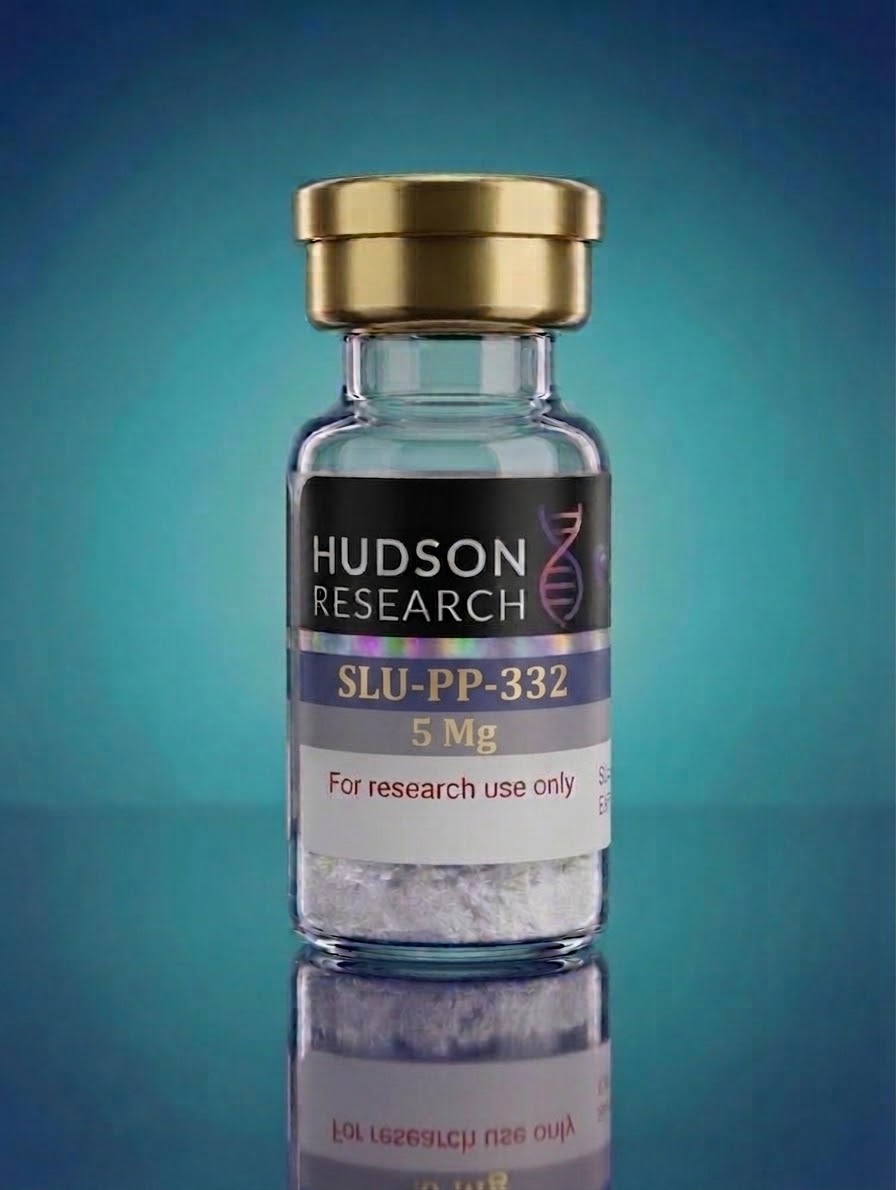

Hudson research lab peptides SLU-PP-332: Advanced Research Compound for Laboratory Investigation
Introduction to SLU-PP-332
Scientific research continues to explore how cellular energy regulation, mitochondrial activity, and metabolic signaling influence biological processes. SLU-PP-332 has attracted scientific interest because of its reported activity on estrogen-related receptors (ERRs), a family of nuclear receptors involved in regulating energy metabolism and cellular function.
For laboratories investigating metabolic pathways and molecular signaling, understanding the characteristics of SLU-PP-332 can provide valuable context for interpreting emerging preclinical research. This synthetic small molecule is sometimes discussed alongside research compounds and experimental peptides, although it is important to clarify that SLU-PP-332 is not a peptide.
Researchers evaluating this compound should distinguish published experimental findings from commercial product claims. Its current evidence base is primarily preclinical, and human safety and effectiveness have not been established.
What Is SLU-PP-332?
SLU-PP-332 is a synthetic small molecule studied for its ability to activate estrogen-related receptors, particularly ERRα, ERRβ, and ERRγ. These receptors participate in the regulation of genes associated with mitochondrial function, oxidative metabolism, and energy utilization.
Unlike conventional peptides, which consist of chains of amino acids, SLU-PP-332 has a distinct small-molecule chemical structure. This difference matters when evaluating chemical identity, analytical testing, storage requirements, and the scientific literature associated with the compound.
SLU-PP-332 has appeared in preclinical investigations examining exercise-associated molecular signaling and metabolic processes. Researchers have used experimental models to investigate how ERR activation may influence selected biological responses.
However, the term “exercise mimetic,” sometimes associated with this compound, describes a research hypothesis and selected findings in experimental models. It does not establish that SLU-PP-332 reproduces the full benefits of exercise in humans.
Scientific Research and Mechanism of Interest
One reason SLU-PP-332 has received attention is its relationship with estrogen-related receptor signaling. These receptors help regulate biological pathways involved in energy production and mitochondrial activity.
Research into ERR agonists may help scientists investigate several interconnected areas:
- Mitochondrial biology: Understanding cellular structures involved in energy production.
- Oxidative metabolism: Exploring pathways through which cells process and use energy.
- Gene expression: Examining how receptor activation influences the expression of selected genes.
- Skeletal muscle biology: Investigating molecular changes associated with oxidative metabolism in experimental models.
- Metabolic signaling: Studying how nuclear receptor pathways participate in broader cellular processes.
Published preclinical research has reported changes in selected metabolic and endurance-related outcomes in animal models. Other laboratory work has investigated molecular responses in cultured cells.
These findings provide a scientific foundation for further investigation, but they should not be interpreted as proof of improved endurance, fat loss, muscle growth, or other health outcomes in people. Additional research is necessary to establish the relevance of these observations to human biology.
Why Laboratory Research Requires Reliable Documentation
Research quality depends on more than the name printed on a product label. A compound’s identity, purity, concentration, stability, and potential impurities can influence the interpretation and reproducibility of laboratory findings.
Researchers evaluating an SLU-PP-332 research material should prioritize transparent documentation and appropriate analytical verification.
Important documentation may include:
- Chemical identity and structural information.
- Lot-specific analytical results, where available.
- Purity measurements and the analytical method used.
- Information about potential impurities and degradation products.
- Storage and handling documentation supported by the supplier.
- Traceable lot identification and associated records.
A certificate of analysis can support product evaluation when it contains meaningful, verifiable analytical data. However, the existence of a certificate alone does not guarantee product quality, biological activity, or suitability for a particular experiment.
For laboratories comparing research compounds, these documentation practices support more reliable, rigorous, and reproducible scientific evaluation.
SLU-PP-332 and Preclinical Research Limitations
An important consideration when reviewing SLU-PP-332 is the distinction between preclinical evidence and established human outcomes.
Animal studies can help researchers investigate biological mechanisms, identify potential research directions, and formulate hypotheses. Cell-based experiments can provide additional information about molecular activity under controlled laboratory conditions.
Neither approach independently establishes safety or effectiveness in humans.
As of the literature reviewed for this product description, human safety, pharmacokinetics, and clinical effectiveness have not been established for SLU-PP-332. Consequently, claims that the compound is proven to increase human endurance, accelerate fat loss, improve athletic performance, or reverse aging would go beyond the available evidence.
There is also no established human-use dosage supported by clinical trials. Animal-study protocols should not be converted into personal-use recommendations.
This distinction is essential for responsible scientific communication. Accurate product information helps laboratory professionals assess experimental findings without confusing preliminary research with validated medical applications.
Where to Find SLU-PP-332 Research Information in the United States
Researchers searching online for SLU-PP-332, experimental metabolic research compounds, or Hudson research lab peptides should evaluate supplier information carefully before making purchasing decisions.
The website hudsonresearchslab.com is the requested destination to investigate for supplier information and any available SLU-PP-332 listing. Its status as an official or authorized source has not been independently verified for this description, so buyers should confirm the company’s identity, product availability, documentation, and applicable terms directly with the supplier.
Before considering a research material, review the following:
- Product identification: Confirm the exact compound name and chemical identity.
- Analytical documentation: Determine whether relevant, lot-specific testing is available.
- Supplier transparency: Review contact information, business details, and product documentation.
- Research suitability: Confirm that the material is appropriate for the intended laboratory application.
- Regulatory requirements: Verify applicable federal, state, institutional, and laboratory requirements before ordering or handling the material.
Search results and commercial listings should not be treated as independent confirmation of purity, efficacy, or regulatory status. A responsible supplier evaluation considers verifiable evidence rather than promotional language alone.
Who Should Evaluate SLU-PP-332?
SLU-PP-332 is relevant to scientific discussions concerning nuclear receptor signaling, cellular energy metabolism, and preclinical compound evaluation.
Information about the compound may be useful to qualified laboratory professionals, scientific researchers, and academic teams reviewing the published literature on ERR agonists.
It should not be presented as a proven fitness supplement, an approved medication, or an established treatment for a health condition. Individuals seeking treatment or performance-enhancing products should not rely on experimental research compounds as substitutes for evidence-based medical care.
Any laboratory work should be conducted by appropriately qualified personnel under applicable safety procedures and institutional oversight.
Frequently Asked Questions About SLU-PP-332
Is SLU-PP-332 a peptide?
No. SLU-PP-332 is a synthetic small molecule that is sometimes marketed alongside research peptides. Its chemical identity is distinct from that of an amino-acid-based peptide.
What is SLU-PP-332 studied for?
Preclinical research has investigated its activity on estrogen-related receptors and associated pathways involving cellular energy metabolism, mitochondrial function, and exercise-related molecular responses.
Does SLU-PP-332 improve human endurance?
Human endurance benefits have not been established. Findings reported in experimental models should not be interpreted as proof of equivalent effects in people.
Is SLU-PP-332 approved for human use?
It is not an FDA-approved medicine for human use. Human safety and effectiveness have not been established, and it should not be marketed as a proven treatment or supplement.
Where can researchers learn more about purchasing SLU-PP-332?
Visit hudsonresearchslab.com to investigate the supplier’s available information. Verify the exact listing, product documentation, and supplier credentials independently before making a purchasing decision.
What should laboratories look for in a research compound?
Prioritize clear chemical identification, relevant analytical testing, traceable lot information, appropriate handling documentation, and evidence supporting the material’s suitability for the intended research.
Conclusion: Evidence-Based Evaluation of SLU-PP-332
SLU-PP-332 represents an interesting area of preclinical investigation into estrogen-related receptor signaling and cellular energy metabolism. Its published research offers a basis for further scientific inquiry, but important questions concerning human safety and effectiveness remain unanswered.
For researchers exploring Hudson research lab peptides and related laboratory materials, the most effective approach is to prioritize transparent documentation, accurate scientific information, and careful supplier evaluation. Visit hudsonresearchslab.com to review the supplier information available, and independently verify any product claims before proceeding.
Research integrity starts with accurate information, verifiable documentation, and a clear distinction between experimental findings and established evidence.
| Strenght: 5 Mg | 5mg |
|---|---|
| QTY | 1 VIAL, 2 VIALS, 3VIALS, 5 VIALS, 10 VIALS |
Be the first to review “SLU-PP-332”
Related products
HUDSON LAB
HUDSON LAB
HUDSON LAB
HUDSON LAB
HUDSON LAB
Uncategorized
HUDSON LAB
Uncategorized
Reviews
There are no reviews yet.