

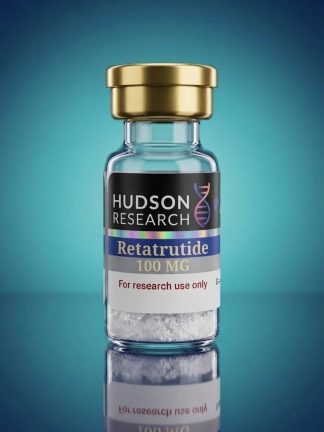
Retatrutide

Price range: $60.00 through $1,620.00
Hudson research lab peptides: Explore retatrutide research, clinical trial updates, safety information, and trusted resources for U.S. research professionals.
Retatrutide Research: A Comprehensive Guide to Scientific Developments
Understanding Retatrutide and Its Role in Research
Retatrutide is an investigational compound attracting considerable attention in metabolic research. Developed by Eli Lilly, this experimental molecule is being studied for its activity at three hormone receptors: GLP-1, GIP, and glucagon. Its distinctive mechanism has made it an important subject in ongoing scientific investigations into obesity, metabolic health, and related conditions.
For researchers, healthcare professionals, and readers seeking reliable scientific information, understanding retatrutide requires more than simply searching for a product listing. It requires accurate information about clinical development, regulatory status, research findings, and product safety.
If you are researching Hudson research lab peptides, this guide provides an informative overview of retatrutide, explains the importance of responsible research practices, and highlights what U.S. readers should know before considering any online claims about its availability.
What Is Retatrutide?
Retatrutide, also known as LY3437943, is an investigational triple hormone receptor agonist. Unlike compounds that target a single receptor, retatrutide activates three distinct receptor pathways associated with metabolic regulation.
Researchers are studying these pathways to better understand their potential effects on body weight, glucose regulation, and other metabolic outcomes. Clinical trials are evaluating the compound’s safety, tolerability, and effectiveness in specific study populations.
Although early and later-stage clinical findings have generated considerable interest, investigational status is not the same as regulatory approval. Results from clinical studies must be interpreted in the context of trial design, participant characteristics, observed adverse events, and the need for further evaluation.
Why Is Retatrutide Receiving Attention?
Interest in retatrutide has grown because of its distinctive triple-receptor mechanism and its ongoing clinical development program. Researchers are examining whether simultaneous activity at the GLP-1, GIP, and glucagon receptors may offer useful insights into metabolic physiology.
Several factors explain the growing interest:
- Triple-receptor activity: Retatrutide provides an opportunity to investigate three hormone receptor pathways within one experimental molecule.
- Clinical research: Studies are examining its potential applications in obesity and associated health conditions.
- Scientific innovation: Its mechanism contributes to broader research into next-generation metabolic therapies.
- Continued evaluation: Clinical trials help investigators assess both potential benefits and possible risks.
These characteristics make retatrutide a noteworthy subject for scientific discussion. However, promising research does not establish that a compound is suitable for unsupervised use or that products advertised online have the same identity, purity, or quality as material used in clinical trials.
Where to Buy Retatrutide in the United States
People searching for where to buy Retatrutide should first understand its current regulatory status. As of October 2026, retatrutide has not received FDA approval for public use and is not available as an ordinary approved prescription medication. Access is limited to eligible participants in authorized clinical trials and other specifically authorized research circumstances.
The U.S. Food and Drug Administration has also stated that retatrutide cannot be used in compounding under federal law. Online listings that claim to offer retatrutide for personal use should therefore be approached with particular caution.
Before relying on a website advertising research peptides, consider these essential questions:
- Does the seller make verifiable claims about its business identity and operations?
- Are product descriptions transparent about intended use and regulatory limitations?
- Are claims about purity, testing, and quality supported by independently verifiable documentation?
- Does the website avoid misleading medical claims and unsupported promises?
- Does the seller clearly distinguish research information from approved medicines?
A professional-looking website, a low advertised price, or a claim of high purity does not establish regulatory authorization or suitability for human use.
Readers searching for Hudson research lab peptides should independently verify the company’s identity, its stated business activities, and any claims about its products. Do not assume that HudsonResearchSlab.com is an official, authorized, or verified source of retatrutide without reliable evidence establishing that status.
Retatrutide Research and Product Quality
Quality assurance is an essential consideration in legitimate laboratory research. Researchers rely on documented material identity, appropriate analytical methods, traceability, and procedures that support reproducible results.
When evaluating a research supplier, it is important to distinguish between a general certificate of analysis, a supplier’s own marketing statements, and independent analytical evidence. These documents are not interchangeable, and none automatically establishes that a substance is approved for medical use.
Research organizations should assess suppliers according to their institutional requirements, applicable regulations, and validated laboratory procedures. Documentation should be evaluated in context rather than accepted solely because a website uses terms such as premium quality, laboratory tested, or high purity.
For retatrutide in particular, research-grade labeling does not establish safety for injection, ingestion, or other human use. Material sold online may differ in composition, concentration, purity, storage history, or contamination profile from material used in controlled clinical investigations.
Safety, Regulatory Status, and Responsible Research
Safety is a critical part of any discussion about investigational peptides. Retatrutide remains under clinical investigation, meaning that its safety profile and potential applications continue to be evaluated.
Products advertised online as retatrutide may present significant uncertainties. Their contents, manufacturing conditions, sterility, and actual concentrations may not be independently established. A disclaimer stating that a product is intended for research purposes does not itself verify the product’s quality or make it appropriate for human use.
For accurate information, consult the FDA’s official drug safety resources, the developer’s clinical research updates, and registered clinical trial records. Individuals interested in potential weight-management treatments should speak with a qualified healthcare professional about currently approved options appropriate to their circumstances.
For researchers, following applicable institutional policies, regulatory requirements, and ethical research practices is essential. Responsible scientific work depends on accurate documentation, transparent reporting, and careful interpretation of evidence rather than unverified claims from online marketplaces.
Choosing Reliable Research Information
When researching Hudson research lab peptides or other laboratory suppliers, prioritize transparency, verifiable business information, and scientifically supportable statements.
A useful research resource should explain the compound’s identity, describe the available evidence accurately, distinguish experimental findings from established clinical outcomes, and disclose relevant limitations.
Be cautious of websites that promise guaranteed weight loss, advertise retatrutide as an approved treatment, suggest that research-grade products are safe for self-administration, or imply that a supplier has official authorization without substantiation.
Reliable information helps readers make better-informed decisions and reduces the risk of confusing experimental research materials with approved medicines.
Frequently Asked Questions About Retatrutide
Is retatrutide FDA approved?
No. As of October 2026, retatrutide remains investigational and has not been approved by the FDA for public use.
Where can I find reliable information about retatrutide?
Consult the FDA, ClinicalTrials.gov, and research updates published by Eli Lilly. These sources provide information about regulatory status, clinical trial activity, and the available scientific evidence.
Can research-grade retatrutide be used for weight loss?
Research-grade labeling does not establish safety or effectiveness for human use. Retatrutide should not be used outside an authorized clinical research setting.
How should I evaluate an online peptide supplier?
Verify the business identity, review the evidence supporting its claims, assess the transparency of its documentation, and confirm that its representations comply with applicable regulations. Do not treat marketing language as proof of product quality or regulatory authorization.
Conclusion: Make Informed Decisions About Retatrutide Research
Retatrutide represents an important area of ongoing metabolic research, with a distinctive triple-receptor mechanism and continued clinical investigation. At the same time, its investigational status makes accurate information and responsible decision-making essential.
Whether you are researching Hudson research lab peptides, investigating retatrutide’s scientific background, or comparing information from online suppliers, prioritize verifiable evidence, transparent documentation, and current regulatory guidance.
The most valuable research resources are those that communicate clearly, distinguish established facts from emerging findings, and place safety and scientific integrity ahead of unsupported commercial promises.
| strength mg | 10mg, 20mg, 30mg, 50mg, 60mg, 100mg |
|---|---|
| QTY | 1 VIAL, 2 VIAL, 3 VIAL, 5 VIAL, 10 VIAL |
Be the first to review “Retatrutide”
Related products
HUDSON LAB
HUDSON LAB
HUDSON LAB

HUDSON LAB
HUDSON LAB

Uncategorized
HUDSON LAB
HUDSON LAB
Reviews
There are no reviews yet.