

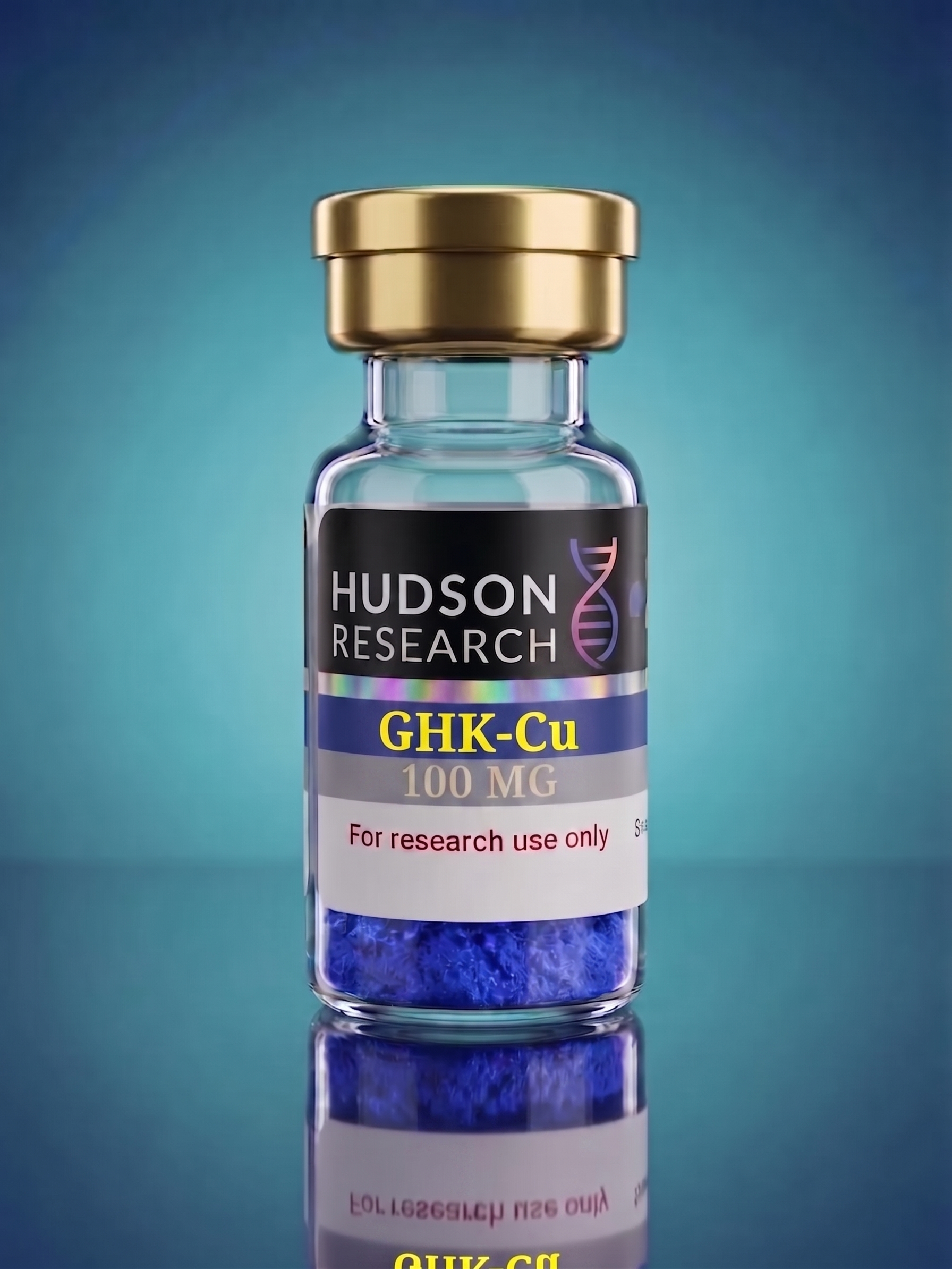
GHK-Cu
Price range: $19.00 through $234.00
Explore Hudson Research Lab peptides and GHK-Cu copper peptide research information, product specifications, and quality considerations.
GHK-Cu Peptide: Research Overview, Properties, and Product Information
Discover GHK-Cu Copper Peptide Research
GHK-Cu is a copper-binding peptide that has attracted scientific interest because of its distinctive molecular structure and its role in several biological research areas. Commonly known as copper peptide GHK-Cu, this compound consists of the tripeptide glycyl-L-histidyl-L-lysine bound to a copper ion. Researchers have investigated its biochemical properties and potential interactions with biological processes, making it an interesting subject in peptide and molecular biology research.
For customers researching Hudson Research Lab peptides, understanding the identity, properties, documentation, and intended application of GHK-Cu is an important first step. Reliable product information should clearly identify the compound, describe its intended research context, and provide relevant specifications that allow qualified researchers to assess whether it is suitable for their laboratory work.
The purpose of this overview is to explain GHK-Cu, summarize its scientific background, and outline the information researchers should examine when evaluating research peptide listings in the United States.
What Is GHK-Cu?
GHK-Cu is a copper complex associated with the naturally occurring tripeptide GHK. The peptide can bind copper ions, producing a complex that researchers study for its biochemical characteristics.
Copper is an essential trace element involved in numerous biological functions, including enzyme activity and cellular processes. Copper-binding molecules are therefore of interest in research examining how metal ions interact with peptides and other biological compounds.
GHK-Cu is frequently discussed in scientific literature concerning skin biology, extracellular matrix research, cellular signaling, and tissue-related biological processes. However, findings from laboratory experiments should not be interpreted as proof that a commercially listed product produces a particular result in humans.
When evaluating GHK-Cu research materials, it is important to distinguish the identity of the compound from claims about its effects. Product identity, analytical testing, formulation, purity, stability, and intended use all influence how a material should be evaluated.
Characteristics of GHK-Cu
GHK-Cu has several characteristics that make it relevant to peptide research.
1. Copper-binding properties
The ability of GHK to bind copper is a defining feature of the complex. This property provides a basis for investigating interactions between peptides and metal ions in controlled scientific settings.
2. Defined peptide structure
GHK-Cu is associated with a specific tripeptide sequence and copper complex. Researchers should verify the identity and chemical characterization of any material they intend to evaluate rather than relying solely on a product name.
3. Scientific research interest
The compound has been examined in published research relating to cellular biology, skin-related processes, and extracellular matrix components. The strength and applicability of evidence vary by experimental model, and further research may be necessary to establish the relevance of individual findings.
4. Importance of analytical documentation
Accurate product characterization is essential when selecting research materials. Documentation may include an analytical certificate, batch or lot identification, a stated purity specification, and information about the analytical methods used. These records help researchers evaluate product consistency and traceability.
Research Areas Associated With GHK-Cu
GHK-Cu has been discussed in several areas of biomedical and biochemical research.
Peptide and copper interactions: Researchers can examine the relationship between peptide structure and copper binding, including how the chemical environment influences the characteristics of a complex.
Cellular biology: Laboratory investigations have explored associations between GHK-Cu and biological signaling pathways. Results should be assessed in the context of the specific experimental conditions and published evidence.
Skin biology research: GHK-Cu appears in scientific discussions involving skin-associated biological processes. These research interests do not establish that every product containing the compound has proven cosmetic or therapeutic benefits.
Extracellular matrix studies: Some research has investigated the relationship between copper peptides and components of the extracellular environment. Interpretation depends on the model, experimental design, and quality of the evidence.
These areas explain why GHK-Cu remains a subject of scientific interest. They should not be presented as guarantees of efficacy, safety, or a specific outcome for an individual.
Evaluating Hudson Research Lab Peptides
When researching Hudson Research Lab peptides, customers should prioritize transparent product information over promotional language. A detailed listing should make it possible to identify the material and understand its documented specifications.
Before relying on any supplier, review the following considerations:
- Product identity: Confirm that the listing identifies GHK-Cu specifically and provides a clear description of the material.
- Analytical documentation: Look for relevant testing records and determine whether the documentation corresponds to the listed batch.
- Purity information: Review how purity is defined, what analytical method was used, and whether the result is supported by appropriate documentation.
- Storage information: Check whether the supplier provides substantiated storage and handling requirements for the specific product.
- Batch traceability: Look for a lot number or other identifier that connects the material to its associated documentation.
- Supplier transparency: Review the seller’s business information, contact details, policies, and explanations of intended product use.
- Regulatory information: Determine whether the product’s labeling and proposed use comply with applicable federal and state requirements.
These checks provide a more reliable foundation for assessing a research material than broad claims about quality or performance.
Where to Find GHK-Cu Product Information
For information about GHK-Cu listings, specifications, and availability, you can review hudsonresearchslab.com, the website specified for this product inquiry. Confirm the site’s business identity, product documentation, terms, and applicable restrictions before relying on any listing. Its status as an official or authorized source has not been independently verified here.
A responsible supplier evaluation should include reviewing the available documentation and determining whether the material is appropriate for the intended lawful research application. A product listing alone is not proof of identity, purity, sterility, regulatory approval, or suitability for human use.
Researchers in the United States should also verify that their intended activities comply with applicable regulations and institutional requirements. Research-use labeling does not, by itself, authorize administration to humans or establish that a compound is approved as a drug or cosmetic ingredient for a particular application.
Why Product Transparency Matters
Choosing research materials based solely on price or advertising can create unnecessary uncertainty. Inconsistent documentation, unclear product identity, and unsupported claims can complicate experimental interpretation.
A reliable, transparent product evaluation begins with verifiable information. Researchers should be able to distinguish documented specifications from marketing statements and identify the evidence supporting claims about a material.
For GHK-Cu, this means checking the exact compound description, available analytical records, batch information, storage guidance, and intended-use restrictions. It also means recognizing the limitations of current evidence and avoiding assumptions that laboratory findings will translate directly into clinical outcomes.
Good documentation supports informed decisions and helps researchers assess whether a material meets the requirements of a particular scientific project.
Important Safety and Regulatory Considerations
GHK-Cu research materials should not automatically be considered suitable for injection, ingestion, or other human use. Research-grade products may not have the safety, quality controls, sterility assurance, or regulatory authorization required for those applications.
Do not interpret experimental findings as medical advice or proof that GHK-Cu treats, prevents, or cures a health condition. Anyone considering a product for a medical or cosmetic application should consult an appropriately qualified professional and verify the product’s legal status and intended use.
Product descriptions should communicate established facts and clearly distinguish them from hypotheses or preliminary research findings.
Final Overview: GHK-Cu and Peptide Research
GHK-Cu is a scientifically interesting copper-binding peptide complex with a history of investigation in biochemical and biological research. Its defined peptide structure, copper-binding characteristics, and presence in published research make it a relevant subject for qualified researchers studying peptide-related processes.
For those exploring Hudson Research Lab peptides, the most valuable next step is to examine product identity, analytical documentation, batch traceability, and intended-use information. Hudsonresearchslab.com is the website identified in this inquiry for reviewing available listings, although its official or authorized status should be independently confirmed.
Ultimately, informed research starts with transparent documentation, realistic expectations, and responsible evaluation. Prioritizing verifiable product information over exaggerated claims helps researchers make better-supported decisions while maintaining appropriate scientific and regulatory standards.
| strength | 50mg, 100mg |
|---|---|
| QTY | 1 VIAL, 2 VIALS, 3VIALS, 5 VIALS, 10 VIALS |
Be the first to review “GHK-Cu”
Related products
HUDSON LAB
Uncategorized

HUDSON LAB
Uncategorized
HUDSON LAB
HUDSON LAB
HUDSON LAB
HUDSON LAB
Reviews
There are no reviews yet.