

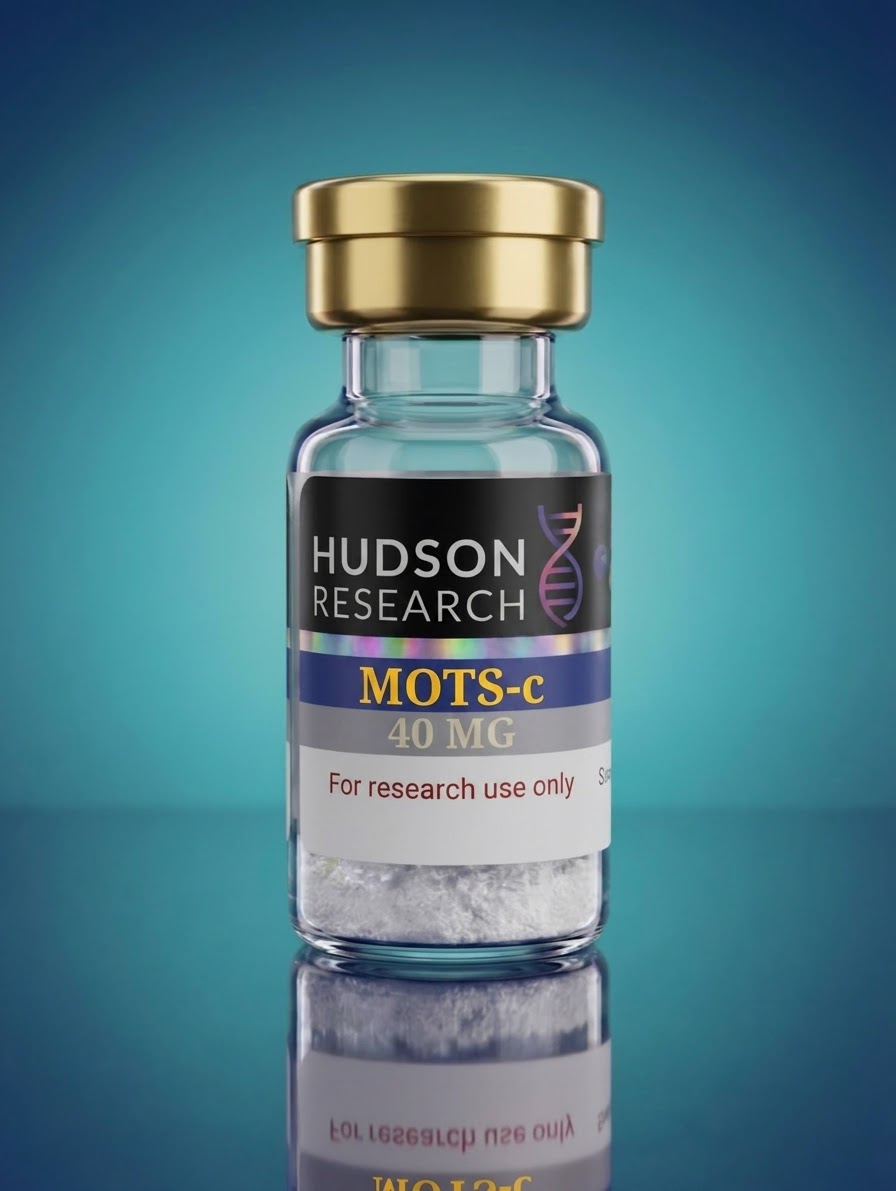
MOTS-C


Price range: $32.00 through $648.00
Hudson research lab peptides Shop MOTS-C research peptide information at HudsonResearchSlab.com. Explore research specifications, product details, and quality documentation.
MOTS-C Research Peptide: Product Information, Research Context, and Quality Considerations
Explore MOTS-C Research Information
MOTS-C is a mitochondrial-derived peptide that has attracted scientific interest in studies examining cellular energy regulation, metabolic signaling, and mitochondrial function. For laboratories and qualified research professionals, understanding the scientific background of MOTS-C is an important starting point when evaluating research materials and their potential applications in controlled experimental settings.
If you are researching MOTS-C peptide information in the United States, it is essential to review product specifications, available analytical documentation, supplier transparency, and the limitations of existing scientific evidence before making a purchasing decision.
For customers researching Hudson research lab peptides, HudsonResearchSlab.com is the website to investigate for current product information and availability. Buyers should independently verify the supplier’s identity, product documentation, and business credentials before placing an order. The website’s official status and the quality of any particular product should not be assumed without verification.
What Is MOTS-C?
MOTS-C is a short peptide encoded by mitochondrial DNA. Unlike proteins encoded by the nuclear genome, mitochondrial-derived peptides have attracted attention because of their relationship to cellular signaling and biological regulation.
Researchers have investigated MOTS-C in connection with pathways involved in energy balance, glucose metabolism, stress responses, and mitochondrial activity. These research areas are relevant to the broader scientific effort to understand how cells respond to changing metabolic conditions.
However, the scientific interest surrounding MOTS-C should not be confused with established clinical benefits. Research findings may differ according to the experimental model, research methodology, and conditions under which a study is conducted. Findings from laboratory or animal research do not automatically establish safety or effectiveness in humans.
For this reason, MOTS-C is best approached as a subject of ongoing scientific investigation rather than as a proven treatment, supplement, or established wellness solution.
Why Is MOTS-C Studied?
MOTS-C has become a subject of scientific interest because mitochondrial function plays an important role in cellular biology. Mitochondria participate in energy production and are involved in multiple signaling processes that influence how cells respond to their environment.
Scientific investigations involving MOTS-C have explored several broad areas.
1. Mitochondrial Signaling
Mitochondria are more than cellular structures associated with energy production. They also participate in signaling processes that help coordinate cellular responses. Researchers study mitochondrial-derived peptides to better understand these interactions and their possible significance in biological systems.
2. Metabolic Research
Some preclinical studies have investigated MOTS-C in relation to metabolic regulation. These investigations contribute to a developing body of scientific literature, but they do not establish that MOTS-C is an effective or safe intervention for metabolic disorders.
3. Cellular Stress Responses
Researchers have also examined the relationship between mitochondrial-derived peptides and cellular responses to environmental and physiological stress. Understanding these mechanisms may contribute to future scientific investigations into mitochondrial biology.
4. Experimental Biology
MOTS-C may be relevant to specialized research projects investigating peptide signaling, cellular function, and mitochondrial pathways. Its suitability for a particular experiment depends on the study design, applicable laboratory standards, and the characteristics of the research material.
These areas explain why MOTS-C appears in scientific discussions. They should not be interpreted as guarantees of a particular biological outcome.
Evaluating MOTS-C Research Peptides
When comparing MOTS-C research materials, a careful evaluation of documentation is more useful than relying on promotional language alone. A professional research-material review should prioritize verifiable specifications and transparent supplier information.
Consider the following factors when evaluating a supplier.
Product identity: Look for a clear product name, an accurate description, and sufficient information to distinguish the material from other peptides or research compounds.
Analytical documentation: Where available, review appropriate analytical reports, such as high-performance liquid chromatography (HPLC) results or mass spectrometry data. Understand what each report measures and whether the documentation applies to the specific product or batch being offered.
Batch traceability: Documentation linking a product to a particular batch can help qualified researchers maintain accurate experimental records.
Storage and handling information: Review any supplied documentation describing material stability, storage requirements, and handling precautions. Requirements depend on the specific material and its documented characteristics.
Supplier transparency: Check the seller’s business identity, contact information, policies, and ability to answer reasonable questions about documentation and product specifications.
Regulatory considerations: Verify the legal status of the material and the requirements that apply to its intended use. Research labeling alone does not establish regulatory compliance or make a product suitable for human administration.
These steps provide a more reliable foundation for supplier evaluation than unsupported claims about purity, effectiveness, or product superiority.
Where to Find MOTS-C Research Peptide Information in the United States
People searching online for MOTS-C research peptides often want to compare product descriptions, technical information, documentation, and supplier policies before deciding which sources merit further evaluation.
For those researching Hudson research lab peptides, HudsonResearchSlab.com is the website identified for checking current MOTS-C listings and related product information.
Before ordering, independently confirm the website’s business identity and legitimacy, examine the documentation associated with the specific product, and determine whether the material is appropriate for the intended lawful research purpose. Do not rely on an advertised designation, product photograph, or unsupported purity statement as a substitute for verifiable evidence.
Availability, shipping eligibility, and applicable restrictions may vary. Buyers should confirm current terms directly with the supplier and comply with relevant federal, state, and local requirements.
No independent verification of the website’s official status, product quality, or current inventory is implied by its inclusion here.
Quality, Transparency, and Responsible Research
Reliable scientific work depends on accurate records, reproducible methods, and a clear understanding of experimental limitations. The same principles apply when evaluating research peptides.
A well-documented research material can make it easier to establish what was evaluated in an experiment, provided that the documentation is authentic, relevant, and sufficiently detailed. Nevertheless, an analytical report does not establish clinical efficacy, demonstrate human safety, or guarantee reproducibility in every experimental setting.
Researchers should also distinguish between a product’s stated specifications and independently established findings. Marketing terms such as premium, advanced, or high purity should not be treated as verified characteristics unless supported by appropriate evidence.
Responsible evaluation means prioritizing transparent documentation over exaggerated promises. It also means acknowledging scientific uncertainty rather than presenting early-stage findings as established medical knowledge.
Important Research and Safety Considerations
MOTS-C remains an investigational subject, and evidence from preclinical research is not equivalent to evidence from well-controlled human clinical trials. Its safety profile, appropriate human use, potential interactions, and long-term effects cannot be assumed from preliminary findings.
This description is intended for scientific information and lawful research evaluation. It does not constitute medical advice, a treatment recommendation, or a claim that MOTS-C is approved for human use. Research materials should not be used for self-experimentation, self-injection, or treatment of medical conditions.
Before considering any investigational compound for a human application, consult a qualified healthcare professional and verify its applicable regulatory status. Research organizations should follow appropriate institutional oversight, laboratory safety procedures, and all relevant legal requirements.
Final Thoughts on MOTS-C Research
MOTS-C offers an interesting subject for investigating mitochondrial-derived peptides and cellular signaling. Its appearance in scientific research reflects continuing interest in understanding the relationship between mitochondria, metabolic pathways, and biological regulation.
For U.S. researchers comparing peptide information and supplier documentation, a careful evaluation of product identity, analytical evidence, traceability, and regulatory requirements is an essential step.
If you are investigating Hudson research lab peptides, visit HudsonResearchSlab.com to review any currently available MOTS-C information, then independently verify the supplier’s credentials and supporting documentation before proceeding. A transparent, evidence-based approach helps researchers make better-informed decisions without confusing experimental interest with proven clinical benefits.
Research responsibly. Evaluate documentation carefully. Prioritize scientific evidence over unsupported claims.
| strength mg | 10MG, 40MG |
|---|---|
| QTY | 1 VIAL, 2 VIALS, 3VIALS, 5 VIALS, 10 VIALS |
Be the first to review “MOTS-C”
Related products

Uncategorized
HUDSON LAB
HUDSON LAB
HUDSON LAB
Uncategorized
HUDSON LAB
HUDSON LAB
HUDSON LAB
Reviews
There are no reviews yet.