

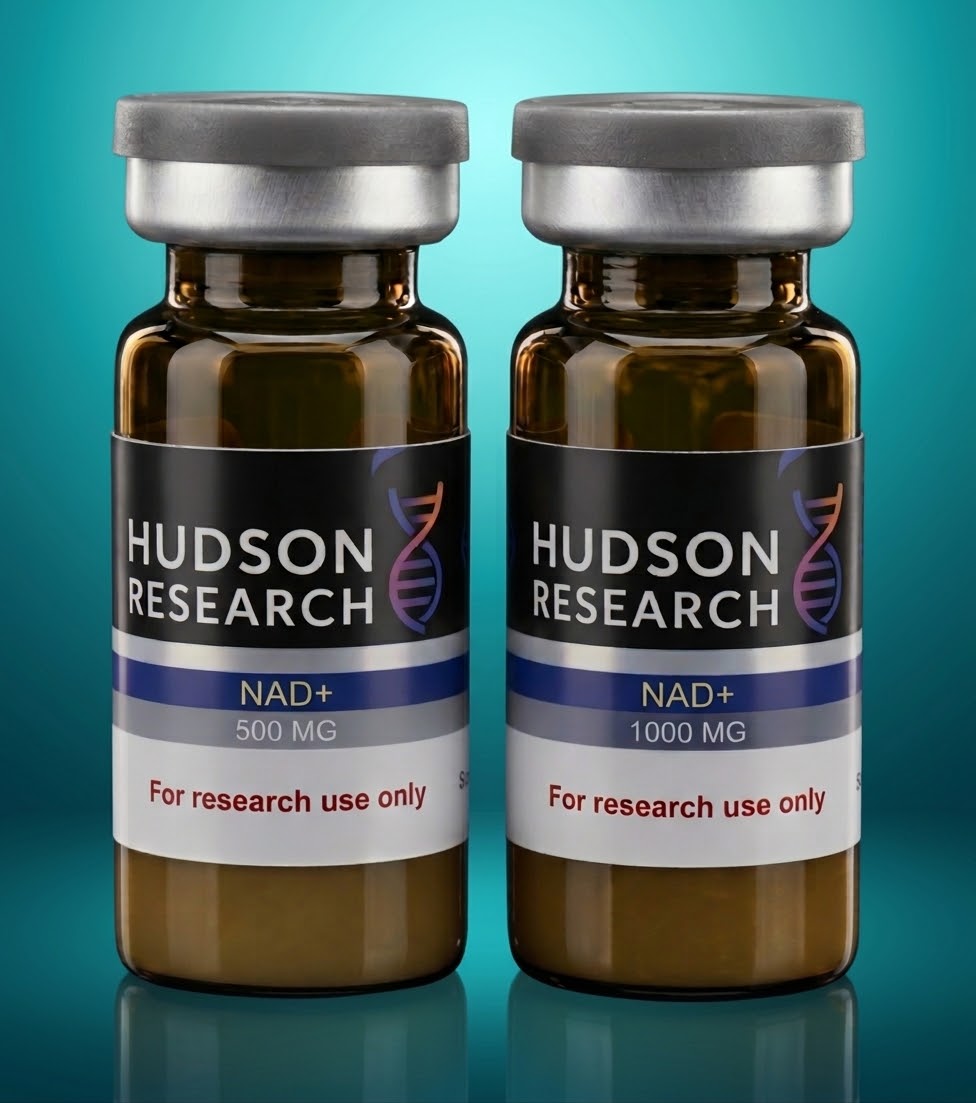
NAD+
Price range: $30.00 through $375.00
Shop NAD+ research compounds at Hudson Research Lab. Explore product specifications, batch documentation, and laboratory research information. Hudson Research Lab peptides
NAD+ Research Compound | Hudson Research Lab Peptides
Explore NAD+ for Laboratory Research
Discover NAD+ research materials with a focus on product transparency, documented specifications, and reliable laboratory sourcing. For researchers, analytical laboratories, and qualified scientific professionals in the United States, understanding the identity and documentation of a research compound is an essential part of selecting appropriate laboratory materials.
NAD+, short for nicotinamide adenine dinucleotide, is a naturally occurring coenzyme involved in cellular biochemical processes. It participates in oxidation-reduction reactions and plays an important role in pathways associated with cellular energy metabolism. Because of these functions, NAD+ remains a subject of scientific interest in laboratory investigations of metabolism, mitochondrial activity, and cellular signaling.
When evaluating Hudson Research Lab peptides and related research compounds, buyers should look beyond product names and marketing language. Verified specifications, batch identification, appropriate documentation, and clear research-use restrictions are important considerations when assessing a laboratory supplier.
Research-use notice: NAD+ products offered as laboratory compounds are not necessarily approved medicines or dietary supplements. This description is intended for laboratory research and analytical information only. Research compounds must not be used for human or veterinary consumption, diagnosis, or treatment.
What Is NAD+?
Nicotinamide adenine dinucleotide is a coenzyme found in living cells. It exists in two principal forms: NAD+ (the oxidized form) and NADH (the reduced form). These forms participate in cellular reactions that transfer electrons and support numerous biochemical processes.
In laboratory research, NAD+ may be studied in connection with:
- Cellular energy metabolism and biochemical pathways.
- Oxidation-reduction reactions.
- Mitochondrial biology and cellular respiration.
- Enzyme activity and metabolic regulation.
- Cellular signaling and related biochemical mechanisms.
- Research examining the relationship between metabolism and cellular stress.
These applications describe areas of scientific investigation rather than guaranteed product outcomes. Results depend on the experimental model, analytical methods, study design, and material specifications.
NAD+ is a small-molecule coenzyme, not a peptide. Although it may appear in a catalog alongside research peptides, accurate product classification helps researchers understand what they are purchasing and which technical documentation is relevant.
Why Product Documentation Matters
Choosing a research compound involves more than comparing product titles or advertised prices. Documentation helps laboratories determine whether a material is suitable for a particular analytical purpose.
When reviewing NAD+ from a supplier, qualified researchers should consider the following factors.
1. Certificate of Analysis
A Certificate of Analysis (COA) provides analytical information associated with a particular batch. Depending on the testing performed, it may report compound identity, assay results, measured purity, and other specifications.
Review the document for the batch or lot number, testing date, analytical method, and issuing laboratory. Confirm that the certificate corresponds to the exact product being considered.
Hudson Research’s published COA page lists NAD+ documentation for products identified as NAD+ 500 and NAD+ 1000. Prospective buyers should review the applicable certificate and confirm that its details match the item offered for sale.
2. Identity and Purity Verification
Product identity and purity are separate analytical considerations. Identity testing helps determine whether the material corresponds to the stated compound, while purity testing estimates the proportion of the target substance under the specified analytical method.
Avoid relying exclusively on broad phrases such as “premium quality,” “ultra-pure,” or “laboratory grade.” Look for supporting documentation and independently assess whether the reported results meet the requirements of the intended research.
3. Traceability and Batch Information
Clear lot identification supports recordkeeping and makes it easier to connect laboratory materials with the correct analytical documents. This is especially important for organizations that maintain formal purchasing records, laboratory procedures, and quality-control documentation.
Before ordering, verify the product name, stated quantity, lot identifier, and associated COA. Do not assume that a certificate for one product size or batch automatically applies to another.
4. Storage and Handling Information
Research compounds should be handled according to the supplier’s verified documentation and applicable laboratory safety procedures. Storage requirements can vary with formulation, packaging, and material stability.
Consult the applicable product documentation and safety data before handling or storing a compound. Do not substitute general online recommendations for material-specific instructions.
NAD+ Research in Cellular Biochemistry
NAD+ is important to multiple biochemical pathways, making it relevant to a broad range of laboratory investigations.
Cellular Energy Metabolism
NAD+ participates in reactions through which cells process nutrients and transfer electrons. Researchers can investigate these reactions to better understand metabolic pathways under defined experimental conditions.
Mitochondrial Research
Mitochondria are central to cellular energy production. Research involving NAD+ may examine biochemical processes associated with mitochondrial metabolism and cellular respiration.
The relevance of NAD+ in these pathways does not establish that a commercially available research compound will improve human energy levels or mitochondrial function.
Enzyme Activity and Cellular Signaling
NAD+ also serves as a substrate for certain enzymes involved in cellular regulation. Laboratory investigations may examine these interactions to characterize specific biochemical mechanisms and their relationships to other cellular processes.
Metabolic Research
Because NAD+ participates in oxidation-reduction reactions, it may be relevant to studies of metabolic regulation and biochemical responses in controlled research models. Experimental conclusions should be based on validated methods and appropriately interpreted results.
Where to Buy NAD+ in the United States
If you are searching online for NAD+ research compounds, prioritize suppliers that provide identifiable product listings, clear research-use restrictions, and accessible analytical documentation.
The Hudson Research website located during our review is:
Hudson Research: hudsonresearchslab.com/
The website includes an NAD+ listing in its COA documentation directory. Before making a purchase, confirm that the exact website address is correct, the product is available, and the relevant batch documentation can be reviewed.
For prospective customers researching Hudson Research Lab peptides, the most useful next step is to compare the published product specifications with the actual certificate of analysis. This approach is more informative than relying on promotional claims alone.
Do not assume that hudsonresearchslab.com is the same business or an authorized official website. Verify the domain directly before placing an order.
What to Check Before Ordering NAD+
Use the following checklist when evaluating a potential laboratory supplier:
- Product identity: Confirm that the listing explicitly identifies NAD+.
- Quantity and specifications: Check the stated amount, formulation, and packaging details.
- Analytical documentation: Review the relevant batch-specific COA.
- Supplier transparency: Look for identifiable contact information and clear purchasing policies.
- Research-use restrictions: Confirm that the material is appropriate for the laboratory’s authorized research purpose.
- Shipping and returns: Read the applicable policies before completing an order.
- Regulatory compliance: Ensure that procurement, handling, and intended laboratory activities comply with applicable requirements.
These checks help establish a more transparent purchasing process and reduce the risk of selecting a product based on incomplete or unverified information.
Frequently Asked Questions About NAD+
What does NAD+ stand for?
NAD+ stands for nicotinamide adenine dinucleotide in its oxidized form. It is a coenzyme involved in numerous cellular biochemical reactions.
Is NAD+ a peptide?
No. NAD+ is a small-molecule coenzyme, not a peptide. It may be listed alongside research peptides in a supplier’s broader research-compound catalog.
Where can I find NAD+ product documentation?
Check the supplier’s product listing and certificate-of-analysis directory. Match the document to the exact product and batch before relying on its reported results.
Can laboratory NAD+ be used as a supplement?
A compound sold exclusively for laboratory research should not be consumed or used as a dietary supplement. Research-use products are not interchangeable with products legally marketed for human consumption.
How should researchers evaluate a supplier?
Review product identification, analytical documentation, batch traceability, safety information, purchasing policies, and compliance requirements. Confirm any claims directly against the available documentation.
Make an Informed Research-Sourcing Decision
Selecting NAD+ for laboratory work begins with accurate product identification, transparent documentation, and a clear understanding of research-use limitations. A well-documented supplier listing can help qualified researchers assess whether a material warrants further technical review.
For those investigating Hudson Research Lab peptides and NAD+ research compounds in the United States, prioritize verifiable specifications and batch-level evidence over unsupported promises. Careful supplier verification supports a more informed, professional, and responsible purchasing decision.
Research-use disclaimer: This content is provided for scientific and educational information. Research compounds are not represented as approved drugs, treatments, or dietary supplements. Products designated for laboratory research must not be used in humans or animals. No therapeutic, diagnostic, anti-aging, or performance-enhancement outcomes are promised.
| strength | 500mg, 1000mg |
|---|---|
| QTY | 1 VIAL, 2 VIALS, 3VIALS, 5 VIALS, 10 VIALS |
Be the first to review “NAD+”
Related products
HUDSON LAB
HUDSON LAB
HUDSON LAB

HUDSON LAB
HUDSON LAB
HUDSON LAB
HUDSON LAB
HUDSON LAB
Reviews
There are no reviews yet.