

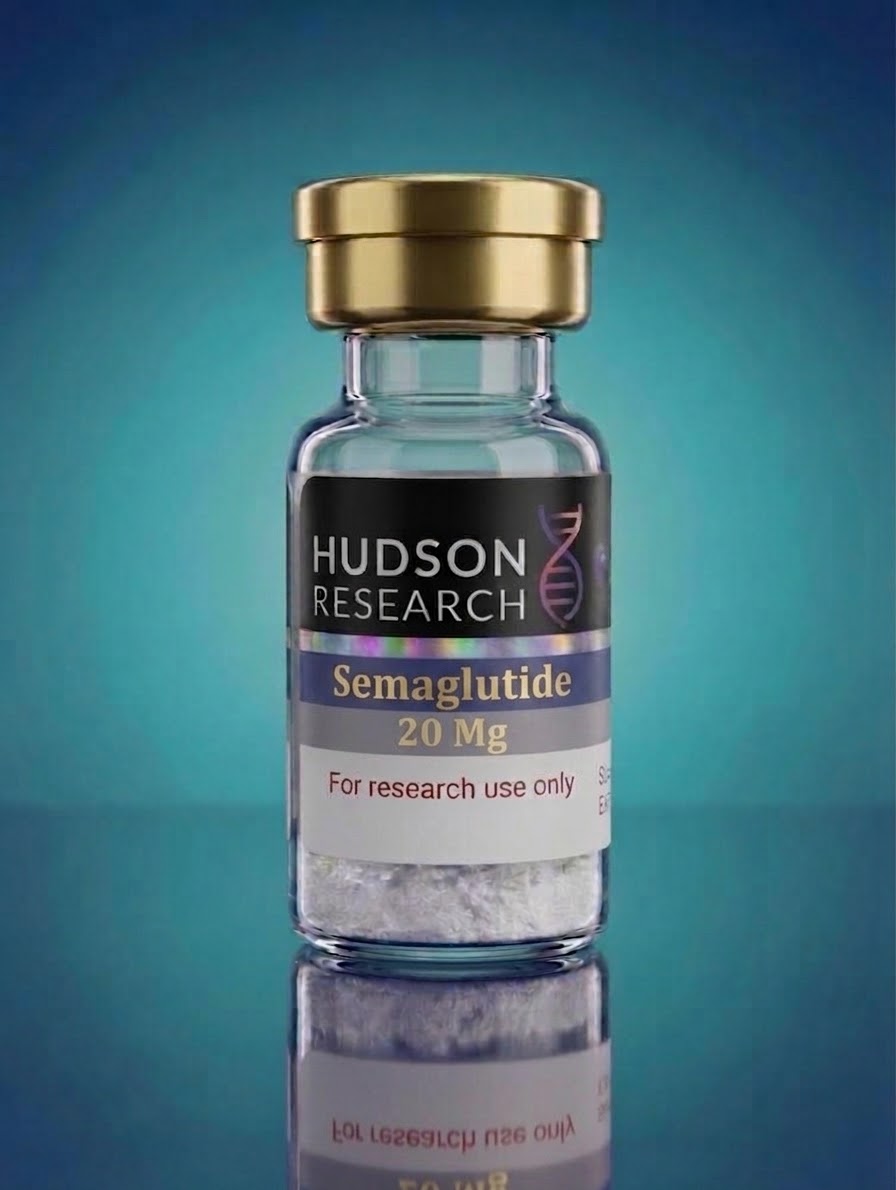


Semaglutide: Research Information, Quality Standards, and Responsible Sourcing
Understanding Semaglutide
Semaglutide is a medication that belongs to a class of drugs known as glucagon-like peptide-1 (GLP-1) receptor agonists. It has important applications in specific medical settings, including the management of type 2 diabetes and, in certain formulations, chronic weight management. Its clinical use depends on the particular product, its approved indication, and the guidance of a qualified healthcare professional.
For people researching Hudson Research Lab peptides, understanding the distinction between prescription medications and products marketed exclusively for laboratory research is an essential first step. Product identity, documentation, intended use, and regulatory status all matter when evaluating a supplier.
What Is Semaglutide?
Semaglutide is a synthetic peptide-based medicine that acts on GLP-1 receptors. These receptors participate in processes involved in blood glucose regulation, appetite, and digestion. Depending on the approved formulation and indication, semaglutide may help improve blood sugar control or support weight management under medical supervision.
Semaglutide products are not interchangeable simply because they contain the same active ingredient. Approved formulations differ in their indications, dosage forms, administration instructions, and labeling. A product marketed for laboratory research should not be assumed to have the quality, safety, effectiveness, or regulatory authorization of an approved prescription medication.
Hudson Research Lab Peptides: What Buyers Should Know
When researching Hudson Research Lab peptides, prospective customers should carefully review the available product documentation and the supplier’s stated terms of sale.
A responsible evaluation should consider:
- Product identification: Confirm the exact compound, formulation, and stated intended use.
- Documentation: Review any available certificate of analysis, batch information, and analytical testing documentation.
- Quality information: Determine which testing methods are used and whether the results can be independently verified.
- Storage and handling: Consult the applicable documentation for any specified laboratory storage and handling requirements.
- Regulatory status: Establish whether a product is intended solely for laboratory research or is an authorized prescription medicine.
- Supplier transparency: Review business contact information, purchasing terms, and policies for addressing product-quality questions.
These checks are valuable because an online product listing or a laboratory test report alone does not establish that a substance is safe or appropriate for human administration.
Why Product Quality and Verification Matter
Product quality is an important consideration when evaluating peptide-related materials. Differences in identity, purity, concentration, contamination, and handling can affect the reliability of laboratory results.
A certificate of analysis may provide information about a particular batch, but its usefulness depends on the tests performed, the methods used, the laboratory responsible, and the authenticity of the document. A stated purity percentage should not be interpreted as proof of sterility, clinical effectiveness, or suitability for human use.
For research organizations, documented quality procedures can help improve traceability and reproducibility. Buyers should avoid assuming that marketing descriptions such as premium quality, high purity, or laboratory grade automatically establish independently verified performance.
Semaglutide Research and Its Scientific Importance
Semaglutide has attracted substantial scientific interest because of its activity at GLP-1 receptors and its role in metabolic health research. Research involving this pathway contributes to a broader understanding of glucose regulation, appetite signaling, and related physiological processes.
However, the interpretation of scientific findings depends on the specific study design, material used, experimental conditions, and applicable research standards. Laboratory observations do not automatically establish clinical outcomes in humans.
Researchers should consult peer-reviewed publications, validated analytical methods, relevant institutional procedures, and applicable regulatory requirements before selecting materials for a study.
Responsible Purchasing Considerations in the United States
Consumers in the United States should distinguish between an authorized prescription medicine and a product sold for research purposes. A research-use designation is not a substitute for FDA approval, and a seller’s website does not independently establish that a product is authorized for medical use.
For patients seeking semaglutide for diabetes management or weight management, the appropriate route is to consult a licensed healthcare professional and obtain any prescribed medication through a legitimate, appropriately licensed pharmacy. The specific product should be consistent with the prescription and applicable FDA requirements.
Be cautious of online offers that promise guaranteed weight loss, claim that a research peptide is equivalent to an approved medicine, or suggest that prescription oversight is unnecessary. These claims can be misleading and may expose buyers to substantial health risks.
Frequently Asked Questions
What is semaglutide used for?
Depending on the approved product and indication, semaglutide is used for type 2 diabetes management and, for certain formulations, chronic weight management. Eligibility and treatment decisions should be assessed by a qualified healthcare professional.
Are research peptides the same as prescription semaglutide?
Not necessarily. A product sold for research may differ in formulation, quality controls, manufacturing standards, regulatory status, and intended use. The ingredient name alone does not establish equivalence to an approved medicine.
How should a peptide supplier be evaluated?
Review product identification, available analytical documentation, supplier transparency, stated intended use, and applicable regulatory requirements. Do not treat an unverified purity claim or certificate as proof of suitability for human administration.
Where can patients obtain semaglutide in the United States?
Patients should consult a licensed healthcare professional and use a legitimate pharmacy that dispenses the prescribed, appropriately authorized medication. Verify the product’s regulatory status rather than relying solely on online advertising.
Final Considerations
Research into semaglutide and GLP-1 receptor signaling continues to contribute to scientific understanding of metabolic health. For anyone evaluating Hudson Research Lab peptides, careful attention to documentation, product identity, and regulatory status is more valuable than unsupported marketing promises.
Prioritize verified information, transparent documentation, and responsible sourcing. For medical treatment, rely on qualified healthcare professionals and authorized prescription channels rather than products labeled exclusively for laboratory research.
| STRENGTH mg | 10mg, 20mg |
|---|---|
| QTY | 1 VIAL, 2 VIALS, 3VIALS, 5 VIALS, 10 VIALS |
Be the first to review “Semaglutide”
Related products

HUDSON LAB
HUDSON LAB
HUDSON LAB
HUDSON LAB
HUDSON LAB
HUDSON LAB
HUDSON LAB
HUDSON LAB
Reviews
There are no reviews yet.