

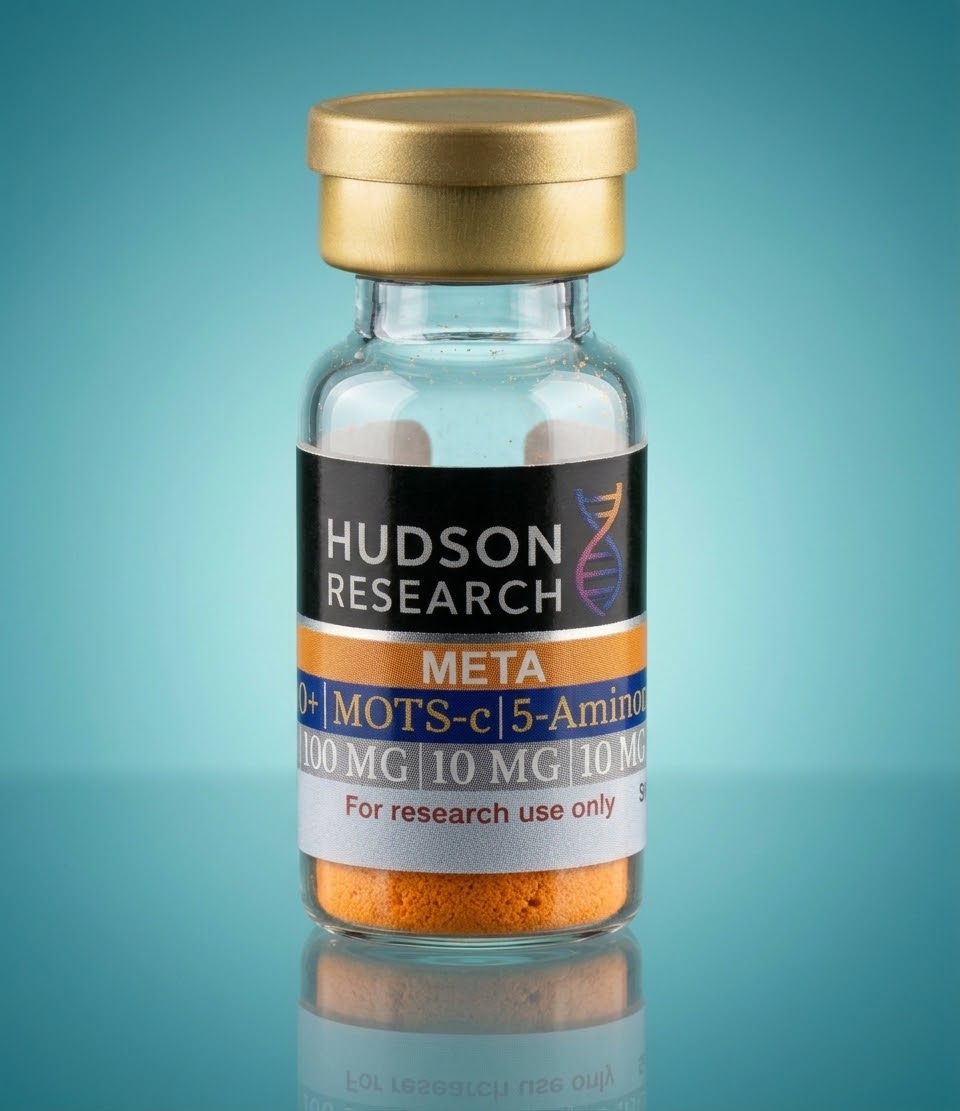
NAD+ | MOTS-C | 5-AMINO-1MQ

Price range: $70.00 through $504.00
Discover Hudson research lab peptides, including NAD+, MOTS-C, and 5-Amino-1MQ. Explore research product information at hudsonresearchslab.com.
NAD+ | MOTS-C | 5-Amino-1MQ — Hudson Research Lab Peptides
Explore NAD+, MOTS-C, and 5-Amino-1MQ at Hudson Research Lab
Are you searching for information about NAD+, MOTS-C, and 5-Amino-1MQ for laboratory research? Hudson Research Lab provides a starting point for exploring these compounds and learning more about their research context, product information, and potential applications in controlled scientific investigations.
As interest in cellular biology, metabolic pathways, mitochondrial function, and molecular research continues to grow, these compounds have attracted attention across different areas of scientific inquiry. Each has a distinct chemical identity and research background, making it important to understand their individual characteristics rather than treating them as interchangeable products.
For researchers seeking information about these compounds, Hudson research lab peptides is a relevant search phrase when exploring the Hudson Research Lab catalog. Visit hudsonresearchslab.com to review available product listings, specifications, and documentation. Confirm the seller’s identity, product availability, and applicable research-use conditions before placing an order.
Whether you are comparing research compounds or organizing a laboratory purchasing process, accurate product information and responsible sourcing should remain essential priorities.
1. NAD+: A Compound of Interest in Cellular Research
Nicotinamide adenine dinucleotide, commonly known as NAD+, is a naturally occurring coenzyme involved in numerous cellular processes. It participates in oxidation-reduction reactions and supports biochemical pathways involved in energy metabolism and cellular function.
NAD+ is widely studied in molecular biology, biochemistry, and related scientific disciplines. Researchers investigating cellular metabolism may examine its role in biochemical reactions, its relationship with NADH, and the mechanisms through which cells maintain NAD+ availability.
Its importance in basic biological research makes NAD+ a recognizable subject within the broader field of cellular science.
When evaluating NAD+ products for laboratory purposes, researchers should examine the stated chemical identity, purity specifications, analytical documentation, storage recommendations, and handling instructions. These details help establish whether a product is appropriate for a particular experimental protocol.
It is also important to distinguish established biochemical knowledge about NAD+ from claims made about commercial products. Research into a biological molecule does not automatically demonstrate that a particular formulation is effective or suitable for human consumption.
Hudson Research Lab’s product information, where available, should be reviewed carefully to determine the specifications and intended research applications of any listed NAD+ material.
2. MOTS-C: Exploring Mitochondrial Research
MOTS-C is a mitochondrial-derived peptide studied in experimental research relating to cellular signaling and metabolic regulation. It has attracted scientific interest because of its relationship to mitochondria and the complex biological pathways involved in cellular energy management.
Mitochondria play important roles in cellular metabolism. Investigating mitochondrial-derived molecules can help researchers explore how cells respond to different physiological and environmental conditions.
MOTS-C has been examined in preclinical research, including investigations involving metabolic pathways. However, findings from laboratory or animal studies should not be interpreted as proof of established clinical benefits in humans.
For laboratory researchers, the quality of product documentation is particularly important when evaluating MOTS-C. Relevant information may include the compound’s stated sequence or identity, purity testing, analytical methods, batch information, and recommended laboratory storage conditions.
These details can help researchers assess material consistency and determine whether available documentation supports their intended experimental use.
Anyone comparing MOTS-C products should also distinguish between research findings, preliminary hypotheses, and clinically established evidence. This careful approach supports more reliable scientific evaluation and helps prevent exaggerated claims from influencing research decisions.
3. 5-Amino-1MQ: A Subject of Metabolic Research
5-Amino-1MQ is a small-molecule research compound investigated for its interaction with nicotinamide N-methyltransferase, commonly abbreviated as NNMT. Unlike MOTS-C, which is a peptide, 5-Amino-1MQ is not itself a peptide.
NNMT is an enzyme involved in the metabolism of nicotinamide and other related compounds. Researchers have explored NNMT-related pathways to better understand their potential relevance to cellular metabolism and metabolic regulation.
This area of research remains scientifically complex. Experimental findings involving 5-Amino-1MQ should not be presented as proof of weight-loss effects, improved physical performance, extended lifespan, or other therapeutic outcomes in humans.
The compound’s research status makes accurate labeling and responsible handling particularly important. Researchers should verify the product identity, analytical documentation, purity information, and any applicable laboratory safety requirements before considering a material for experimental work.
Understanding the distinction between NAD+, MOTS-C, and 5-Amino-1MQ is essential when comparing these products. Although all three may appear in discussions about cellular or metabolic research, they have different chemical characteristics and should be evaluated independently.
Why Accurate Product Information Matters
Choosing research materials requires more than recognizing a compound name. Product documentation, supplier transparency, and appropriate handling procedures are important elements of responsible laboratory purchasing.
When reviewing Hudson Research Lab listings, consider the following factors:
- Product identity: Confirm that the listed compound matches the material required for your research.
- Purity specifications: Review the stated purity and the analytical method used to determine it.
- Batch documentation: Check whether batch-specific information or a certificate of analysis is available.
- Storage requirements: Follow the manufacturer’s documented storage and handling instructions.
- Packaging information: Verify the stated quantity, packaging details, and product labeling.
- Research-use restrictions: Confirm the intended use and applicable legal or institutional requirements.
- Supplier transparency: Review the seller’s business information, customer support details, shipping policies, and product documentation.
These considerations are valuable when comparing research materials from different sources. A product description alone is not a substitute for independent verification or appropriate analytical testing.
Where to Find NAD+, MOTS-C, and 5-Amino-1MQ
For information about product availability, specifications, and purchasing requirements, visit hudsonresearchslab.com and review the current catalog.
Before completing a purchase, verify the website’s ownership and seller credentials, confirm the exact product listing, and review the documentation provided for the specific compound and batch. Availability, product specifications, and purchasing terms may change, so consult the current listing rather than relying on outdated descriptions.
Researchers in the United States should also confirm that the intended acquisition and use comply with applicable federal and state requirements, institutional policies, and laboratory safety procedures.
Suggested call to action:
Explore NAD+, MOTS-C, and 5-Amino-1MQ product information at hudsonresearchslab.com. Review available specifications and research documentation to make an informed decision about your laboratory requirements.
Responsible Research and Safety Considerations
NAD+, MOTS-C, and 5-Amino-1MQ have different properties and evidence bases. They should not be assumed to provide the same biological effects or be suitable for the same experimental procedures.
Research compounds are not automatically approved medicines, dietary supplements, or products suitable for personal use. The safety, quality, and effectiveness of a particular product depend on factors that cannot be established by marketing copy alone.
Do not interpret preliminary research findings as a recommendation for self-administration or as a substitute for qualified medical advice. Products intended for laboratory research should be handled according to their labeling, safety documentation, and applicable institutional requirements.
Researchers should consult appropriate scientific literature and qualified professionals when assessing experimental protocols, chemical handling, and potential hazards.
Frequently Asked Questions
What are NAD+, MOTS-C, and 5-Amino-1MQ?
NAD+ is a cellular coenzyme involved in biochemical reactions. MOTS-C is a mitochondrial-derived peptide studied in experimental biology. 5-Amino-1MQ is a small-molecule research compound investigated in relation to NNMT. They are chemically distinct materials.
Where can I find Hudson Research Lab product information?
Visit hudsonresearchslab.com to review the current catalog and any available product specifications. Verify the website’s seller identity and documentation before purchasing.
What should I check before ordering research compounds?
Review the compound identity, purity specifications, batch documentation, storage requirements, intended use, and applicable legal restrictions. Confirm that the material meets the requirements of your research protocol.
Are these compounds approved treatments for humans?
This product description does not establish that any of these compounds is approved for human treatment. Approval status and permitted uses should be verified through authoritative regulatory sources for the specific compound and product.
Final Summary
NAD+, MOTS-C, and 5-Amino-1MQ represent different subjects of scientific investigation involving cellular biochemistry, mitochondrial biology, and metabolic pathways. Understanding their differences, reviewing reliable documentation, and avoiding unsupported claims are essential parts of responsible research.
For current product listings and available documentation, visit hudsonresearchslab.com. Verify all relevant product details and research-use conditions before making a purchasing decision.
Important: This description is intended for scientific and informational purposes. It does not establish product quality, seller authorization, clinical efficacy, or suitability for human use.
| QTY | 1 VIAL, 2 VIALS, 3VIALS, 5 VIALS, 10 VIALS |
|---|
Be the first to review “NAD+ | MOTS-C | 5-AMINO-1MQ”
Related products
HUDSON LAB
HUDSON LAB
HUDSON LAB
HUDSON LAB
HUDSON LAB
HUDSON LAB
HUDSON LAB
Uncategorized
Reviews
There are no reviews yet.