

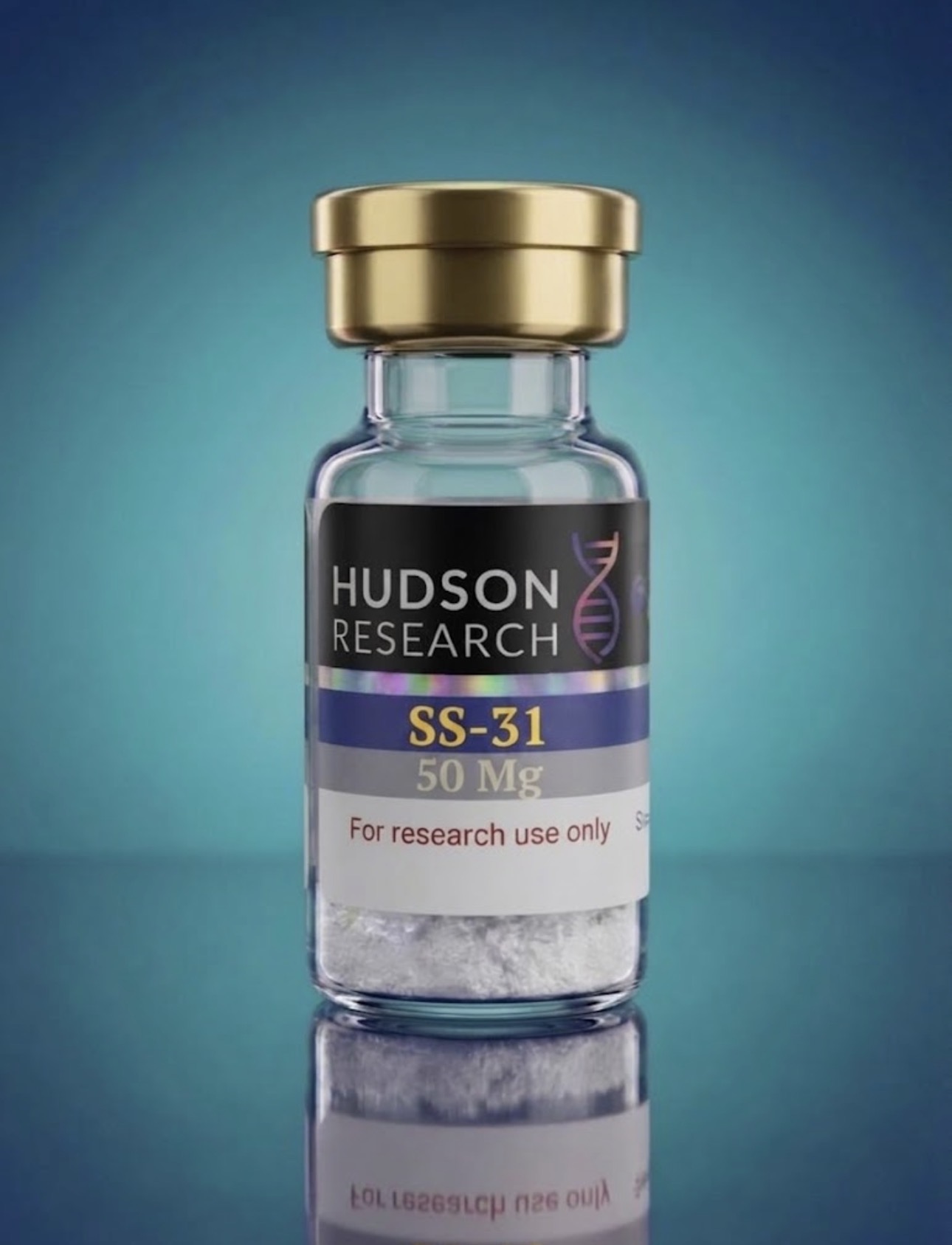

SS-31 Peptide: Research Overview, Potential Applications, and Important Considerations
Hudson research lab peptides SS-31 Peptide: Understanding Its Role in Mitochondrial Research
SS-31, also known as elamipretide, is a synthetic peptide investigated for its potential effects on mitochondrial function and cellular energy production. As scientific interest in mitochondrial health continues to grow, SS-31 has attracted attention in laboratory research exploring how cells maintain energy, respond to oxidative stress, and preserve normal cellular processes.
For researchers investigating mitochondrial biology, SS-31 represents an interesting compound because of its proposed interaction with cardiolipin, a phospholipid found in the inner mitochondrial membrane. This interaction has been studied for its potential influence on mitochondrial membrane stability and cellular energy processes.
People searching for Hudson research lab peptides, SS-31 peptide research, or elamipretide information should understand the distinction between scientific investigation and established clinical evidence. Although preliminary research has generated interest, experimental findings do not automatically establish safety or effectiveness in humans.
What Is SS-31 Peptide?
SS-31 is a mitochondria-targeting tetrapeptide studied for its potential role in supporting mitochondrial function. It is also known by the research name elamipretide and has been investigated in preclinical studies and clinical trials involving conditions associated with mitochondrial dysfunction.
Mitochondria are specialized structures within cells that contribute to energy production and several other essential biological processes. Their activity is closely connected to cellular metabolism, oxidative balance, and the maintenance of normal physiological functions.
Because mitochondrial dysfunction is associated with a range of biological and medical conditions, researchers continue to investigate compounds that may influence mitochondrial activity. SS-31 is one such compound, although its clinical applications remain subject to evidence, regulatory status, and the results of ongoing scientific evaluation.
How SS-31 Is Studied in Mitochondrial Research
One major area of SS-31 research concerns cardiolipin, a lipid that helps maintain the organization and function of the inner mitochondrial membrane.
Researchers have investigated whether interactions involving SS-31 and cardiolipin may influence mitochondrial membrane properties, electron transport, and processes associated with oxidative stress.
These mechanisms are scientifically significant because mitochondria participate in producing adenosine triphosphate (ATP), the molecule cells use to transfer energy for numerous biological activities.
However, mitochondrial function is complex. Findings observed in isolated cells or animal models may not translate directly into meaningful clinical outcomes in humans. Further investigation is necessary to establish the relevance of proposed mechanisms across different conditions and populations.
Potential Research Applications of SS-31
Scientific investigations have explored SS-31 in several areas related to mitochondrial biology.
1. Mitochondrial membrane function
Studies have examined the relationship between SS-31, cardiolipin, and mitochondrial membrane organization. These investigations may help clarify how mitochondrial structures contribute to cellular function.
2. Oxidative stress pathways
Oxidative stress occurs when the production of reactive molecules exceeds the body’s ability to manage them effectively. Researchers have investigated whether SS-31 influences processes associated with mitochondrial oxidative stress.
The extent and clinical significance of these effects depend on the experimental setting and available evidence.
3. Cellular energy production
Mitochondria play a central role in ATP production. Research into SS-31 has examined mitochondrial bioenergetics and related processes that influence how cells generate and use energy.
These findings remain part of a developing scientific field and should not be interpreted as proof that SS-31 improves energy levels or physical performance in healthy individuals.
4. Investigation of mitochondrial disorders
SS-31 has been investigated in clinical research involving certain conditions associated with mitochondrial dysfunction. Researchers continue to evaluate its potential therapeutic relevance, safety profile, and clinical outcomes.
An investigational compound should not be considered an established treatment solely because it has demonstrated promising results in preliminary studies.
Why Scientific Quality and Product Verification Matter
When researching SS-31 or other experimental peptides, evaluating the quality of available information is essential.
Searches for Hudson research lab peptides may lead to websites discussing research compounds, product specifications, or laboratory materials. Before relying on any supplier information, researchers should independently verify the business’s identity, product documentation, and applicable regulatory requirements.
Important considerations include:
- Identity verification: Determine whether documentation establishes the identity of the compound being described.
- Analytical testing: Review available analytical reports and assess whether the testing laboratory and methods can be independently verified.
- Purity documentation: Understand what a stated purity percentage measures and which impurities or contaminants the analysis covers.
- Traceability: Look for appropriate batch identification, documentation, and handling information.
- Regulatory compliance: Confirm that the material’s intended use and distribution comply with applicable federal and state requirements.
- Evidence quality: Distinguish peer-reviewed findings and registered clinical trials from supplier descriptions and unsupported marketing claims.
A certificate of analysis can provide useful information, but its existence alone does not establish that a product is safe for human use, suitable for a particular experiment, or approved as a medicine.
SS-31 Safety and Regulatory Considerations
SS-31 is associated with an investigational therapeutic research program. Its approval status and permitted uses should be checked against current information from the U.S. Food and Drug Administration and other relevant regulatory authorities.
Materials marketed for laboratory research should not automatically be regarded as approved medicines or products suitable for human administration.
Potential risks, appropriate administration, interactions, and long-term safety cannot be established from promotional product descriptions alone. Anyone considering an investigational treatment should consult a qualified healthcare professional and rely on appropriate clinical and regulatory guidance.
Researchers should also follow institutional policies, laboratory safety procedures, and applicable rules governing the acquisition and use of experimental compounds.
Where to Find Reliable Information About SS-31
For individuals researching SS-31 in the United States, useful sources include peer-reviewed scientific publications, clinical trial records, and official regulatory information.
The following resources can help support a more informed review:
- PubMed: https://pubmed.ncbi.nlm.nih.gov/ — Search for peer-reviewed research on SS-31, elamipretide, and mitochondrial function.
- ClinicalTrials.gov: https://clinicaltrials.gov/ — Review registered studies, trial status, eligibility criteria, and reported results.
- U.S. Food and Drug Administration: https://www.fda.gov/ — Consult official information about drug development, approvals, and regulatory requirements.
For HudsonResearchLab.com specifically, verify its business identity, product documentation, and applicable regulatory status independently. This description does not establish that the website is an official manufacturer, authorized distributor, or verified source of SS-31.
Final Perspective on SS-31 Research
SS-31 is a scientifically interesting peptide because of its potential relationship with cardiolipin, mitochondrial membrane function, and cellular energy processes. These research areas provide opportunities to investigate important questions about mitochondrial biology.
Nevertheless, promising mechanisms and preliminary findings should not be confused with established clinical benefits. Careful evaluation of published evidence, laboratory documentation, safety considerations, and regulatory status is essential when researching SS-31.
For readers exploring Hudson research lab peptides, an evidence-first approach provides a more reliable foundation for understanding SS-31 than unsupported efficacy claims or unverified purchasing recommendations.
Disclaimer: This content is for informational and educational purposes only. It is not medical advice, a treatment recommendation, or confirmation that any supplier or product is approved for human use.
| Strength mg | 10mg, 50mg |
|---|---|
| qty | 1 VIAL, 2 VIALS, 3VIALS, 5 VIALS, 10 VIALS |
Be the first to review “SS-31”
Related products
HUDSON LAB
HUDSON LAB
HUDSON LAB
HUDSON LAB
HUDSON LAB
HUDSON LAB
HUDSON LAB
HUDSON LAB
Reviews
There are no reviews yet.