

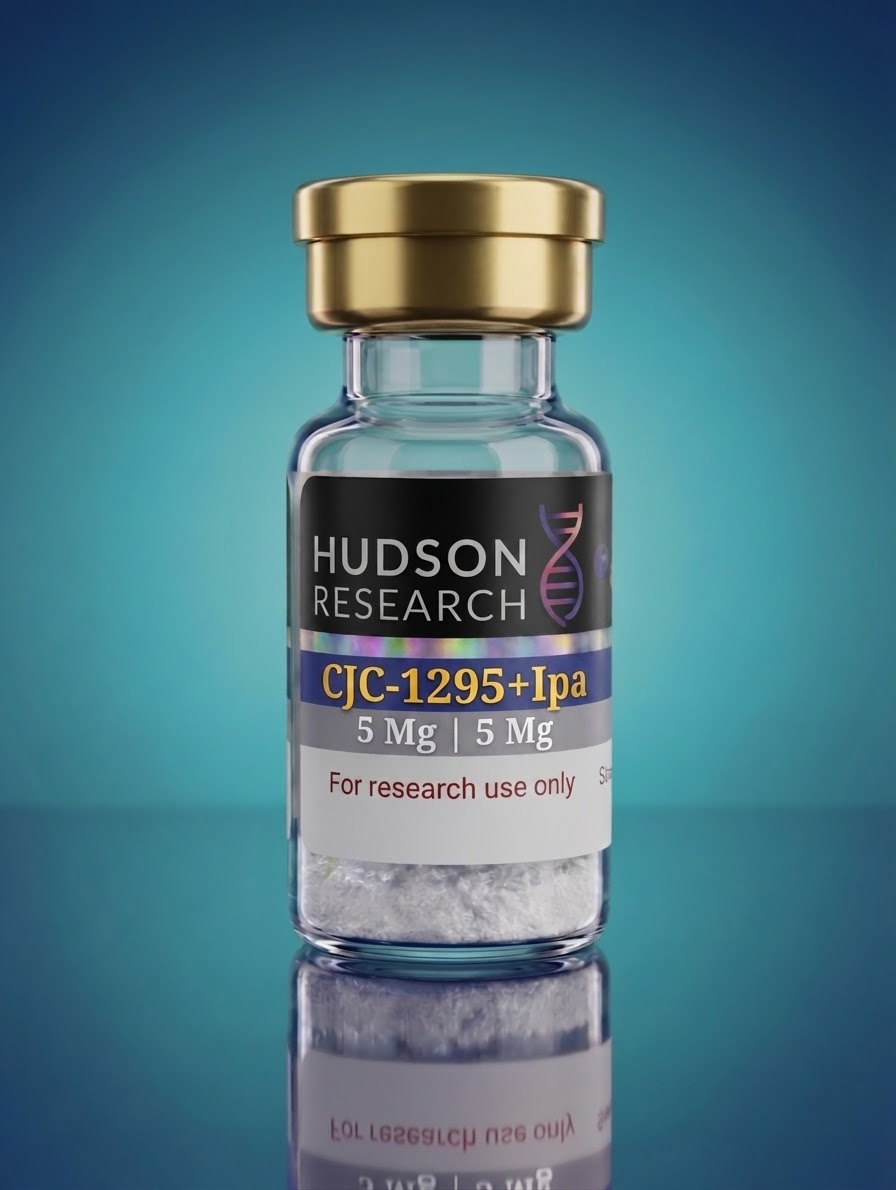
CJC-1295 no DAC + Ipa
Price range: $55.00 through $396.00
Hudson research lab peptides: Explore CJC-1295 no DAC + ipamorelin research information, quality considerations, and responsible peptide sourcing.
CJC-1295 No DAC + Ipamorelin (Ipa): Research Overview
CJC-1295 No DAC + Ipa: Understanding This Research Peptide Combination
Hudson research lab peptides CJC-1295 no DAC + Ipa is a peptide combination frequently discussed in scientific and biochemical research contexts. The combination pairs a modified growth hormone-releasing hormone (GHRH) analogue commonly called CJC-1295 without Drug Affinity Complex (DAC) with ipamorelin, a growth hormone secretagogue studied for its interaction with ghrelin receptors.
Interest in research peptides has grown among laboratory professionals, biotechnology researchers, and individuals seeking to understand peptide chemistry. However, it is essential to distinguish laboratory research from approved human medical applications. Research compounds should not automatically be considered safe, effective, or suitable for personal use.
For anyone researching Hudson research lab peptides, understanding compound identity, analytical documentation, supplier transparency, and applicable regulations is an important starting point.
What Is CJC-1295 No DAC?
CJC-1295 no DAC is commonly used to describe a modified peptide based on growth hormone-releasing hormone. The term “no DAC” distinguishes formulations without the Drug Affinity Complex associated with longer-acting versions of CJC-1295.
The distinction matters because molecular modifications can influence a peptide’s stability, interactions, and duration of activity. Nevertheless, terminology used in commercial listings is not sufficient to establish the precise identity, purity, or performance of a particular material.
Researchers evaluating this compound should consider its documented amino acid sequence, analytical characterization, storage requirements, and intended research application. Independent laboratory testing and traceable documentation are more informative than promotional descriptions alone.
What Is Ipamorelin (Ipa)?
Ipamorelin is a synthetic peptide studied for its activity at the ghrelin receptor, also known as the growth hormone secretagogue receptor. Research into this receptor involves complex physiological signaling pathways.
Although ipamorelin is discussed in connection with growth hormone release, that association does not establish that an unapproved peptide product is safe or effective for bodybuilding, recovery, weight management, anti-aging, or other personal health goals.
Claims about these outcomes should be assessed against reliable scientific evidence and relevant regulatory guidance. Laboratory findings should not be interpreted as proof of clinical benefits in humans.
Why Researchers Examine the CJC-1295 No DAC + Ipa Combination
Research interest in peptide combinations may involve questions about receptor signaling, molecular interactions, experimental reproducibility, and differences between individual compounds.
When evaluating a combination such as CJC-1295 no DAC + ipamorelin, researchers should avoid assuming that two compounds will necessarily produce a predictable combined effect. The scientific characteristics of each substance, experimental conditions, and available evidence must be considered independently.
A credible research assessment should distinguish established findings from preliminary observations and unsupported commercial claims.
Evaluating Hudson Research Lab Peptides
When researching Hudson research lab peptides or any other peptide supplier, buyers and laboratory professionals should prioritize verifiable product information over persuasive marketing language.
Important considerations include:
- Product identity: Look for clear compound names and appropriate chemical identification.
- Analytical documentation: Determine whether a certificate of analysis is available and whether it identifies the tested batch.
- Testing transparency: Review the stated analytical methods and the qualifications of the laboratory performing the tests.
- Purity reporting: Understand what a reported purity percentage measures and what it does not establish.
- Traceability: Check for batch numbers, handling information, and documented storage requirements.
- Regulatory compliance: Verify applicable U.S. federal and state requirements for the substance and its intended use.
- Responsible communication: Be cautious of claims promising guaranteed hormonal changes, muscle growth, fat loss, faster recovery, or other medical outcomes.
A certificate of analysis should not be treated as automatic proof of sterility, safety, authenticity, or suitability for human administration. Those are distinct questions that require appropriate evidence.
Where to Research CJC-1295 No DAC + Ipamorelin in the United States
People searching for CJC-1295 no DAC + Ipa in the United States should begin by identifying the intended purpose of the material and the rules that apply to that use.
For laboratory research, evaluate the supplier’s documentation, chemical identification, testing procedures, and applicable restrictions before making procurement decisions. The existence of a product listing or online storefront does not establish regulatory approval or verify that a company is an authorized source.
If you are considering Hudson Research Lab as a supplier, verify its business identity, product documentation, and any claims of official authorization directly through independently verifiable records. Do not assume that a website is an official or approved source solely because it uses research-related terminology.
For human health concerns, consult a qualified healthcare professional rather than relying on online peptide marketing. The safety profile, appropriate use, and clinical benefits of experimental peptide combinations cannot be established by a product description.
Quality, Safety, and Responsible Research
Responsible peptide research depends on accurate identification, appropriate laboratory practices, reliable records, and compliance with relevant requirements.
Peptides may be sensitive to environmental conditions, and improper handling can affect material integrity. Even when a sample has been analytically characterized, its suitability depends on the intended experiment and the evidence supporting that application.
CJC-1295 and ipamorelin should not be assumed to be approved medicines simply because they are advertised online. Their regulatory status and permitted uses should be checked against current U.S. Food and Drug Administration guidance and other applicable requirements.
Products labeled “for research use only” are not thereby established as safe for human consumption or injection. Consumers should be especially cautious of sellers that imply otherwise or make extraordinary promises without credible supporting evidence.
Frequently Asked Questions
What does “no DAC” mean in CJC-1295 no DAC?
“No DAC” refers to a version described as lacking the Drug Affinity Complex associated with certain longer-acting CJC-1295 formulations. Product identity should be confirmed through appropriate technical documentation.
What does Ipa mean?
“Ipa” is a common abbreviation for ipamorelin, a synthetic peptide studied for its activity at the ghrelin receptor.
Are CJC-1295 no DAC and ipamorelin FDA-approved for human use?
They should not be assumed to be FDA-approved treatments. Consult current FDA information for the specific substance, formulation, and intended use.
How can a researcher evaluate peptide quality?
Review batch-specific analytical documentation, compound identity, testing methods, traceability, storage information, and applicable regulatory requirements. No single document guarantees overall product safety.
Where can I find reliable information about peptide research?
Useful starting points include peer-reviewed scientific publications, PubMed, official FDA resources, and qualified research institutions. These sources can help distinguish established evidence from preliminary findings and unsupported claims.
Final Considerations
CJC-1295 no DAC + ipamorelin is a peptide combination that warrants careful evaluation of its chemistry, available evidence, and regulatory context. For people researching Hudson research lab peptides, a transparent, evidence-based approach is more valuable than relying on bold marketing promises.
Prioritize verifiable documentation, independent evidence, and responsible research practices when evaluating peptide-related information in the United States.
| QTY | 1 VIAL, 2 VIALS, 3VIALS, 5 VIALS, 10 VIALS |
|---|
Be the first to review “CJC-1295 no DAC + Ipa”
Related products
HUDSON LAB
HUDSON LAB
HUDSON LAB
HUDSON LAB
HUDSON LAB
HUDSON LAB
HUDSON LAB
HUDSON LAB
Reviews
There are no reviews yet.