

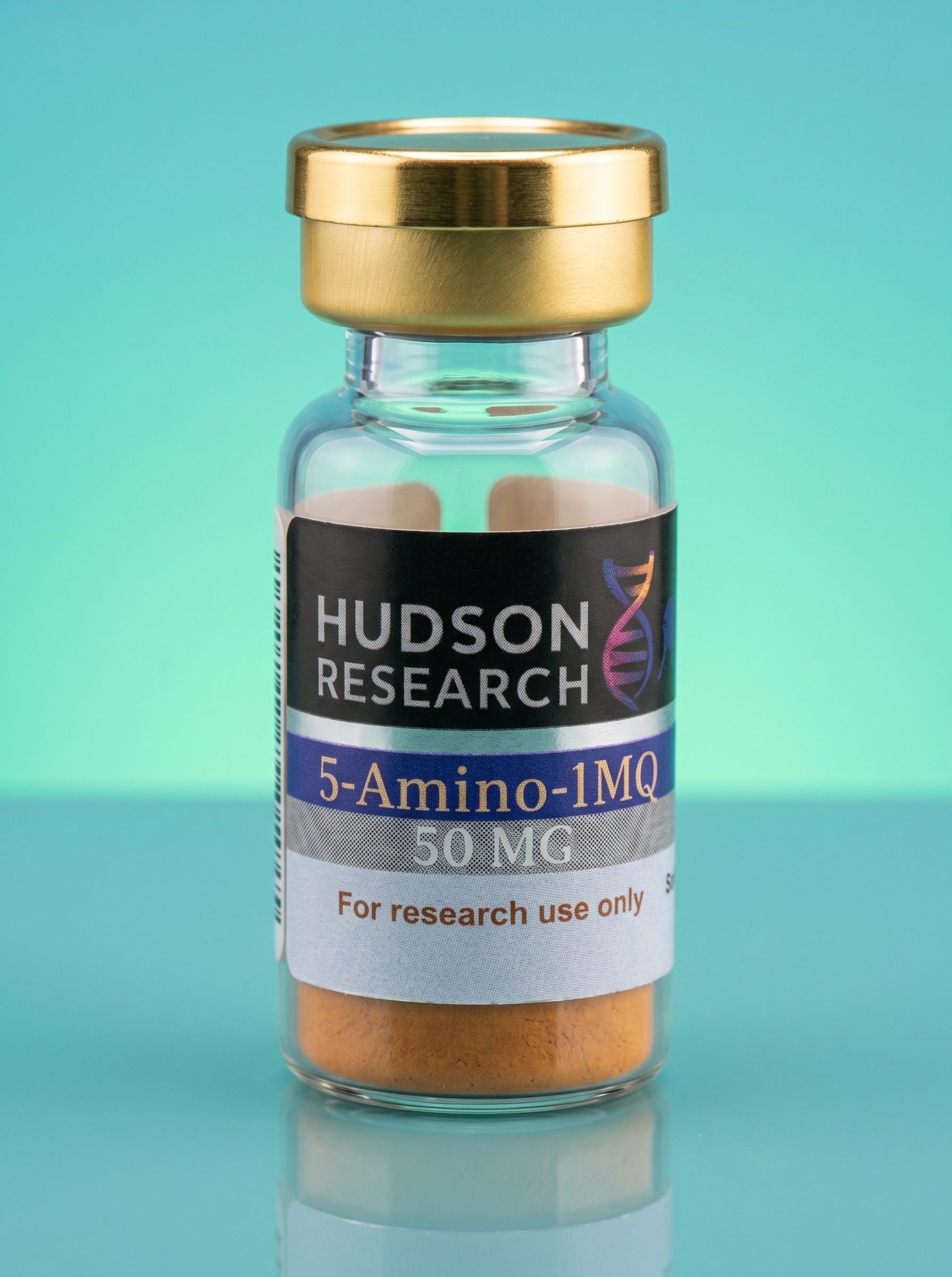
5-Amino-1MQ

Price range: $55.00 through $396.00
Explore Hudson research lab peptides and learn about 5-Amino-1MQ, its research background, scientific limitations, and important safety considerations.
5-Amino-1MQ: Research Overview, Scientific Background, and Safety Considerations
Understanding 5-Amino-1MQ
5-Amino-1MQ is a small molecule that has attracted scientific interest because of its potential interaction with nicotinamide N-methyltransferase (NNMT), an enzyme involved in cellular metabolism. Researchers studying metabolic pathways have investigated NNMT because it participates in the processing of nicotinamide and influences cellular methylation reactions.
For readers researching Hudson research lab peptides and related laboratory compounds, understanding the scientific context of 5-Amino-1MQ is an important first step. Although the compound is frequently discussed in connection with metabolic research, experimental findings should not be confused with established clinical benefits.
5-Amino-1MQ is a research compound, not an established treatment for obesity, diabetes, or other metabolic conditions. Its safety, efficacy, appropriate dosing, and long-term effects in humans have not been established through adequate clinical evidence.
How Does 5-Amino-1MQ Work?
NNMT is an enzyme that helps regulate the metabolism of nicotinamide and certain methyl donors. Scientific interest in NNMT has grown because researchers have explored its relationship with energy balance, cellular metabolism, and adipose tissue function.
5-Amino-1MQ has been investigated as an NNMT inhibitor in preclinical research. In laboratory and animal studies, researchers have examined whether inhibiting this enzyme may influence metabolic processes.
However, several important distinctions must be understood:
- Preclinical evidence: Findings from laboratory experiments and animal models can help researchers identify potential biological mechanisms.
- Human evidence: Clinical trials are needed to determine whether a compound produces meaningful effects in people.
- Safety evaluation: Researchers must establish toxicity, interactions, pharmacokinetics, and potential adverse effects before a compound can be considered safe for human use.
- Regulatory status: Scientific interest does not automatically establish approval for medical treatment or human consumption.
These distinctions are essential when evaluating claims about emerging research compounds.
Why Is 5-Amino-1MQ Discussed in Metabolic Research?
Metabolism involves interconnected biochemical processes that regulate how cells use nutrients, produce energy, and maintain normal functions. Enzymes such as NNMT are of interest because they participate in pathways that may influence cellular activity.
Researchers investigate these pathways to improve their understanding of metabolic regulation and identify possible directions for future scientific study.
Online discussions sometimes describe 5-Amino-1MQ as a potential weight-management compound. Nevertheless, laboratory findings cannot establish that it causes weight loss, improves body composition, or provides other health benefits in humans. Such claims require appropriately designed and independently evaluated clinical trials.
A responsible research overview distinguishes promising hypotheses from proven outcomes. This approach helps readers make informed assessments of scientific information without relying on exaggerated marketing language.
Evaluating Research Compounds and Laboratory Suppliers
People searching for Hudson research lab peptides or information about 5-Amino-1MQ should evaluate supplier documentation carefully. Product descriptions alone cannot establish the identity, purity, quality, or safety of a chemical compound.
When reviewing laboratory research materials, consider the following factors:
Identity and purity documentation: Look for appropriate analytical documentation, such as high-performance liquid chromatography (HPLC) results and mass spectrometry data, when applicable. These methods can provide information about a sample’s composition, although no single document guarantees overall product quality.
Batch-specific testing: Documentation should correspond to the actual batch being evaluated. Generic certificates may not accurately represent a particular lot.
Storage and handling information: Laboratory chemicals may require specific storage conditions to maintain their stability. Handling instructions should be consistent with the compound’s safety documentation.
Transparent business information: Verify the legal business name, contact details, applicable terms, and available documentation independently. Do not assume a website is an authorized or official supplier solely because its name appears in search results.
Research-use statements: Confirm that the supplier clearly identifies the intended use and provides relevant safety information. Research-use labeling does not establish that a compound is appropriate for human administration.
These checks provide a more reliable foundation for evaluating laboratory materials than unsupported purity claims or persuasive advertising.
Safety Considerations for 5-Amino-1MQ
Safety is a critical consideration when evaluating any experimental compound. The absence of comprehensive human clinical data means that potential risks associated with 5-Amino-1MQ may not be fully characterized.
Consumers should not assume that a compound is safe because it is described as research-grade, discussed in online communities, or associated with encouraging preclinical findings.
Potential questions that require scientific investigation include toxicity, effects on normal cellular pathways, interactions with medications, and consequences of repeated or prolonged exposure. Without sufficient evidence, these risks cannot be reliably quantified.
5-Amino-1MQ should not be presented as a proven weight-loss solution or a substitute for established medical care. Anyone considering a substance for health-related purposes should consult a qualified healthcare professional rather than relying on supplier marketing or anecdotal reports.
Frequently Asked Questions About 5-Amino-1MQ
What is 5-Amino-1MQ?
5-Amino-1MQ is an experimental small molecule studied for its potential to inhibit NNMT, an enzyme involved in nicotinamide metabolism. It is not an established medical treatment.
Is 5-Amino-1MQ a peptide?
No. 5-Amino-1MQ is a small molecule, not a peptide. Although people may search for it alongside research peptides, the two categories are chemically distinct.
Does 5-Amino-1MQ cause weight loss?
There is insufficient high-quality human clinical evidence to establish that 5-Amino-1MQ causes weight loss or provides a safe, effective treatment for obesity.
How can researchers assess product quality?
Researchers can examine batch-specific analytical data, relevant safety documentation, supplier transparency, and appropriate laboratory quality controls. Independent verification is preferable to relying exclusively on marketing claims.
Is 5-Amino-1MQ approved for human use?
Its status should be verified through current official regulatory sources for the relevant jurisdiction. It should not be assumed to be approved for human consumption or treatment merely because it is offered online.
Final Perspective
5-Amino-1MQ remains a subject of scientific interest because of its relationship with NNMT and metabolic pathways. Nevertheless, important questions about human efficacy, safety, and clinical relevance remain unresolved.
For readers exploring Hudson research lab peptides and related laboratory materials in the United States, the most valuable approach is to prioritize transparent documentation, reliable scientific evidence, and accurate descriptions of a compound’s limitations. Distinguishing experimental research from established medical evidence supports better-informed decisions and discourages reliance on exaggerated or unverified claims.
| strength mg | 50mg |
|---|---|
| qty | 1 VIAL, 2 VIALS, 3VIALS, 5 VIALS, 10 VIALS |
Be the first to review “5-Amino-1MQ”
Related products

HUDSON LAB
HUDSON LAB
HUDSON LAB
Uncategorized
HUDSON LAB
HUDSON LAB
HUDSON LAB
HUDSON LAB
Reviews
There are no reviews yet.