

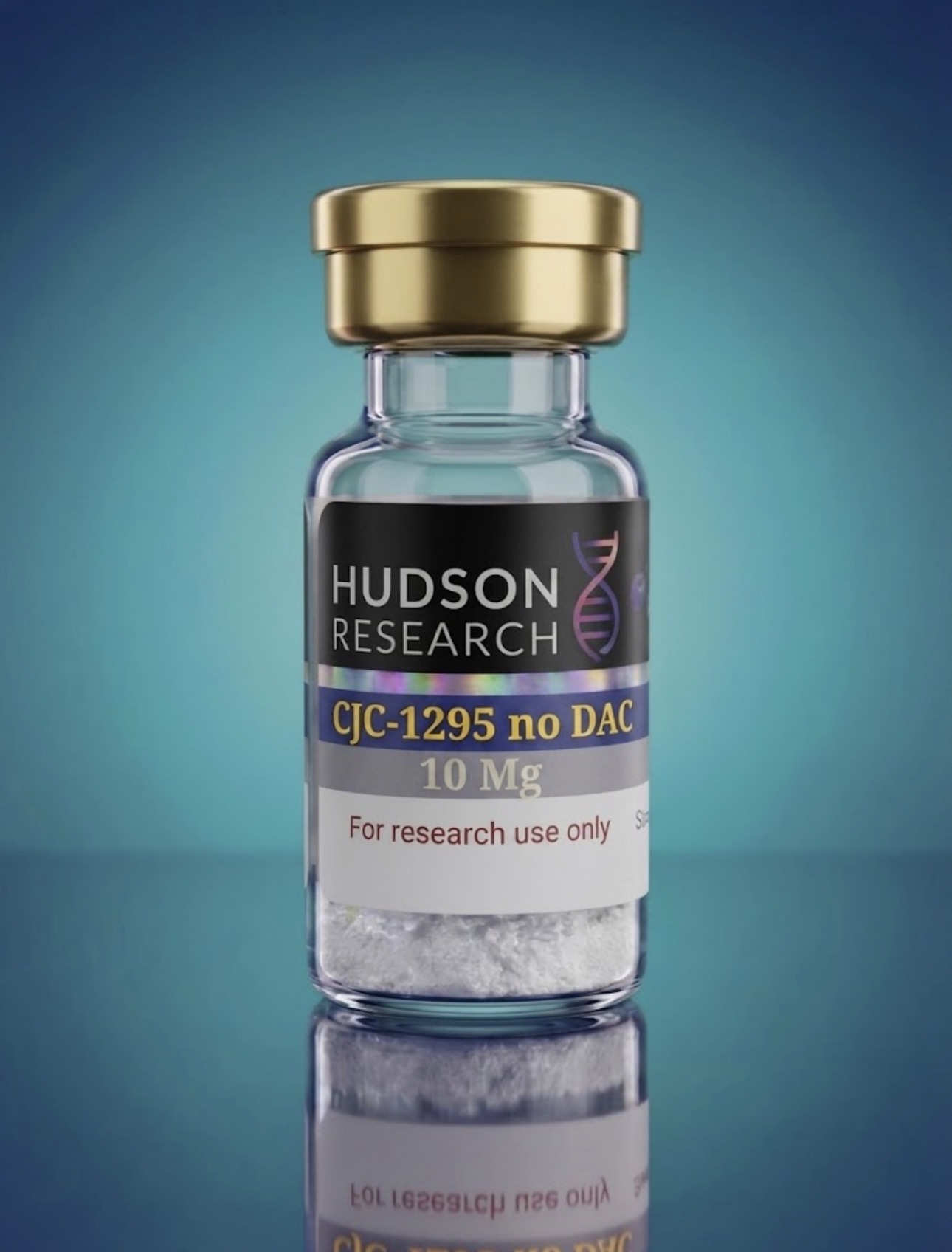
CJC-1295 (No DAC)
Price range: $50.00 through $360.00
Explore Hudson research lab peptides and CJC-1295 (No DAC) product information, research considerations, quality documentation, and responsible handling.
CJC-1295 (No DAC): Product Information for Research Professionals
CJC-1295 (No DAC): Detailed Product Description
Introduction to CJC-1295 (No DAC)
CJC-1295 (No DAC) is a synthetic peptide associated with scientific interest in growth hormone-releasing hormone (GHRH) signaling. Researchers studying peptide chemistry, molecular interactions, and endocrine signaling may encounter this compound in scientific literature and laboratory research discussions.
When evaluating Hudson research lab peptides, researchers should prioritize accurate product identification, transparent documentation, and responsible laboratory practices. Understanding a research compound’s characteristics and limitations is an essential part of maintaining a reliable research environment.
CJC-1295 (No DAC) is distinct from versions of CJC-1295 formulated with a drug-affinity complex (DAC). This distinction is important when reviewing scientific publications, comparing chemical specifications, or evaluating analytical results. Product names alone should not be treated as proof of composition, purity, or suitability for a particular research application.
What Is CJC-1295 (No DAC)?
CJC-1295 (No DAC) is commonly discussed as a modified peptide related to GHRH, a naturally occurring signaling molecule involved in the regulation of growth hormone secretion. The compound’s relationship to this signaling pathway has attracted interest in experimental and biochemical research.
The term “No DAC” identifies a version without the drug-affinity complex associated with certain longer-acting CJC-1295 formulations. Researchers should verify the precise identity of any material through appropriate analytical documentation rather than relying exclusively on marketing terminology.
Scientific interest in a peptide does not establish that it is an approved medicine, a safe human-use product, or an effective treatment. Its classification, legal status, and permissible applications depend on the applicable jurisdiction and intended use.
Key Product Information
When reviewing a CJC-1295 (No DAC) research listing, consider the following product-information categories:
- Compound identity: Confirm the stated peptide name and any available chemical identification information.
- Composition: Review the manufacturer’s description of the material and any stated formulation details.
- Analytical documentation: Look for relevant analytical reports, such as high-performance liquid chromatography (HPLC) or mass spectrometry results, where available.
- Batch traceability: Check whether the material is associated with a specific lot or batch number.
- Storage documentation: Follow verified manufacturer instructions for the supplied material and its packaging.
- Intended use: Confirm that the material is appropriate for the specific lawful research application being considered.
- Regulatory information: Review applicable restrictions and determine whether the product may legally be supplied, possessed, or used for the intended purpose.
These considerations support better documentation and more reproducible laboratory workflows. They do not, by themselves, guarantee product quality or establish that a material is suitable for any particular experiment.
Why Documentation Matters When Evaluating Research Peptides
Research reliability depends on more than a product name or a stated purity percentage. Researchers need enough information to determine whether a material is identifiable, traceable, and appropriate for a defined experimental protocol.
Analytical reports can provide useful information about the characteristics measured in a particular sample. However, different analytical methods answer different questions. A chromatographic purity result, for example, should not automatically be interpreted as proof of identity, sterility, absence of endotoxins, or suitability for human administration.
A responsible assessment of CJC-1295 (No DAC) should therefore consider the available documentation as a whole. Researchers should review test methods, report dates, sample identifiers, and the relationship between the reported results and the actual batch under consideration.
Important: Do not assume that every research peptide listing includes independent laboratory verification. Request supporting records where appropriate, and distinguish verified analytical findings from unsubstantiated marketing statements.
CJC-1295 (No DAC) and Scientific Research
The scientific discussion surrounding CJC-1295 (No DAC) is connected to GHRH-related signaling and the biological regulation of growth hormone. Understanding these mechanisms requires careful interpretation of experimental evidence, including the differences between laboratory findings, animal studies, and human clinical research.
Evidence from one experimental setting cannot automatically be generalized to another. Findings involving a related peptide, a different formulation, or a different administration method may not apply to CJC-1295 (No DAC).
Researchers reviewing the literature should consult primary scientific publications, assess study limitations, and identify the precise compound investigated. These practices help prevent misleading comparisons and improve the quality of scientific interpretation.
CJC-1295 (No DAC) should not be represented as an established treatment for muscle growth, fat loss, anti-aging, recovery, or hormone deficiencies without appropriate clinical evidence and regulatory authorization. Research interest alone does not demonstrate a clinically meaningful benefit.
Quality, Storage, and Responsible Handling
Proper laboratory procedures are essential when working with research materials. Storage requirements may vary according to the material’s formulation, packaging, and manufacturer instructions. Researchers should consult the relevant documentation rather than assume that a generic storage recommendation applies to every product.
Laboratories should also maintain suitable records for receiving, identifying, storing, and handling research materials. Procedures should follow applicable institutional requirements, laboratory safety protocols, and relevant regulations.
Research-grade labeling does not establish that a material is sterile, pharmaceutical-grade, or suitable for injection. Materials sold for laboratory research should not be assumed safe for personal use, self-experimentation, or administration to humans or animals.
These precautions are particularly important for investigational peptides because incomplete documentation or inappropriate handling can compromise experimental integrity and create avoidable safety concerns.
Where to Find Information About Hudson Research Lab Peptides
People searching online for Hudson research lab peptides may be looking for product specifications, supplier information, laboratory documentation, or details about CJC-1295 (No DAC).
Hudsonresearchslab.com is the website specified for review in this product-page brief. Before describing it as the official website or recommending a purchase, independently confirm the business’s identity, its relationship to the product, its current policies, and the applicable legal requirements. Do not assume that a website is an authorized source solely because its domain contains a company or laboratory name.
For legitimate research procurement, evaluate whether the supplier provides clear product identification, appropriate analytical documentation, traceable batch information, and transparent contact and business details. Any purchasing decision should be based on verifiable information rather than unconfirmed claims of authenticity, guaranteed purity, or superior performance.
Researchers should also check federal and state requirements that may apply to investigational peptides. Regulatory status and permissible uses can differ depending on the product and circumstances. When necessary, consult qualified regulatory or institutional compliance professionals before proceeding.
Frequently Asked Questions
What is CJC-1295 (No DAC)?
CJC-1295 (No DAC) is a synthetic peptide discussed in connection with GHRH-related signaling and experimental research. Product identity should be verified using appropriate documentation.
How is CJC-1295 (No DAC) different from a DAC-containing version?
The “No DAC” designation indicates the absence of the drug-affinity complex associated with certain CJC-1295 formulations. Researchers should verify the exact formulation before comparing scientific findings.
Is CJC-1295 (No DAC) approved for human use?
It should not be assumed to be an approved medicine. Verify current regulatory information through the relevant authorities, and do not use research-labeled material for self-treatment.
What documentation should accompany a research peptide?
Depending on the product and intended laboratory application, useful records may include compound identification, batch information, analytical testing, handling instructions, and applicable safety documentation.
Where can I verify information about Hudson research lab peptides?
Review the supplier’s business information and product documentation directly, and independently verify any claim that a particular website is an official or authorized source. The domain hudsonresearchslab.com should not be described as officially authorized without supporting evidence.
Final Considerations
CJC-1295 (No DAC) is a specialized research compound that warrants careful evaluation of its identity, analytical documentation, intended use, and regulatory status. For laboratories, the most valuable product information is accurate, transparent, and supported by verifiable records.
When researching Hudson research lab peptides, prioritize reliable documentation and responsible laboratory practices over exaggerated performance claims. A careful, evidence-based approach supports better research decisions and helps maintain scientific integrity.
Research-use notice: This information is educational and is not medical advice. It does not establish product purity, efficacy, safety, or regulatory approval. Research materials should not be used for human consumption or self-administration.
| qty | 1 VIAL, 2 VIALS, 3VIALS, 5 VIALS, 10 VIALS |
|---|
Be the first to review “CJC-1295 (No DAC)”
Related products
HUDSON LAB
HUDSON LAB
HUDSON LAB
HUDSON LAB
Uncategorized
HUDSON LAB
HUDSON LAB
HUDSON LAB
Reviews
There are no reviews yet.