

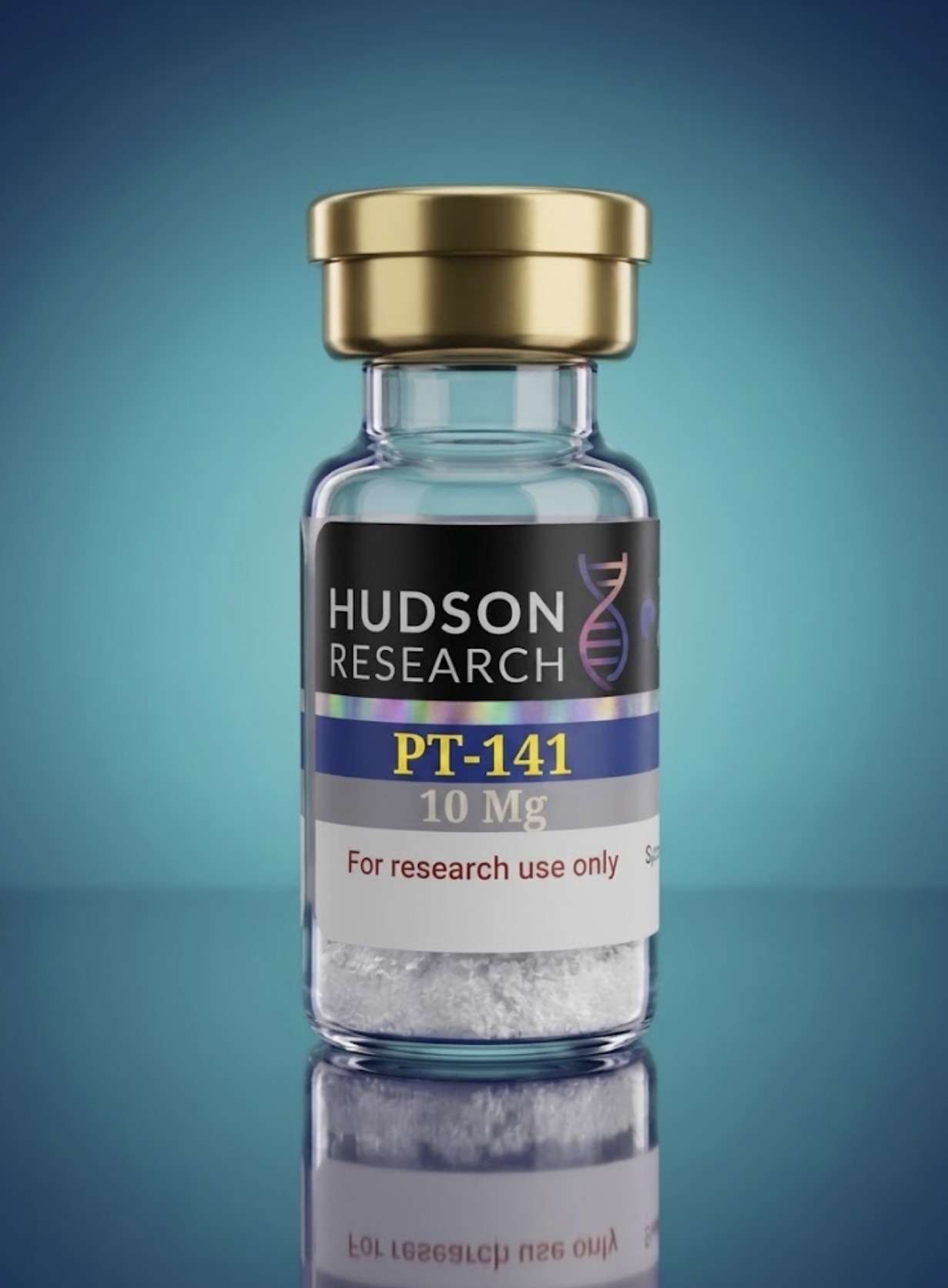
PT-141 (Bremelanotide): Scientific Overview, Research Background, and Key Information
Understanding PT-141 Peptide
PT-141, also known as bremelanotide, is a synthetic peptide studied for its activity on the melanocortin receptor system. It has attracted scientific interest because melanocortin receptors participate in several physiological processes, including pathways associated with sexual desire and behavior.
For readers exploring Hudson Research Lab peptides, understanding the scientific background of PT-141 is an important first step. Product identity, intended use, regulatory status, and independently verifiable quality documentation are essential considerations when evaluating peptide-related information in the United States.
PT-141 should not be confused with a general wellness supplement. Bremelanotide has a specific medical and pharmacological history, and the regulatory status of a particular product depends on its formulation, manufacturer, intended use, and applicable requirements.
What Is PT-141 (Bremelanotide)?
PT-141 is a peptide compound associated with melanocortin receptor activity. Unlike substances that primarily act through the vascular mechanisms commonly discussed in connection with erectile dysfunction medications, bremelanotide acts on melanocortin receptors in the body.
This difference makes the compound relevant to scientific discussions about the biological mechanisms involved in sexual desire. However, understanding a proposed mechanism does not establish that every formulation containing the same compound is safe, effective, or appropriate for medical use.
Researchers examining PT-141 may encounter scientific literature discussing receptor activity, pharmacology, clinical development, and the distinction between laboratory findings and results obtained in controlled human studies.
A reliable scientific overview should separate established evidence from preliminary findings and marketing claims.
PT-141 Research and Scientific Interest
Interest in PT-141 research reflects broader scientific efforts to understand how the melanocortin system influences physiological and behavioral responses.
When evaluating research involving bremelanotide, several areas deserve careful consideration:
- Pharmacology: How the compound interacts with melanocortin receptors.
- Clinical evidence: What controlled studies have established about particular medical indications.
- Safety assessment: Which adverse reactions, contraindications, and interactions have been identified.
- Formulation: How a specific preparation differs from another product containing a related active ingredient.
- Regulatory oversight: Whether the product has been evaluated and authorized for its stated use.
These distinctions are especially important when information about prescription medicines appears alongside products advertised online as research peptides.
Scientific credibility depends on verifiable evidence, not simply on a product name, an advertised purity percentage, or an appealing description.
PT-141 and Its Established Medical Context
In the United States, bremelanotide is the active ingredient in Vyleesi, an FDA-approved prescription medicine indicated for a specific condition: acquired, generalized hypoactive sexual desire disorder (HSDD) in certain premenopausal women.
The approved indication has defined eligibility criteria and does not apply to every person experiencing changes in sexual desire. The prescribing information also identifies important limitations and potential adverse effects.
For example, the approved medicine can cause nausea, flushing, headache, and other adverse reactions. It can also transiently increase blood pressure and is contraindicated in patients with uncontrolled hypertension or known cardiovascular disease.
These facts are important when reading about PT-141 online. Approval of a particular prescription medicine does not automatically mean that every product advertised as PT-141, bremelanotide, or a research peptide is FDA-approved.
For authoritative details, consult the official U.S. prescribing information for Vyleesi and discuss individual medical questions with a licensed healthcare professional.
Evaluating Hudson Research Lab Peptides
Anyone researching Hudson Research Lab peptides should distinguish between a seller’s own product descriptions and independently verified information.
Before relying on a company’s claims, evaluate whether it clearly identifies the legal business responsible for the product, explains its intended use, provides appropriate documentation, and accurately represents the product’s regulatory status.
Useful questions include:
- Is the exact compound and formulation clearly identified?
- Are analytical reports traceable to the specific product lot?
- Does the documentation identify the testing laboratory and analytical methods?
- Are the stated specifications supported by independent evidence?
- Are storage requirements and product-handling limitations documented?
- Does the company accurately describe the product’s regulatory status?
- Can the seller’s identity and any claimed authorization be independently confirmed?
A certificate of analysis may provide information about selected analytical results, but it does not independently establish clinical safety, effectiveness, sterility, or FDA approval. The significance of any quality documentation depends on the tests performed, the laboratory’s capabilities, and the traceability of the results.
These checks provide a more dependable basis for evaluating product information than promotional claims alone.
Why Product Quality and Transparency Matter
Peptide-related products can differ in identity, formulation, manufacturing controls, and supporting documentation. An attractive product page cannot establish that a particular batch meets pharmaceutical standards.
For that reason, transparency is an important part of responsible scientific communication. Descriptions should avoid unsupported claims such as guaranteed purity, pharmaceutical-grade manufacturing, proven clinical benefits, or complete safety unless those statements are properly substantiated.
The same principle applies to website trust signals. A professional-looking storefront, customer testimonials, or a published laboratory report should not be treated as conclusive proof of product authenticity or regulatory compliance.
In the United States, the FDA has warned that labeling a product “research use only” does not by itself resolve its regulatory status when the surrounding marketing and distribution indicate an intended human-drug use.
This is an important consideration for businesses publishing content about PT-141 and other biologically active peptides.
Responsible Research and U.S. Regulatory Considerations
The regulatory status of PT-141 depends on the particular product and its intended use. Bremelanotide’s presence in an approved prescription medicine should not be interpreted as authorization for every independently marketed preparation.
Researchers and institutions should review applicable federal and state requirements, institutional policies, and relevant safety procedures before obtaining or handling research chemicals.
Consumers seeking information about sexual health should consult qualified healthcare professionals rather than rely on unverified online product claims or self-directed use of research chemicals.
For an accurate understanding of bremelanotide, useful resources include the official FDA drug database, the prescribing information for Vyleesi, and peer-reviewed pharmacology and clinical research publications.
PT-141: An Evidence-Based Perspective
PT-141 remains an important example of how research into biological signaling pathways can inform the development of a prescription medicine. At the same time, its scientific background illustrates why the identity of an active compound and the regulatory status of a finished product must be evaluated separately.
For visitors researching Hudson Research Lab peptides, the most valuable starting point is transparent, verifiable information about product identity, intended use, quality documentation, and applicable regulations.
The bottom line: A compelling product description should never replace reliable scientific evidence. Careful evaluation of PT-141, accurate representation of bremelanotide’s approved medical context, and clear regulatory information provide a more trustworthy foundation for understanding this peptide in the United States.
This overview is for educational purposes only and does not constitute medical advice, an assessment of a specific seller, or a recommendation to purchase or use an unapproved product.
| qty | 1 VIAL, 2 VIALS, 3VIALS, 5 VIALS, 10 VIALS |
|---|
Be the first to review “PT-141”
Related products
HUDSON LAB
HUDSON LAB
HUDSON LAB
HUDSON LAB
HUDSON LAB
HUDSON LAB
HUDSON LAB
HUDSON LAB
Reviews
There are no reviews yet.