

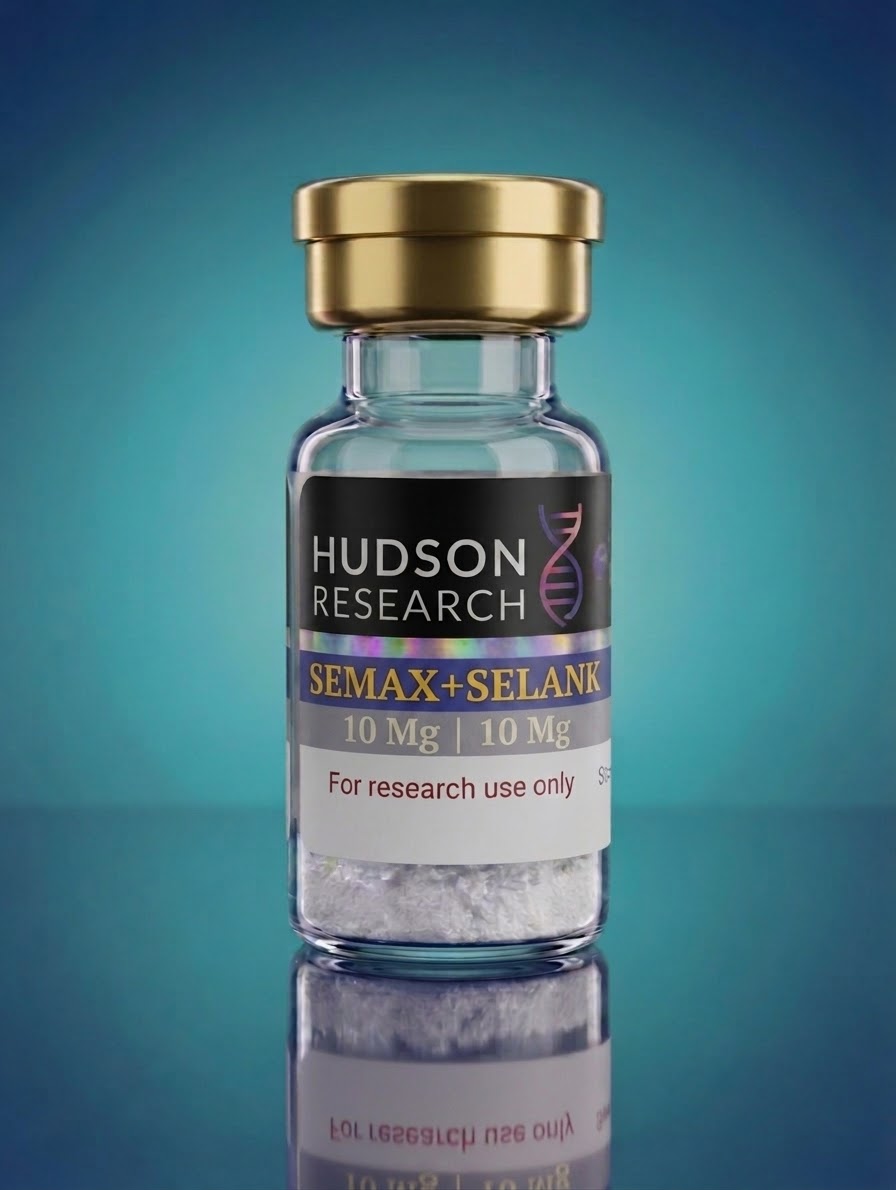
SEMAX + SELANK Research Peptides: Product Information and Laboratory Research Overview
Introduction to SEMAX + SELANK
SEMAX and SELANK are synthetic peptides that have attracted scientific interest for their distinct biological activities and potential applications in experimental research. Researchers investigating peptide chemistry, neurobiology, and molecular signaling may encounter these compounds in scientific literature exploring how different peptide structures interact with biological systems.
At Hudson Research Lab, customers seeking information about research peptides should be able to review product identity, available documentation, handling considerations, and applicable restrictions before making purchasing decisions. Anyone researching Hudson research lab peptides should prioritize transparent product information, accurate labeling, and responsible laboratory practices.
SEMAX and SELANK are different compounds, and they should not be treated as interchangeable. Their molecular characteristics, proposed mechanisms, and research histories differ. Understanding these distinctions is an important first step when evaluating peptide materials for legitimate laboratory investigations.
What Is SEMAX?
SEMAX is a synthetic peptide derived from a fragment of adrenocorticotropic hormone (ACTH). It has been studied primarily in research exploring neurobiological processes and potential interactions with pathways involved in nervous system function.
Scientific interest in SEMAX includes investigations into molecular signaling, neurotrophic factors, and other biological processes. However, findings from individual studies do not establish that a product is safe or effective for a particular medical condition. Research results must be evaluated according to study design, experimental conditions, reproducibility, and the quality of available evidence.
For laboratory researchers, accurate compound identification and reliable documentation are essential. Product specifications should be reviewed independently rather than inferred from a product name, marketing description, or general discussion of the compound.
What Is SELANK?
SELANK is a synthetic peptide related to a fragment of the naturally occurring immunomodulatory peptide tuftsin. It has been investigated in scientific contexts involving neurobiology, biological signaling, and interactions between different physiological pathways.
Like SEMAX, SELANK has generated research interest, but scientific interest is not equivalent to established clinical benefit. Evidence from preliminary experiments or limited clinical investigations should not be interpreted as proof that a peptide can safely or reliably deliver a particular outcome.
Researchers evaluating SELANK should consider the available scientific literature, the limitations of published findings, and the documentation supplied for the specific material under review.
SEMAX vs. SELANK: Understanding the Difference
Although SEMAX and SELANK are both synthetic peptides discussed in neurobiological research, they have different structures and research backgrounds.
SEMAX is associated with investigations into ACTH-derived peptide sequences and neurobiological signaling. SELANK is related to tuftsin and has been studied in other areas of biological signaling.
These distinctions matter when evaluating scientific publications or comparing research materials. Results obtained with one peptide cannot automatically be applied to the other. Likewise, combining two compounds does not establish that their effects will be complementary, predictable, or safe.
A responsible research assessment should examine each compound independently and evaluate any proposed combination using appropriate evidence. Product descriptions should not substitute for scientific validation or imply that a combination has demonstrated benefits without supporting evidence.
Research Quality, Product Identity, and Documentation
When evaluating SEMAX + SELANK research materials, product transparency should be a central consideration. Clear documentation can help qualified researchers determine whether a material is appropriate for a particular laboratory protocol.
Relevant information may include:
- Compound identification: Clear naming and identification of the material supplied.
- Purity documentation: Available analytical results describing measured purity and the method used.
- Certificate of analysis: Batch-specific documentation when available and independently verifiable.
- Storage information: Manufacturer-provided conditions intended to preserve product integrity.
- Handling requirements: Applicable laboratory precautions and instructions for safe material management.
- Regulatory information: Accurate statements concerning intended use, shipping restrictions, and applicable laws.
No single specification guarantees the quality, safety, or suitability of a research material. Documentation should be evaluated in context, and independent testing may be appropriate depending on the intended laboratory application.
Where to Find Hudson Research Lab Peptides
Customers searching for Hudson research lab peptides should verify the seller’s identity, domain ownership, product documentation, and current business information before placing an order.
Hudson Research Lab can be referenced as the requested brand in this product-page draft. However, the relationship between the brand and hudsonresearchslab.com, including whether that domain is its official purchasing website, should be independently confirmed before the website is advertised as an official source.
Before purchasing research materials, review the product listing, applicable terms, shipping restrictions, and available analytical documentation. Avoid relying solely on promotional claims or unverified testimonials when assessing a supplier.
A transparent purchasing process helps researchers make better-informed decisions and supports responsible laboratory procurement.
Responsible Research and Regulatory Considerations
SEMAX and SELANK should not be assumed to be approved by the U.S. Food and Drug Administration (FDA) for general medical use merely because they appear in research publications or are offered by a supplier.
Regulatory status depends on the specific compound, product, intended use, and applicable requirements. Researchers and purchasers should consult current FDA information and relevant federal and state requirements before obtaining or using these materials.
Research-use labeling is not evidence that a compound is safe for human administration. Unapproved or inadequately characterized peptides may present uncertainties involving purity, contamination, stability, dosage, interactions, and adverse effects. Products marketed for laboratory research should not be represented as established treatments or substitutes for professional medical care.
Appropriate handling, documented procedures, qualified oversight, and compliance with applicable regulations are essential parts of responsible laboratory work.
Frequently Asked Questions
Are SEMAX and SELANK the same peptide?
No. They are distinct synthetic peptides with different structural origins and research histories. Scientific findings concerning one should not automatically be applied to the other.
Does research interest prove that SEMAX + SELANK is effective?
No. Scientific investigation does not establish clinical effectiveness. Claims about health benefits require appropriate evidence and must be consistent with applicable regulatory requirements.
What should buyers review before ordering research peptides?
Review compound identification, available batch-specific analytical documentation, supplier identity, shipping restrictions, storage information, and applicable regulations.
Is hudsonresearchslab.com the official website?
The website’s official status should be verified directly through reliable business records or an independently authenticated company source before it is described as the official purchasing channel.
Are research peptides approved for human use?
A research-use designation does not establish approval for human use. Check the current regulatory status of the specific product and intended use with the relevant authorities.
Conclusion
SEMAX + SELANK research peptides represent two distinct compounds with scientific histories that warrant careful evaluation. For researchers, the most valuable starting point is accurate compound information, transparent documentation, critical review of scientific evidence, and responsible procurement practices.
When evaluating Hudson research lab peptides, prioritize verifiable supplier information and product-specific documentation over unsupported claims. A careful, evidence-led approach is the strongest foundation for responsible research and informed purchasing decisions.
| qty | 1 VIAL, 2 VIALS, 3VIALS, 5 VIALS, 10 VIALS |
|---|
Be the first to review “SEMAX + SELANK”
Related products
HUDSON LAB
HUDSON LAB
HUDSON LAB
Uncategorized
HUDSON LAB
HUDSON LAB
HUDSON LAB
HUDSON LAB
Reviews
There are no reviews yet.