

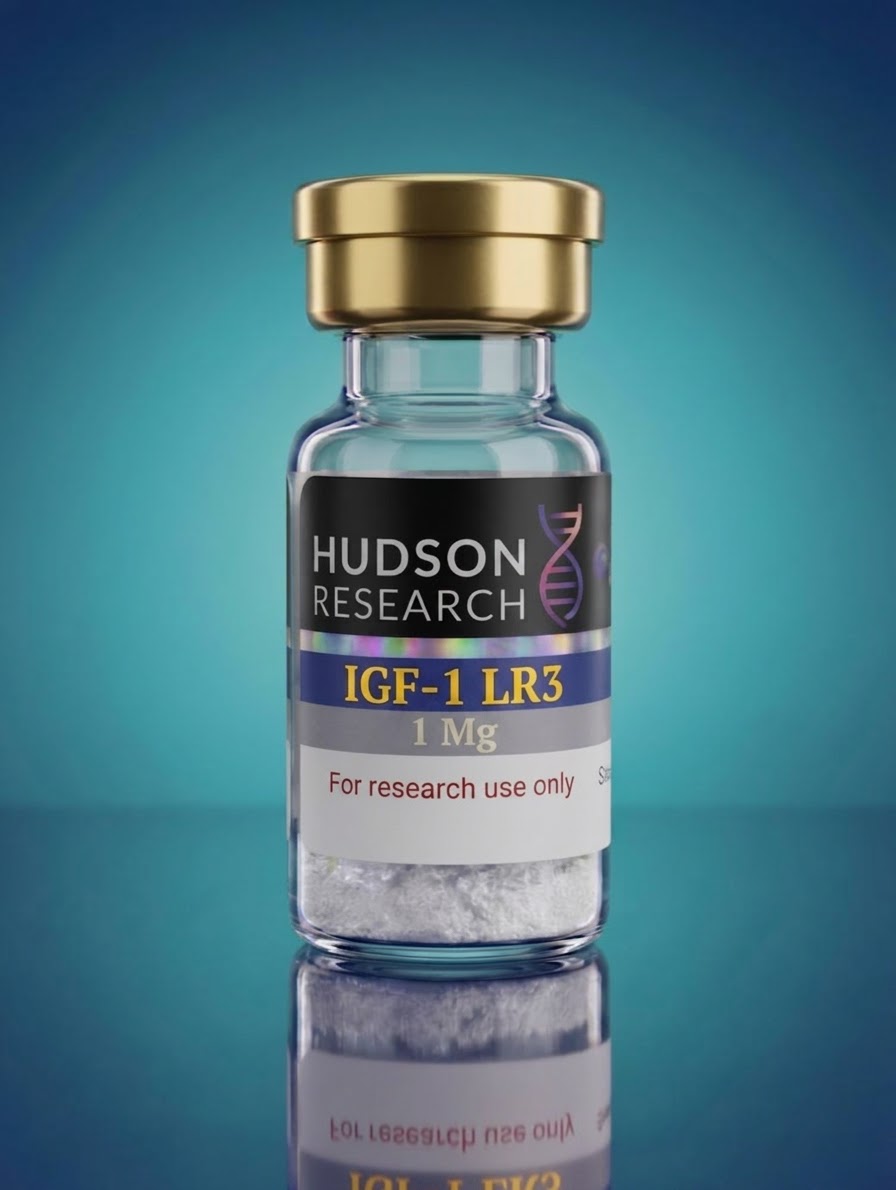
IGF-1 LR3

Price range: $65.00 through $468.00
Hudson research lab peptides: Explore IGF-1 LR3 research information, molecular properties, laboratory considerations, and responsible sourcing.
IGF-1 LR3: Research Overview, Properties, and Laboratory Considerations
IGF-1 LR3: An Informational Guide for Research Professionals
Understanding IGF-1 LR3 Hudson Research Lab Peptides
IGF-1 LR3, also known as Long Arg3 Insulin-Like Growth Factor-1, is a modified analogue of insulin-like growth factor 1 (IGF-1). It is studied in laboratory settings because of its interaction with biological pathways associated with cell growth, metabolism, and cellular signaling.
For researchers exploring growth-factor biology, understanding IGF-1 LR3 requires attention to its molecular characteristics, experimental limitations, and safety considerations. This overview provides a clear introduction to the compound and the factors that research professionals should evaluate before considering any laboratory investigation.
What Makes IGF-1 LR3 Different?
IGF-1 LR3 is a modified form of IGF-1 featuring an arginine substitution at position three and an extension of 13 amino acids. These structural modifications affect its interactions with IGF-binding proteins and its biological behavior compared with native IGF-1.
The compound is associated with research into insulin-like growth factor signaling, a network involved in cellular development, metabolism, and tissue biology. However, laboratory observations should not be interpreted as evidence of established medical benefits or safety in humans.
Understanding these distinctions is essential when reviewing scientific literature, comparing research compounds, or designing controlled laboratory investigations.
IGF-1 LR3 and Growth-Factor Research
Growth factors are signaling molecules that influence how cells communicate and respond to their surrounding environment. The IGF signaling system is an important subject in molecular biology because it participates in processes involving cell proliferation, differentiation, and metabolism.
IGF-1 LR3 may be investigated in controlled experimental models examining these pathways. Researchers should distinguish between findings from cell cultures, animal studies, and clinical research, as results from one setting cannot automatically be applied to another.
A rigorous research approach includes reviewing peer-reviewed publications, documenting experimental conditions, and recognizing the limitations of available evidence.
Hudson Research Lab Peptides: Evaluating Research Information
When researching Hudson research lab peptides or other laboratory-oriented peptide listings, it is important to distinguish marketing statements from independently verifiable product information.
A professional evaluation should consider whether the supplier provides relevant documentation, including:
- Identity verification: Documentation identifying the compound being supplied.
- Purity analysis: Analytical results describing measured purity and potential impurities.
- Batch traceability: Lot numbers and records connecting a product to its supporting documentation.
- Analytical methods: Information about the techniques used to characterize the material.
- Storage information: Appropriate handling and storage guidance supported by the supplier’s documentation.
- Research-use restrictions: Clear statements explaining the intended laboratory use and applicable limitations.
A certificate of analysis can be useful, but its reliability depends on the methods used, the laboratory responsible for testing, and whether the results correspond to the specific batch. Independent verification is preferable when analytical quality is important.
These checks provide a more reliable foundation for evaluating research materials than promotional claims alone.
Laboratory Quality and Documentation
Reliable research depends on consistency, reproducibility, and careful documentation. When evaluating an experimental peptide, researchers should examine the available analytical evidence and determine whether it meets the requirements of their particular study.
Purity is only one measure of quality. Identity, stability, contamination, and sample-handling conditions may also influence experimental results. A material described as highly pure is not automatically suitable for every application, nor does a purity statement establish biological activity or clinical safety.
Maintaining accurate laboratory records helps researchers identify potential sources of variation and interpret experimental findings responsibly.
Safety Considerations and Research Limitations
IGF-1 LR3 is not an established, approved treatment for general human use. Its experimental status means that important questions about appropriate exposure, long-term effects, and potential adverse outcomes remain unresolved.
Because the IGF signaling pathway is involved in cell growth and metabolism, manipulating it may have significant biological consequences. Potential concerns associated with excessive or inappropriate IGF-related activity include disturbances in glucose regulation and effects on abnormal cell growth. The precise risks associated with IGF-1 LR3 in humans are not sufficiently characterized to establish a safe self-administration protocol.
It should not be treated as a routine supplement or a substitute for medical care. Anyone considering an experimental compound for personal use should consult a qualified healthcare professional rather than relying on vendor descriptions or anecdotal reports.
Research materials should be handled according to applicable laboratory safety procedures, institutional policies, and relevant laws and regulations.
How to Assess Research Peptide Suppliers in the United States
Researchers in the United States should assess peptide suppliers using objective documentation rather than relying exclusively on search rankings, advertising language, or claims of authenticity.
Useful evaluation criteria include:
- Transparent company information: Look for verifiable business details and clear contact information.
- Batch-specific documentation: Check whether analytical reports identify the actual lot being supplied.
- Independent testing: Determine whether appropriate third-party analytical verification is available.
- Clear product descriptions: Confirm that molecular identity and limitations are described accurately.
- Regulatory transparency: Review applicable federal and state requirements for the material and its proposed use.
- Responsible claims: Be cautious of unsupported statements promising muscle growth, fat loss, anti-aging effects, or other human outcomes.
These criteria help separate verifiable quality information from unsupported advertising claims.
Hudson Research Lab’s product availability, business status, documentation, and official-supplier status should be independently verified before any conclusions are drawn. This overview does not independently certify hudsonresearchlab.com or establish that the website is an authorized or verified source for IGF-1 LR3.
Frequently Asked Questions About IGF-1 LR3
IGF-1 LR3 is a modified analogue of insulin-like growth factor 1 studied in connection with growth-factor signaling and cellular biology.
Is IGF-1 LR3 approved for human use?
IGF-1 LR3 is not an established, approved treatment for general human use. Its experimental nature and uncertain safety profile make medical self-administration inappropriate.
What should researchers check before evaluating a peptide?
Researchers should review identity and purity documentation, batch traceability, analytical methods, storage requirements, and applicable institutional and regulatory requirements.
Does a certificate of analysis guarantee safety?
No. A certificate of analysis provides information about specified analytical tests. It does not, by itself, establish clinical safety, suitability for human use, or regulatory approval.
How can researchers verify a supplier’s claims?
Researchers can examine business records, request batch-specific analytical documentation, evaluate independent testing, and consult relevant regulatory guidance. Claims of official status should be confirmed through independently verifiable evidence.
Conclusion
IGF-1 LR3 is a specialized research compound that warrants careful evaluation of its molecular properties, experimental limitations, analytical documentation, and potential risks. For professionals studying IGF-related pathways, accurate documentation, responsible laboratory practices, and independent verification are essential.
Rather than relying on bold marketing promises, researchers should prioritize credible scientific evidence and transparent quality information. This approach supports more reliable research decisions while recognizing the important distinction between experimental compounds and established medical treatments.
| strength mg | 1 VIAL, 2 VIALS, 3VIALS, 5 VIALS, 10 VIALS |
|---|
Be the first to review “IGF-1 LR3”
Related products
HUDSON LAB
HUDSON LAB
HUDSON LAB
HUDSON LAB
Uncategorized
HUDSON LAB
HUDSON LAB
HUDSON LAB
Reviews
There are no reviews yet.