

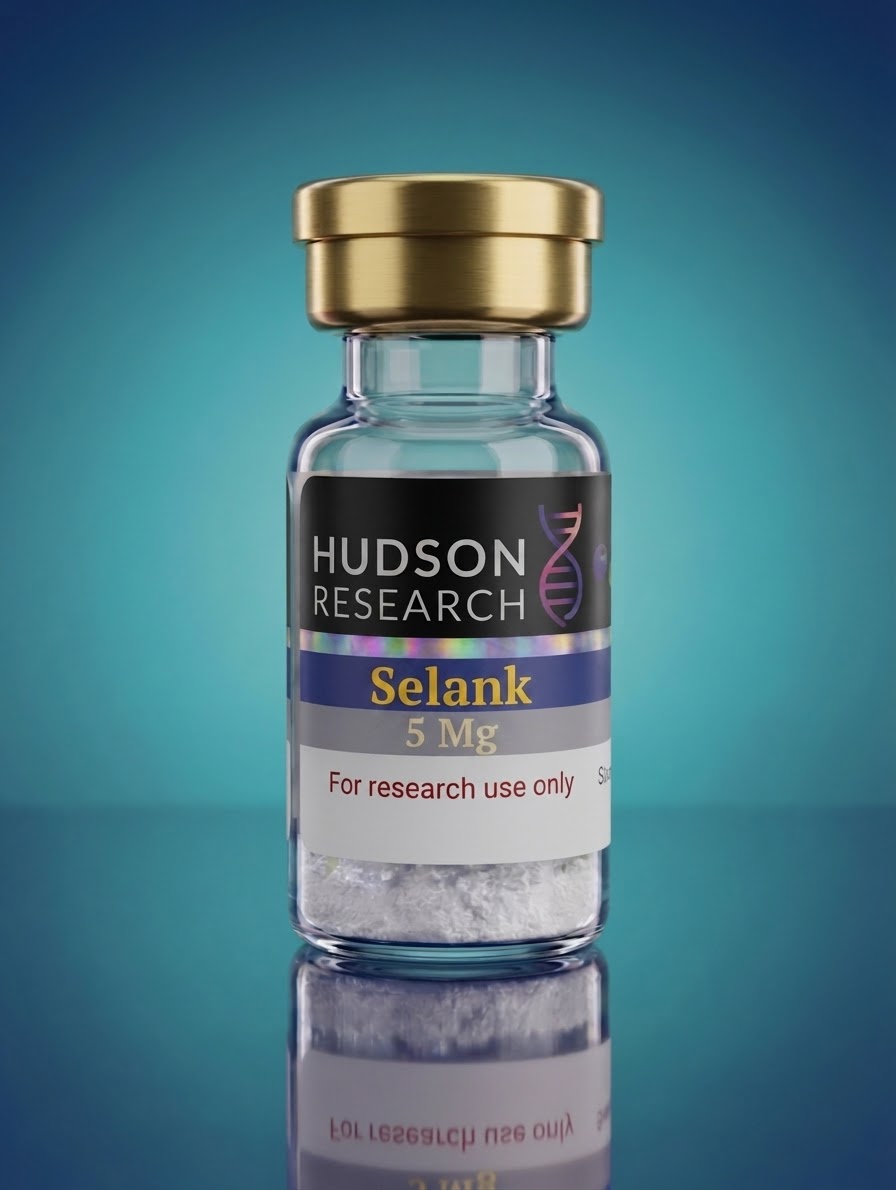
SELANK Peptide: Research Overview, Product Information, and Quality Considerations
Explore SELANK Research with an Evidence-First Approach
SELANK is a synthetic peptide that has attracted scientific interest because of its potential biological activity and its relationship to research involving the nervous and immune systems. For laboratories, scientific researchers, and qualified research professionals, understanding the compound’s identity, available evidence, and quality requirements is an important part of responsible research planning.
When researching Hudson research lab peptides, it is important to distinguish scientific interest from established clinical evidence. SELANK is not an FDA-approved drug in the United States, and available research does not establish that products marketed under this name are safe or effective for human use.
This product overview provides background on SELANK, explains important laboratory-quality considerations, and outlines the information researchers should evaluate before selecting a research supplier.
What Is SELANK?
SELANK is a synthetic peptide consisting of seven amino acids. It is commonly identified by the sequence Thr-Lys-Pro-Arg-Pro-Gly-Pro and is associated with research into tuftsin-derived peptides.
Scientists have investigated SELANK in connection with biological signaling and neurological research. However, findings from preliminary experiments cannot automatically be translated into proven human benefits.
For anyone researching SELANK peptide information in the United States, understanding the compound’s scientific background is a useful starting point. Researchers should consult published literature, assess study limitations, and distinguish laboratory observations from validated clinical outcomes.
Why Is SELANK Discussed in Scientific Research?
SELANK has received attention in research discussions involving neurobiology and peptide science. Its proposed biological properties have prompted interest in understanding how this compound behaves under experimental conditions.
Nevertheless, scientific interest does not equal proof of effectiveness. Research involving peptides can produce preliminary observations that require further investigation, replication, and rigorous evaluation before meaningful conclusions can be drawn.
A responsible research process therefore considers both potential scientific relevance and the limitations of the available evidence.
Important Research Considerations
When reviewing SELANK-related scientific literature, researchers should consider:
- Study design: Determine whether the evidence comes from laboratory experiments, animal studies, or human research.
- Reproducibility: Look for independent studies that confirm reported observations.
- Research limitations: Evaluate sample sizes, methodology, experimental conditions, and possible sources of bias.
- Product identity: Verify that the material’s identity is documented and appropriate for the intended laboratory investigation.
- Safety uncertainties: Recognize that limited evidence cannot establish a compound’s safety profile or suitability for human use.
These considerations support more reliable scientific evaluation and help prevent misleading interpretations of preliminary findings.
Hudson Research Lab Peptides: Information to Evaluate
When exploring Hudson research lab peptides, prospective research customers should prioritize transparent product information and verifiable quality documentation.
The name of a supplier alone does not establish the identity, purity, or quality of a particular peptide. Those attributes should be supported by documentation applicable to the specific product and batch.
Before considering a supplier, researchers should look for the following information where available:
1. Product Identification
Clear product identification helps researchers distinguish SELANK from related peptides, salts, and other compounds. Product documentation should specify the material being offered and identify any relevant chemical form.
2. Analytical Documentation
A certificate of analysis, or COA, may provide information about testing performed on a particular batch. Researchers should review the issuing laboratory, analytical methods, sample identification, and reported findings rather than relying on the mere presence of a downloadable document.
3. Purity and Identity Testing
Purity and identity are different analytical questions. A purity result alone does not necessarily confirm molecular identity, sterility, or the absence of every relevant contaminant.
Depending on the research context, qualified laboratories may evaluate methods such as mass spectrometry and chromatography to characterize peptide materials.
4. Storage and Handling Information
Appropriate handling requirements depend on the compound’s form, packaging, and supporting stability information. Researchers should consult validated documentation rather than assume that all peptide products share identical storage requirements.
5. Transparent Supplier Information
A professional research supplier should make relevant business information, product specifications, applicable terms, and available documentation accessible. Claims about manufacturing, domestic sourcing, independent testing, or quality certifications should be verified before they are repeated in purchasing decisions.
Where to Find SELANK Research Information
If you are researching where to buy SELANK for legitimate laboratory work, begin by examining the supplier’s product documentation and confirming that the proposed material is suitable for the specific research purpose.
The requested website, HudsonResearchSlab.com, should not be described as an official or authorized SELANK source without independent verification of that status. Before making a supplier recommendation, verify the business identity, product listing, relevant documentation, and applicable legal requirements.
You can visit the requested domain at hudsonresearchslab.com/ to investigate the information it provides. This reference does not constitute an endorsement, confirmation of product availability, or verification of product quality.
For United States researchers, regulatory status is another essential consideration. The U.S. Food and Drug Administration identifies unresolved safety concerns involving compounded drugs containing selank acetate, including potential immunogenicity risks associated with peptide aggregation and peptide-related impurities. The agency also states that important information about human safety remains unavailable.
Official reference: FDA, “Certain Bulk Drug Substances for Use in Compounding that May Present Significant Safety Risks.”
SELANK in the United States: Regulatory Awareness
SELANK is not FDA-approved for any medical use in the United States. Products marketed as research materials should not be presented as approved medicines or as established treatments for anxiety, stress, sleep difficulties, or cognitive concerns.
Researchers and organizations should also avoid assuming that a research-use label resolves every regulatory question. Applicable requirements depend on the product, its intended use, the seller’s activities, and relevant federal and state law.
A careful review of regulatory information helps researchers make informed decisions and reduces the risk of relying on unsupported product claims.
Benefits of a Transparent Research-Sourcing Process
Although no supplier can guarantee scientific outcomes, a transparent sourcing process can improve the quality of research planning.
Potential advantages of thorough supplier evaluation include:
- Better access to relevant product and batch documentation.
- More informed assessment of analytical test results.
- Improved traceability for research records.
- Clearer communication about product limitations and intended applications.
- Reduced reliance on exaggerated claims or unverifiable quality statements.
These practices help research teams focus on reproducibility, documentation, and responsible experimental design rather than marketing promises.
Frequently Asked Questions About SELANK
What is SELANK peptide?
SELANK is a synthetic seven-amino-acid peptide studied for its potential biological activity. Its scientific interest does not establish proven clinical benefits or human safety.
Is SELANK FDA-approved in the United States?
No. SELANK is not FDA-approved for any medical use in the United States. The FDA has also identified unresolved safety concerns related to compounded selank acetate.
Where can I find Hudson research lab peptides?
You can investigate the requested website, HudsonResearchSlab.com, at https://hudsonresearchslab.com/. Verify the company’s identity, product documentation, and relevant regulatory requirements independently. Its official-seller status and the availability or quality of any SELANK product have not been verified here.
What should a SELANK certificate of analysis contain?
Review the product and batch identifiers, analytical methods, reported results, testing laboratory, and date of analysis. Confirm that the document is authentic and relevant to the specific material being evaluated.
Does SELANK guarantee improvements in mood, focus, or memory?
No such guarantee is justified. Available evidence does not establish SELANK as a safe and effective treatment for these outcomes in the United States.
Make Informed Research Decisions
SELANK remains a subject of scientific interest, but significant evidence and safety limitations must be acknowledged. A responsible approach to Hudson research lab peptides combines careful literature review, transparent documentation, independent verification, and awareness of U.S. regulatory requirements.
Rather than relying on bold marketing promises, prioritize verifiable facts and scientifically appropriate materials. This evidence-focused approach supports more credible research decisions and helps maintain clear distinctions between experimental compounds and approved medical products.
Research notice: This description is for scientific and educational information only. SELANK is not an FDA-approved drug, and this content does not recommend human or veterinary use, provide a treatment claim, or establish that any named seller is an authorized source.
| strength mg | 5mg, 10mg |
|---|---|
| qty | 1 VIAL, 2 VIALS, 3VIALS, 5 VIALS, 10 VIALS |
Be the first to review “SELANK”
Related products
HUDSON LAB
HUDSON LAB
HUDSON LAB
HUDSON LAB
Uncategorized
HUDSON LAB
HUDSON LAB
HUDSON LAB
Reviews
There are no reviews yet.