

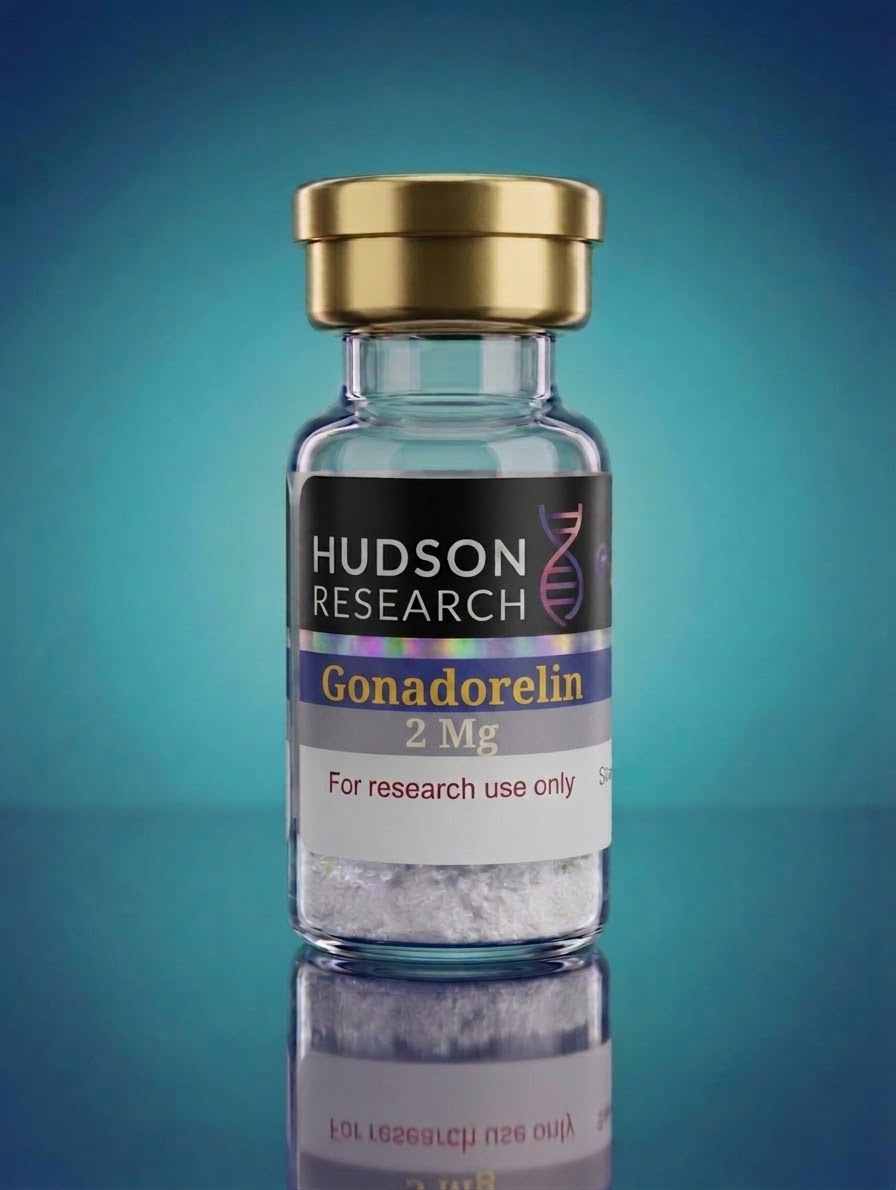
Gonadorelin
Hudson research lab peptides: Learn about gonadorelin, its role in hormone research, safety considerations, and responsible sourcing in the United States.
Gonadorelin: Uses, Research Information, and Responsible Sourcing
Gonadorelin: An Essential Guide to Hormone Research
Gonadorelin is a synthetic form of gonadotropin-releasing hormone (GnRH), a naturally occurring hormone involved in regulating reproductive function. It plays an important role in communication between the hypothalamus and the pituitary gland, helping control the release of luteinizing hormone (LH) and follicle-stimulating hormone (FSH).
For researchers, healthcare professionals, and individuals seeking reliable scientific information, understanding gonadorelin begins with its biological function, established medical applications, and appropriate regulatory considerations. When evaluating information about Hudson research lab peptides, it is important to distinguish scientific research products from medicines intended for human use.
This guide explains what gonadorelin is, how it works, why it attracts scientific interest, and what to consider when evaluating peptide-related suppliers in the United States.
What Is Gonadorelin?
Gonadorelin is a synthetic peptide that mimics the activity of the body’s natural gonadotropin-releasing hormone. Under normal physiological conditions, GnRH is released in pulses from the hypothalamus. These signals stimulate the pituitary gland to release LH and FSH, hormones that contribute to reproductive processes.
Because of this mechanism, gonadorelin has attracted attention in endocrinology, reproductive medicine, and hormone-related research.
Unlike general nutritional supplements, gonadorelin directly interacts with a specific hormonal signaling pathway. Its effects depend on factors such as the administration method, dosing schedule, individual physiology, and clinical context.
Gonadorelin should not be confused with other peptides marketed for research purposes. Each compound has its own mechanism of action, evidence base, potential risks, and regulatory status.
How Does Gonadorelin Work?
Gonadorelin acts on GnRH receptors in the anterior pituitary gland. When these receptors are stimulated, the pituitary releases LH and FSH into circulation.
These hormones perform different functions:
- Luteinizing hormone (LH): Supports reproductive hormone production and ovulatory processes.
- Follicle-stimulating hormone (FSH): Contributes to ovarian follicle development and sperm production.
- GnRH signaling: Helps coordinate the hormonal communication needed for normal reproductive function.
The pattern of exposure matters. Natural GnRH signaling is pulsatile, and sustained exposure to GnRH agonists can produce effects different from intermittent stimulation. Consequently, gonadorelin’s biological activity cannot be accurately summarized by assuming that more exposure always produces a stronger or more beneficial response.
These mechanisms make gonadorelin relevant to scientific investigations involving pituitary function and reproductive endocrinology.
Gonadorelin in Medical and Scientific Research
Gonadorelin has established relevance in the evaluation of the hypothalamic-pituitary-gonadal axis. Depending on the jurisdiction, formulation, and applicable product labeling, gonadorelin preparations may have specific diagnostic or therapeutic uses.
Its scientific significance includes:
Endocrine system evaluation: Gonadorelin can be used in appropriate clinical contexts to investigate how the pituitary responds to GnRH stimulation.
Reproductive hormone signaling: Researchers study GnRH pathways to understand the relationships among the hypothalamus, pituitary gland, and reproductive organs.
Hormonal regulation: Gonadorelin provides a way to investigate mechanisms involved in LH and FSH release.
Scientific education: Its well-characterized mechanism makes it relevant to discussions of peptide hormones, receptor interactions, and endocrine feedback systems.
Importantly, scientific interest does not establish that gonadorelin is suitable for self-treatment, bodybuilding, fertility enhancement, or other purposes outside an appropriate clinical setting.
Potential Benefits and Important Limitations
Gonadorelin’s principal significance is its ability to interact with a specific hormonal signaling pathway. In appropriate medical settings, that property can support defined diagnostic or therapeutic objectives.
However, the potential benefits depend on the clinical indication and the formulation being used. It is not appropriate to claim that gonadorelin reliably increases testosterone, improves fertility, builds muscle, or corrects every hormone-related concern.
Hormonal systems are complex, and an intervention that affects one signaling pathway can have different consequences depending on the underlying condition.
A healthcare professional can determine whether a hormone evaluation or a particular treatment is appropriate. Self-directed use can delay diagnosis of an underlying medical issue and may expose individuals to unnecessary risks.
Safety, Quality, and Regulatory Considerations
Before evaluating any gonadorelin-related product, it is important to understand the difference between a medicine intended for a specific medical use and a substance supplied for laboratory research.
Research labeling does not establish that a product is approved for human administration. Likewise, an online product listing, certificate of analysis, or statement about purity does not independently demonstrate that a product is safe, clinically effective, sterile, or suitable for injection.
Responsible evaluation should consider:
- Identity and traceability: Whether the supplier provides credible documentation identifying the compound and its source.
- Quality documentation: Whether analytical testing is appropriately documented and traceable to the relevant batch.
- Intended use: Whether the product is clearly distinguished from medicines intended for human use.
- Regulatory status: Whether applicable FDA requirements and relevant state and federal laws are satisfied.
- Professional oversight: Whether medical questions are addressed by a qualified healthcare professional.
Potential adverse effects and contraindications depend on the formulation, administration route, and clinical circumstances. Product-specific prescribing information and professional medical guidance should be consulted before any medical use.
Hudson Research Lab Peptides: Evaluating Online Information
People searching for Hudson research lab peptides may be looking for information about peptide identity, product documentation, research applications, or supplier credibility.
When researching hudsonresearchslab.com, review the website’s available documentation and independently verify any claims about company identity, product quality, regulatory compliance, and intended use. Do not assume that a website is an official or authorized source solely because its domain name appears in search results or its marketing uses scientific terminology.
Before relying on a supplier, consider whether it provides verifiable business information, clear product specifications, appropriate analytical documentation, and transparent policies. Any claims of regulatory approval or clinical suitability should be checked against relevant authoritative sources.
For gonadorelin intended for a medical purpose, consult a licensed healthcare professional and an appropriately licensed pharmacy or other legally authorized provider. A research-use designation should never be interpreted as permission to administer a product to humans.
How to Research Gonadorelin Responsibly in the United States
Readers researching gonadorelin in the United States can start with authoritative sources rather than relying exclusively on commercial descriptions.
The U.S. Food and Drug Administration (FDA) provides information about drug approvals, labeling, compounding, and regulatory requirements. The National Library of Medicine’s DailyMed database provides labeling information for many marketed medicines. PubMed can help readers locate scientific literature on GnRH signaling, pituitary function, and reproductive endocrinology.
Useful research questions include:
- What is the compound’s established mechanism of action?
- What clinical indications, if any, apply to the specific formulation?
- What evidence supports the intended application?
- What safety information and contraindications are documented?
- What legal and regulatory requirements apply to the product and its intended use?
These questions help separate established scientific information from unsupported marketing claims.
Frequently Asked Questions About Gonadorelin
What is gonadorelin used for?
Gonadorelin is a synthetic GnRH analogue with established relevance to particular diagnostic and therapeutic applications involving reproductive hormone signaling. The appropriate use depends on the specific formulation, indication, and applicable medical guidance.
Is gonadorelin a peptide?
Yes. Gonadorelin is a small peptide hormone analogue that mimics the activity of naturally occurring gonadotropin-releasing hormone.
Is gonadorelin the same as testosterone?
No. Gonadorelin acts on GnRH receptors and influences pituitary hormone release. Testosterone is a steroid hormone with different biological functions.
Can gonadorelin be used without medical supervision?
Self-directed use is not recommended. Hormonal interventions require appropriate evaluation, and the safety of a particular product cannot be established simply by its online description or research labeling.
How can I evaluate a gonadorelin supplier?
Review the supplier’s verifiable identity, documentation, product specifications, and regulatory claims. For medical use, rely on qualified healthcare professionals and legally authorized pharmaceutical channels.
Final Thoughts
Gonadorelin is an important compound in reproductive endocrinology because of its specific role in GnRH signaling and the regulation of LH and FSH. Understanding its mechanism, established applications, limitations, and safety considerations provides a stronger foundation than relying on promotional claims alone.
For readers searching for Hudson research lab peptides, careful verification is essential. Prioritize authoritative scientific information, transparent documentation, and applicable U.S. regulatory requirements. For medical applications, seek advice from a qualified healthcare professional rather than relying on products labeled exclusively for research.
Informed decisions begin with accurate information, credible evidence, and a commitment to responsible sourcing.
| strength mg | 1 VIAL, 2 VIALS, 3VIALS, 5 VIALS, 10 VIALS |
|---|
Be the first to review “Gonadorelin”
Related products
HUDSON LAB
HUDSON LAB
HUDSON LAB
HUDSON LAB
HUDSON LAB
HUDSON LAB
HUDSON LAB
HUDSON LAB
Reviews
There are no reviews yet.