

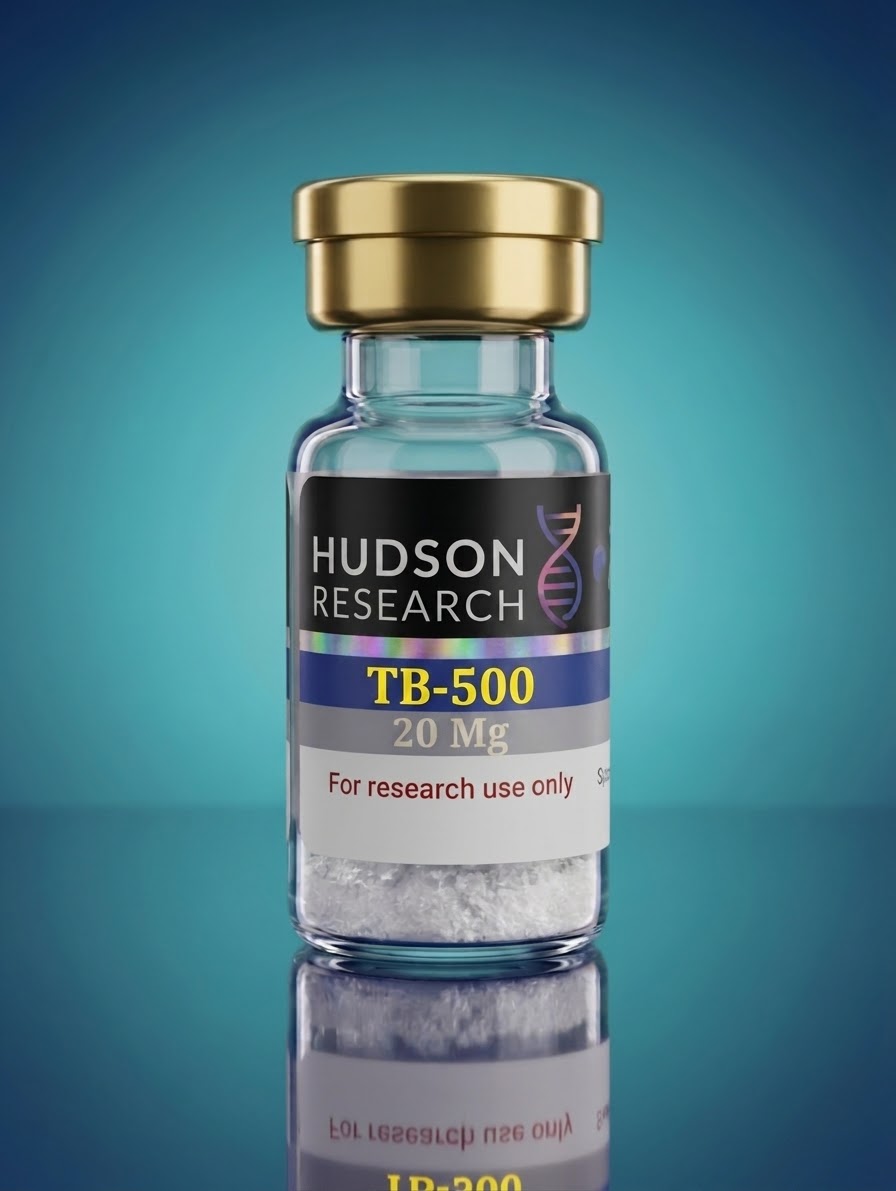
TB-500
Price range: $49.00 through $648.00
Explore Hudson research lab peptides and learn about TB-500, research considerations, quality standards, and important safety information.
TB-500 Peptide: Research Overview, Quality Considerations, and Safety Information
TB-500: An Informative Guide for Peptide Research
TB-500 is a synthetic peptide fragment associated with thymosin beta-4, a naturally occurring protein studied for its role in cellular processes. It has attracted attention in scientific discussions involving cell migration, tissue remodeling, and biological research. However, interest in a research compound should not be confused with proof of safety or effectiveness in humans.
For individuals researching Hudson research lab peptides, understanding the identity, research context, regulatory status, and limitations of compounds such as TB-500 is an essential first step. Reliable product information should prioritize transparency, verifiable documentation, and responsible communication rather than exaggerated promises.
This guide provides an overview of TB-500 and the factors researchers should consider when evaluating peptide-related information in the United States.
What Is TB-500?
TB-500 is commonly described as a synthetic fragment of thymosin beta-4. Although these substances are related, they should not automatically be treated as interchangeable. Their molecular structures, biological properties, and available evidence may differ.
Thymosin beta-4 has been investigated in scientific research involving actin regulation, cell movement, and tissue-related biological processes. Findings involving the full-length protein do not necessarily establish the effects of TB-500 itself.
This distinction is particularly important when reviewing online peptide descriptions. A scientifically credible overview should identify the compound being discussed and distinguish preliminary findings from demonstrated clinical outcomes.
Researchers examining TB-500 should therefore look for clear compound identification, reliable supporting documentation, and appropriately qualified statements about what is known and what remains uncertain.
Why Has TB-500 Attracted Research Interest?
TB-500 has received attention in online discussions about biotechnology, peptide science, and experimental compounds. Much of the interest centers on biological processes that scientists continue to investigate.
However, popularity is not evidence of effectiveness. Anecdotal reports, social media discussions, and promotional descriptions cannot replace well-designed clinical studies.
The most responsible approach is to evaluate claims against the available scientific literature. This includes examining whether a finding comes from laboratory experiments, animal research, or studies involving human participants.
For researchers and readers comparing Hudson research lab peptides with other sources of peptide-related information, this evidence-based approach can help separate credible scientific context from unsupported marketing statements.
Research Quality and Documentation
Product documentation is an important consideration when evaluating research compounds. A professional research information page should communicate the identity of a substance clearly and avoid suggesting that a product has been independently verified when supporting evidence is unavailable.
Depending on the material and the supplier’s claims, relevant documentation may include:
- Compound identity: Information that clearly identifies the specific peptide or fragment.
- Analytical testing: Appropriate laboratory results supporting stated identity or purity.
- Batch traceability: Records connecting analytical documentation to a particular batch.
- Storage documentation: Evidence-based information appropriate to the specific material.
- Supplier transparency: Clear business contact information and accurate product descriptions.
- Regulatory disclosures: Statements that distinguish research materials from approved medicines.
A certificate of analysis can be useful, but its value depends on the testing methods, the laboratory, the reported results, and whether the document corresponds to the actual batch. A certificate alone does not establish clinical safety or suitability for human use.
These considerations are relevant when evaluating Hudson research lab peptides or information published by any other peptide-related supplier.
TB-500 Safety and Regulatory Considerations in the United States
An essential part of understanding TB-500 is recognizing its regulatory and scientific limitations.
The U.S. Food and Drug Administration has identified TB-500, described as the thymosin beta-4 fragment LKKTETQ, in its review of substances that may present significant safety risks when used in compounding. The agency has highlighted concerns involving potential immunogenicity, peptide aggregation, and peptide-related impurities.
The FDA has also reported that it has not identified human exposure data for drug products containing this fragment in the safety assessment cited by the agency. Consequently, important questions about potential harm remain unresolved.
These limitations mean that claims concerning injury recovery, wound healing, muscle development, pain relief, or athletic performance should not be presented as established benefits of TB-500.
A responsible research overview should also avoid treating a research-use label as evidence that a substance is safe, approved, or appropriate for administration to people.
Anyone considering a substance for a medical purpose should consult a qualified healthcare professional rather than relying on online product descriptions or anecdotal reports.
How to Evaluate Hudson Research Lab Peptides
People searching for Hudson research lab peptides should prioritize independent verification over promotional language.
Before relying on a supplier’s claims, consider reviewing the following information:
1. Verify the business identity. Check the supplier’s legal business information, contact details, and relevant registration records where applicable. Do not assume that a website is an official or authorized source solely because it uses a particular brand name.
2. Review the available documentation. Look for specific analytical methods, batch identifiers, and appropriately detailed test results. Be cautious of broad purity claims that lack supporting evidence.
3. Distinguish research materials from medicines. A research-oriented description does not establish that a product has been approved for human treatment or that it can legally be marketed for that purpose.
4. Assess claims critically. Promises of guaranteed recovery, dramatic performance enhancement, or proven therapeutic outcomes require strong evidence. Avoid relying on testimonials as a substitute for clinical research.
5. Examine applicable requirements. Requirements may vary according to the substance, intended use, marketing claims, and distribution arrangements. Regulatory compliance should be independently established rather than assumed.
These steps provide a more reliable foundation for evaluating peptide information and making informed research decisions.
Where to Find Information About TB-500
HudsonResearchSlab.com is the website name supplied for this requested SEO content. Its status as an official, authorized, or verified TB-500 source has not been independently established here.
Readers interested in learning more about the website should independently verify its business identity, product documentation, and applicable regulatory information before relying on its representations.
For regulatory context, the FDA’s published information on potentially risky bulk drug substances is an important starting point. Its guidance helps explain why the availability of a substance online does not necessarily mean it is approved for medical use.
Official regulatory resources are especially valuable when online descriptions contain claims that appear stronger than the available evidence.
Frequently Asked Questions About TB-500
Is TB-500 FDA-approved for human treatment?
TB-500 is not an FDA-approved treatment for human use. Its safety and effectiveness for proposed therapeutic applications have not been established sufficiently to support claims of proven clinical benefit.
Does TB-500 have proven recovery benefits?
Reliable evidence establishing recovery benefits in humans is lacking. Research involving related biological substances should not be interpreted as proof that TB-500 produces the same effects.
What should researchers look for in peptide documentation?
Researchers should look for clear compound identification, relevant analytical testing, batch traceability, transparent supplier information, and accurate regulatory disclosures.
Is HudsonResearchSlab.com an official TB-500 supplier?
That status has not been independently verified for this description. Verify the business identity and any claims of official or authorized supplier status directly through reliable, independent records.
Conclusion: Make Informed Decisions About TB-500
TB-500 remains a subject of interest in discussions about experimental peptides and cellular biology. Nevertheless, important uncertainties concerning its human safety, effectiveness, and regulatory status remain.
For anyone researching Hudson research lab peptides, the strongest approach is to prioritize transparent documentation, credible scientific evidence, and accurate regulatory information. Careful evaluation is more valuable than relying on exaggerated claims or unsupported promises.
A clear understanding of these limitations helps readers distinguish scientific investigation from established medical treatment and encourages more responsible decisions when evaluating peptide-related information.
| strength mg | 10mg, 20 |
|---|---|
| qty | 1 VIAL, 2 VIALS, 3VIALS, 5 VIALS, 10 VIALS |
Be the first to review “TB-500”
Related products
HUDSON LAB
HUDSON LAB
HUDSON LAB
HUDSON LAB
HUDSON LAB
HUDSON LAB
HUDSON LAB
HUDSON LAB
Reviews
There are no reviews yet.