

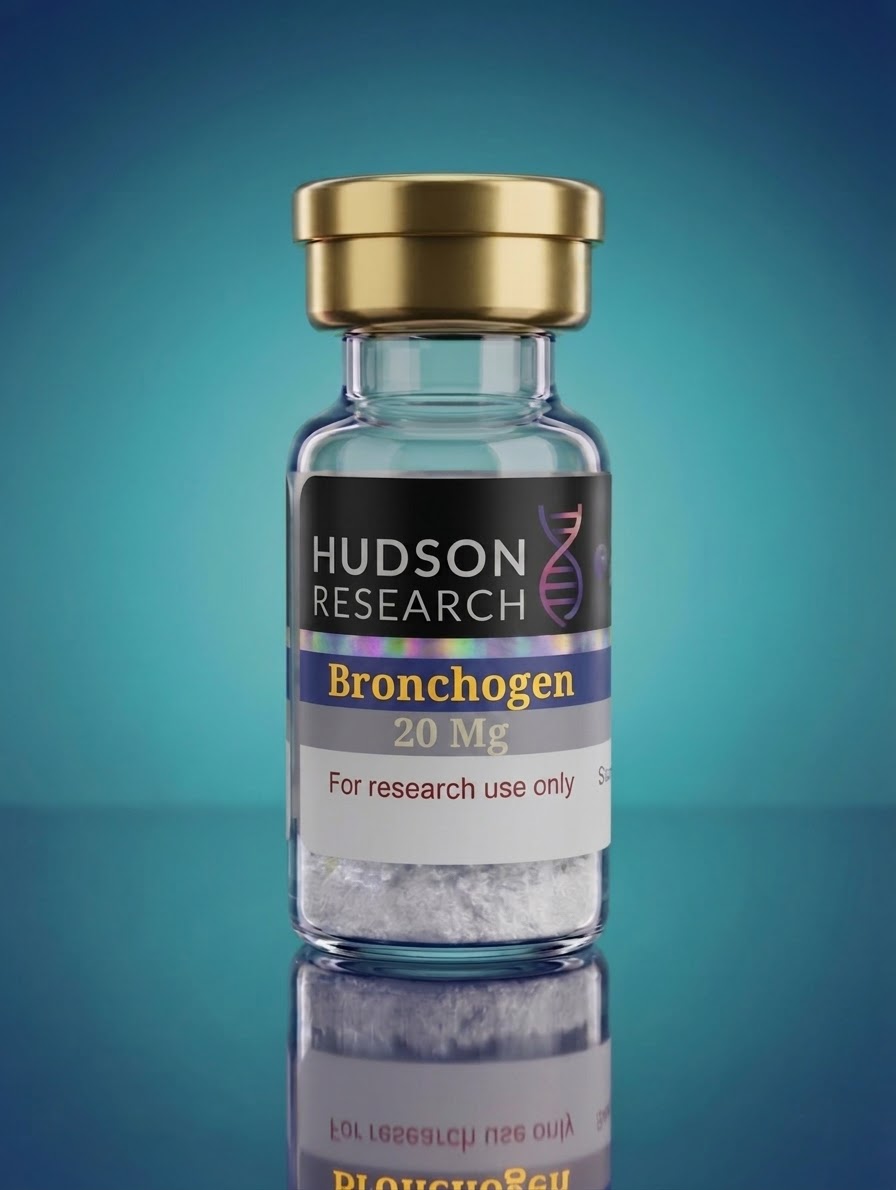
BRONCHOGEN
Price range: $25.00 through $180.00
Hudson Research Lab peptides: Explore BRONCHOGEN research information, product specifications, quality documentation, and laboratory research considerations.
BRONCHOGEN – Research Peptide Information | Hudson Research Lab
BRONCHOGEN Product Description: SEO-Optimized for the United States
Discover BRONCHOGEN: An Advanced Peptide Research Compound
BRONCHOGEN is a synthetic short peptide studied in preclinical research involving bronchial tissue and cellular regulation. For laboratories, scientific researchers, and qualified research professionals in the United States, understanding the compound’s identity, scientific background, documentation, and research limitations is essential before evaluating any supplier.
When researching Hudson Research Lab peptides, product transparency and reliable scientific documentation should be priorities. BRONCHOGEN belongs to a group of short peptides commonly described as peptide bioregulators. Researchers have investigated this class of compounds to better understand potential interactions with cellular processes, gene expression, and tissue-specific biological mechanisms.
However, scientific investigation is not the same as established medical effectiveness. BRONCHOGEN has limited preclinical evidence, and its safety and effectiveness in humans have not been established through controlled clinical trials. It is not an FDA-approved medicine and should not be marketed as a proven treatment for respiratory conditions.
For laboratories evaluating BRONCHOGEN, the most valuable approach is an evidence-based assessment that prioritizes compound identity, analytical testing, traceability, and appropriate research-use restrictions.
What Is BRONCHOGEN?
BRONCHOGEN is described in scientific and supplier literature as a synthetic tetrapeptide associated with research into bronchial and respiratory tissue. A tetrapeptide is a short chain of four amino acids.
The compound is frequently associated with the peptide sequence Ala-Glu-Asp-Leu, abbreviated AEDL, although sequence reporting is not entirely consistent across the available literature. Researchers should therefore confirm the precise molecular identity of any material under evaluation rather than relying exclusively on a product name.
Published laboratory investigations have examined short peptides in relation to cellular differentiation and interactions with DNA. Some research involving BRONCHOGEN has focused on bronchial epithelial cell models and proposed mechanisms of gene-expression regulation.
These findings provide scientific context for further investigation, but they do not establish that BRONCHOGEN improves breathing, treats lung disease, prevents respiratory infections, or produces measurable health benefits in people.
For research professionals, separating preliminary findings from clinically demonstrated outcomes is a critical part of responsible scientific evaluation.
BRONCHOGEN Research: What Scientists Should Know
Interest in peptide bioregulators has encouraged research into the relationship between short amino acid sequences and cellular activity. BRONCHOGEN is one compound discussed in this field, particularly in connection with bronchial epithelial tissue.
Research topics associated with BRONCHOGEN include:
- Cellular research: Investigation of biological responses in controlled laboratory models.
- Gene-expression studies: Examination of changes in selected cellular markers under experimental conditions.
- Peptide characterization: Assessment of molecular identity, sequence, and physicochemical properties.
- Preclinical investigation: Evaluation of proposed biological mechanisms before any conclusions about human applications can be justified.
- Analytical quality assessment: Examination of identity, purity, and other relevant characteristics of research materials.
The available evidence remains limited and predominantly preclinical. Findings from laboratory experiments cannot automatically be applied to human physiology, and additional independent research would be necessary to establish reproducibility, safety, and clinical relevance.
This distinction is especially important when evaluating products described online using terms such as advanced peptides, innovative bioregulators, or next-generation research compounds. Compelling terminology is not a substitute for verifiable evidence.
Why Product Documentation Matters
When comparing peptide research suppliers in the United States, documentation can be more informative than promotional claims.
Before considering any BRONCHOGEN research material, qualified laboratory personnel should examine the available technical information and confirm that the documentation corresponds to the specific product and batch being evaluated.
Important documentation considerations include:
1. Compound identity
The supplier should provide a clear product identifier and available analytical information that supports the stated molecular identity.
2. Purity information
Review any reported purity result alongside the analytical method, laboratory identity, report date, and batch number. A purity percentage alone does not establish identity, sterility, safety, or suitability for a particular experiment.
3. Certificate of Analysis
A Certificate of Analysis, or COA, may provide information about a particular batch. Researchers should verify that the certificate is authentic and corresponds to the material supplied.
4. Traceability
Product identifiers, lot numbers, and consistent documentation help laboratories maintain appropriate records and investigate unexpected experimental results.
5. Handling and storage information
Follow the supplier’s documented laboratory handling requirements and applicable institutional safety procedures. Do not assume that instructions for another peptide apply to BRONCHOGEN.
These measures support a more rigorous research process and help researchers distinguish documented product characteristics from unverified marketing statements.
Where to Find BRONCHOGEN Information Online
Researchers searching for Hudson Research Lab peptides may wish to investigate the supplier information available at:
Website provided for review: hudsonresearchslab.com/
The website has been provided as a requested source for supplier information. Its status as the official BRONCHOGEN seller, current product availability, product specifications, and quality-testing practices have not been independently verified here.
Before placing an order, confirm the supplier’s business identity, applicable terms, product documentation, and compliance with relevant United States regulations. Do not rely solely on search rankings, promotional descriptions, or claims of exclusivity when making a purchasing decision.
For laboratory procurement, transparent specifications and independently verifiable documentation are more meaningful than unsupported promises.
Important Research-Use and Safety Considerations
BRONCHOGEN should not be represented as an established treatment for asthma, chronic obstructive pulmonary disease (COPD), bronchitis, lung injury, or other respiratory conditions.
There are no adequate controlled human clinical trials establishing its effectiveness or safety for these uses. Its human pharmacology and potential adverse effects remain insufficiently characterized.
This is a significant limitation for anyone assessing claims about respiratory support or tissue regeneration. Preliminary laboratory findings do not establish a safe dose, appropriate administration route, or favorable benefit-risk profile in humans.
This product description is intended for scientific information and laboratory research contexts, not personal medical use. BRONCHOGEN is not approved by the U.S. Food and Drug Administration as a medicine. It should not be used for human or veterinary consumption.
Researchers must follow applicable laws, institutional requirements, and laboratory safety protocols. Anyone seeking care for a respiratory condition should consult a qualified healthcare professional rather than experiment with research peptides.
Frequently Asked Questions About BRONCHOGEN
What is BRONCHOGEN?
BRONCHOGEN is described as a synthetic short peptide investigated in preclinical research involving bronchial epithelial cells and cellular regulation.
What is BRONCHOGEN studied for?
Scientific investigations have examined its relationship to cellular differentiation and proposed gene-expression mechanisms. These findings do not establish clinical benefits in humans.
Is BRONCHOGEN FDA-approved?
No. BRONCHOGEN is not an FDA-approved medicine for treating or preventing disease.
What should researchers check before selecting a supplier?
Researchers should examine product identity, batch-specific analytical documentation, available purity data, traceability, storage instructions, and applicable regulatory requirements.
Where can I find Hudson Research Lab peptides?
You can review the supplier website provided for this product at hudsonresearchslab.com. Verify the supplier’s identity, current listings, and supporting documentation independently before making any purchasing decision.
Final Overview: Make Research Decisions With Confidence
BRONCHOGEN is a peptide research compound associated with preliminary investigations into bronchial tissue and cellular biology. Its scientific interest should be evaluated alongside the limitations of the current evidence, the absence of established human clinical benefits, and the importance of verifiable analytical documentation.
For researchers exploring Hudson Research Lab peptides, a rigorous, transparent, and evidence-driven evaluation process is the most valuable starting point. Clear specifications, authentic batch records, and responsible laboratory practices provide a stronger foundation for scientific work than exaggerated health claims or unverified supplier endorsements.
The best research decisions begin with reliable information, realistic expectations, and a commitment to scientific integrity.
| strength mg | 1 VIAL, 2 VIALS, 3VIALS, 5 VIALS, 10 VIALS |
|---|
Be the first to review “BRONCHOGEN”
Related products
HUDSON LAB
HUDSON LAB

HUDSON LAB
HUDSON LAB
HUDSON LAB
HUDSON LAB
HUDSON LAB
HUDSON LAB
Reviews
There are no reviews yet.