

AHK-Cu Peptide: Research Overview, Product Information & Buying Guide
AHK-Cu Copper Peptide: An Overview
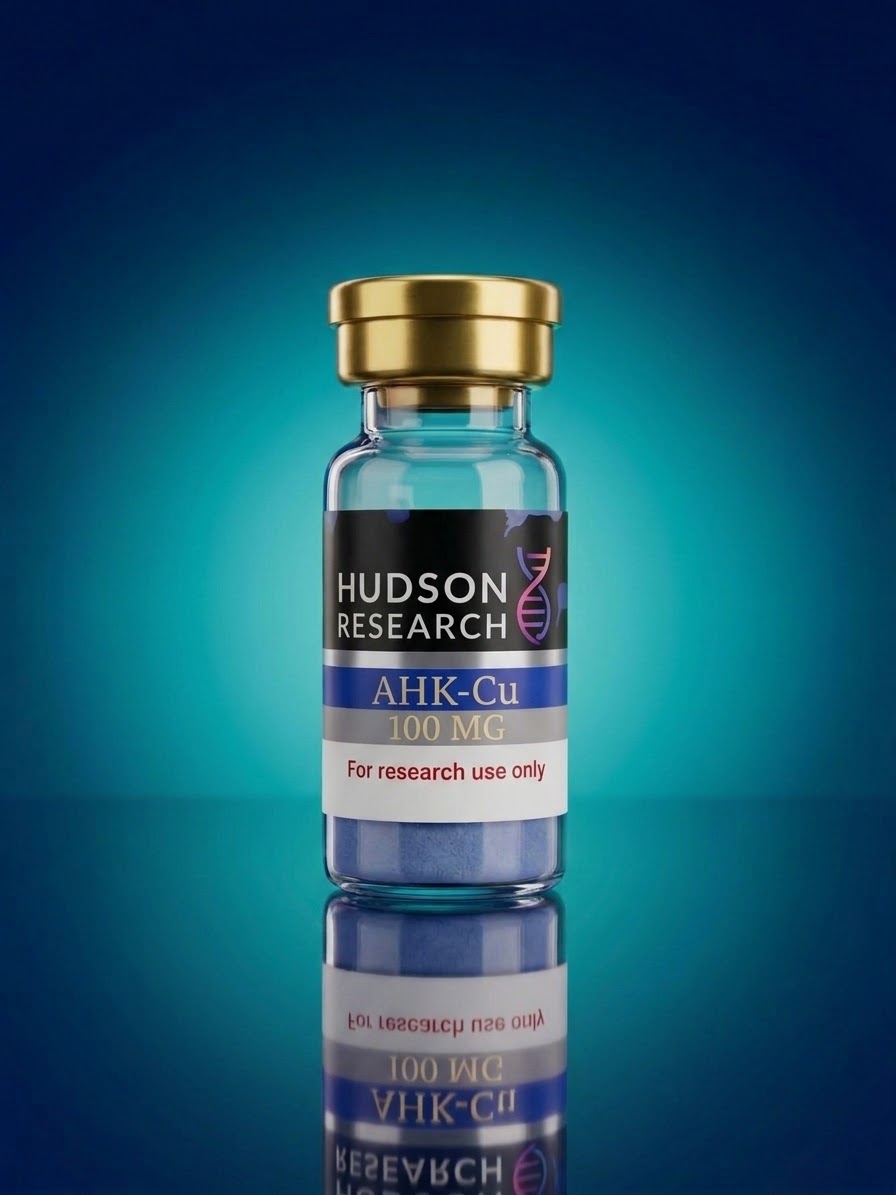
AHK-Cu is a copper-binding tripeptide that has attracted scientific interest in laboratory investigations involving skin biology and hair-follicle research. Also described as alanyl-histidyl-lysine copper, this compound combines the amino acid sequence alanine-histidine-lysine with a copper ion. Researchers study copper-peptide complexes to better understand their chemical properties and potential biological interactions.
For customers exploring Hudson research lab peptides, understanding a compound’s identity, research status, documentation, and intended application is an essential starting point. AHK-Cu is a specialized research compound, not an established medical treatment. Its limited evidence base means that laboratory findings should not be interpreted as proof of effectiveness or safety in humans.
Hudson Research Lab lists AHK-Cu among its research compounds at hudsonresearchlab.com. The website states that its products are intended for laboratory research and are not for human or animal consumption. Researchers should independently review the current listing, available documentation, and applicable requirements before making a purchasing decision.
What Is AHK-Cu?
AHK-Cu is a copper complex of the tripeptide alanyl-histidyl-lysine. It is structurally related to GHK-Cu, another copper-binding peptide discussed in biochemical and cosmetic research, but the two compounds are not identical.
The distinction matters because findings associated with one peptide cannot automatically be applied to another. Each compound requires its own analytical characterization and supporting evidence.
AHK-Cu has been investigated in experimental work involving dermal papilla cells and hair-follicle biology. These research areas help scientists examine cellular behavior under controlled conditions. However, preliminary findings do not establish that a commercial research product produces hair growth, reverses hair loss, improves skin quality, or delivers any other specific result in people.
For laboratory professionals, AHK-Cu is best approached as a compound requiring careful identification, appropriate analytical evaluation, and evidence-based interpretation.
Why Researchers Investigate Copper-Binding Peptides
Copper-binding peptides are of interest because copper participates in numerous biological processes, including the activity of certain enzymes. Researchers examine how peptide structure, copper coordination, concentration, and experimental conditions influence observed chemical and biological behavior.
AHK-Cu offers an opportunity to investigate a particular peptide-copper complex and compare its properties with those of related compounds.
Potential research questions include:
- Chemical characterization: How can the identity and composition of a copper-peptide complex be evaluated?
- Molecular interactions: How does copper coordination influence the compound’s chemical properties?
- Cellular research: What responses have been observed in controlled laboratory models?
- Comparative studies: How does AHK-Cu differ from structurally related copper peptides?
- Analytical consistency: Which validated methods can help assess the identity and purity of a research sample?
These questions provide a more reliable framework for understanding AHK-Cu than unsupported marketing claims. They also demonstrate why access to credible analytical records and transparent product information matters when selecting research materials.
AHK-Cu Research: What the Evidence Actually Shows
Interest in AHK-Cu has grown partly because of preliminary research involving hair-follicle models and dermal papilla cells. These models can help scientists explore biological mechanisms and identify questions for future investigation.
Nevertheless, the evidence remains limited. Laboratory observations cannot establish clinical effectiveness, appropriate human dosing, long-term safety, or the likelihood of a particular outcome.
Researchers should distinguish between three important evidence categories:
In-vitro research: Experiments performed using cells or other laboratory systems can reveal preliminary biological activity. They cannot independently establish that the same effects will occur in a living person.
Ex-vivo research: Studies involving tissue examined outside the body can provide additional biological insight, but their findings still have limitations when applied to real-world human use.
Human clinical trials: Carefully designed clinical studies are necessary to evaluate effectiveness and safety in people. Robust clinical evidence specific to AHK-Cu remains insufficient to establish therapeutic benefits.
This distinction is especially important when evaluating claims about hair restoration, skin rejuvenation, collagen production, or tissue repair. Such claims should not be presented as proven outcomes of AHK-Cu.
Choosing Hudson Research Lab Peptides
When comparing laboratory research suppliers in the United States, informed purchasing decisions should prioritize documentation, product identification, and transparent business practices rather than promotional language alone.
Hudson Research Lab’s website lists AHK-Cu among its research offerings. Prospective buyers can use the supplier’s website to review current product availability and the information provided for individual listings.
Before purchasing AHK-Cu or another research compound, consider the following criteria.
1. Product Identification
Check that the product name and chemical identity are clearly stated. Similar peptide names can refer to different compounds, and accurate identification is important for reproducible research.
2. Analytical Documentation
Look for relevant analytical reports, such as a certificate of analysis, where available. Review the stated analytical method, sample identification, test date, and reported results. Do not assume that a purity claim or third-party testing statement independently verifies every batch without supporting documentation.
3. Product Specifications
Review the listed quantity, formulation, storage information, handling requirements, and other specifications relevant to the intended laboratory work. Confirm any missing details directly with the supplier.
4. Shipping and Business Policies
For United States orders, verify shipping availability, delivery estimates, payment terms, return policies, and customer support options before checkout. Policies can change, so consult the current website rather than relying on outdated descriptions.
5. Regulatory and Safety Considerations
Confirm that the compound and intended research activity comply with applicable laws, institutional procedures, and laboratory safety requirements. A research-use-only label does not establish that a substance is approved for human administration.
These checks can help laboratories make more informed decisions and reduce the risk of relying on incomplete product information.
Where to Buy AHK-Cu in the United States
Researchers looking for AHK-Cu can review the product information on the Hudson Research Lab website:
Website: hudsonresearchslab.com
The supplier lists AHK-Cu alongside other research compounds. Review the current listing for product specifications, availability, documentation, and purchasing conditions before proceeding.
For a responsible purchasing process, compare the available information against your laboratory’s requirements. If a certificate of analysis, a particular analytical method, or a batch-specific document is necessary for your study, request confirmation before placing an order.
This approach is more reliable than selecting a research material solely on the basis of price, search rankings, or broad claims about purity and performance.
Important Research-Use Notice
AHK-Cu is not an FDA-approved drug for treating hair loss, skin conditions, or other medical conditions. The available research does not establish a validated human dosage, a proven treatment protocol, or a comprehensive human safety profile.
Research compounds sold for laboratory use should not be represented as approved medicines or consumer treatments. Do not ingest, inject, or otherwise administer research-use-only material to humans or animals. Anyone considering a treatment for a medical or cosmetic concern should consult a qualified healthcare professional.
Frequently Asked Questions
What is AHK-Cu peptide?
AHK-Cu is a copper-binding complex of the tripeptide alanine-histidine-lysine. It has been investigated in preliminary research involving cellular biology and hair-follicle models.
Is AHK-Cu the same as GHK-Cu?
No. Both are copper-binding peptides, but their amino acid sequences differ. Research findings for GHK-Cu should not automatically be treated as evidence for AHK-Cu.
Is AHK-Cu FDA-approved for human use?
AHK-Cu is not an FDA-approved drug for any human medical indication. Research findings do not establish that it is safe or effective as a treatment.
Where can researchers find Hudson Research Lab AHK-Cu?
Visit hudsonresearchlab.com and review the current product listing. Confirm the product details and supporting documentation directly with the supplier.
What should laboratories check before purchasing?
Review the compound’s identity, available batch-specific analytical documentation, specifications, storage requirements, supplier policies, and applicable research-use restrictions.
Final Thoughts
AHK-Cu is an intriguing subject for continued investigation into copper-binding peptides, but its potential should be evaluated through rigorous scientific research rather than exaggerated promises. Understanding the difference between preliminary laboratory findings and established human evidence is essential for responsible research.
For laboratories exploring Hudson research lab peptides, the most valuable purchasing strategy is to prioritize accurate product identification, transparent documentation, and clear research-use limitations. Visit hudsonresearchslab.com to review the supplier’s current AHK-Cu listing and determine whether the available product information meets your laboratory’s requirements.
Explore the research carefully, verify the documentation, and make evidence-led decisions.
| strength mg | 1 VIAL, 2 VIALS, 3VIALS, 5 VIALS, 10 VIALS |
|---|
Be the first to review “AHK-Cu”
Related products
Uncategorized
HUDSON LAB
HUDSON LAB
HUDSON LAB
HUDSON LAB
HUDSON LAB
HUDSON LAB
HUDSON LAB
Reviews
There are no reviews yet.